Our Story 2025
2025 was a foundational year for Beaver Valley Destination Stewardship. We stayed focused on strengthening relationships, deepening our understanding of our role in the watershed’s community of care, and thoughtfully applying our guiding principles to all our work.
We worked in collaboration with Bagida’waad Alliance and the Osprey Museum on a project called TWOEYEDS (“Tour Workshops of Ecological Youth Energize Destination Stewardship”), funded by the Ontario Trillium Foundation and Community Foundation Grey Bruce. Community was invited to participate in Stewardship Circles and outdoor “Walk and Share” events, where we endeavored to use “two eyes” to see the whole picture with responsibility, reciprocity, respect, and relevance.
Two-Eyed Seeing is a concept developed by respected Mi’kmaq Elder Albert Marshall, which recognizes the strengths of Indigenous and Western ways of knowing and is a process of simultaneously holding both perspectives, in order to foster a more holistic and nuanced understanding of the world. It promotes a collaborative approach to learning and problem-solving that begins with relationship building. Follow this link to learn more about Two-Eyed Seeing.
Acknowledging the Land
We who love our watershed and seek to live with the land, flow with waters above, below and within, breathe inspirational air and grow wise together under the Sun and rest in dreams under the Moon truly with our head, heart and hands wish to acknowledge we are grateful to dwell on the Traditional Territory of the Anishinabek Nation:
The People of the Three Fires known as Ojibway, Odawa, and Pottawatomie Nations.
And further we collectively give thanks to the Chippewas of Saugeen, and the Chippewas of Nawash, now known as the Saugeen Ojibway Nation, as the traditional keepers of this land.
Our Intent
We endeavour to bring the host community of the Beaver Valley Watershed together under a set of Guiding Principles, so through our relationships we share responsibility for the holistic care of our home.
Our Guiding Principles
See the Whole Picture
Respect the Natural and Cultural Distinctiveness of the Watershed
Benefit Local Communities — both People and Nature
Value Quality over Quantity
Share Responsibility Across All Sectors
Our TWOEYEDS funder nourishes a planted seed: Ontario Trillium Foundation
We are grateful to the Ontario Trillium Foundation for providing the funds to build collaborative relationships and share our learning journey with the community through a series of Stewardship Circles, Walk & Shares, as well as a Beaver Valley Destination Stewardship website, Osprey Museum exhibit development, and Indigenous-directed video storytelling.
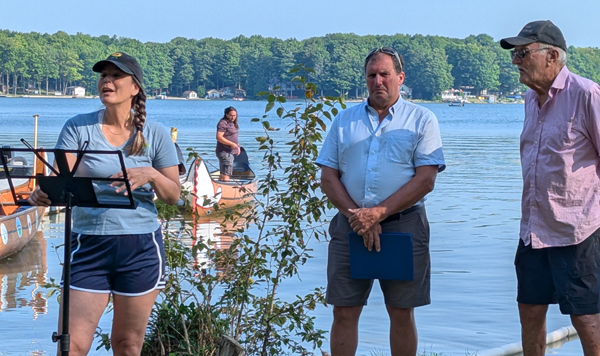
The Collaborative Agreement between Osprey Museum, Bagida’waad Alliance, and Beaver Valley Destination Stewardship ensured that we collectively respected the First Nations principles of OCAP® – Ownership, Control, Access and Possession – in all relationships and engagements with our Indigenous partners. This commitment to honouring each person’s choice to share cultural knowledge allows individuals to decide whether to answer questions or provide information at their own discretion. We asked all our event participants to join us in recognizing this important sensitivity and not to push for answers or information for which an individual chooses not to respond. Find more information about OCAP® at this link.
Building land-based relationships with our TWOEYEDS collaborator: Bagida’waad Alliance
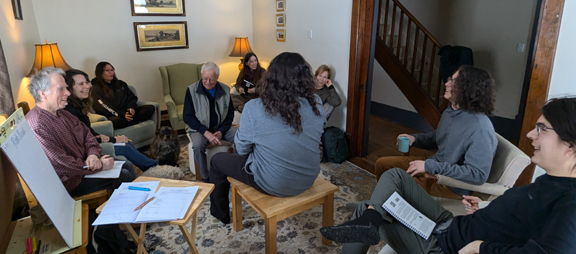
In January we gathered in the valley to continue our connection with Aki Guardian youth of Bagida’waad Alliance. Together we evaluated our previous WOODS “walk & talks” (2024) and created a new storytelling “walk & share experience structure. We envisioned our journey ahead together to model TWOEYEDS activities.
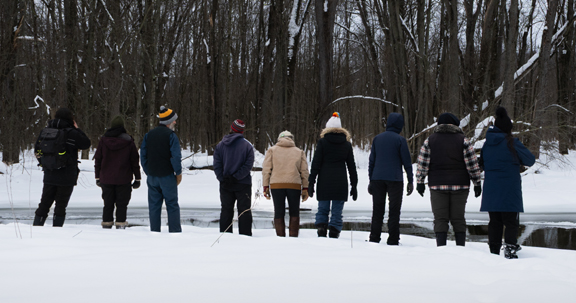
Building on relationships with our Indigenous friends at Bagida’waad Alliance, Aki Tours returned to lead the creative choices of land-based learning themes around animals. We tested our “walk & share” model along the winter riverside with friends.
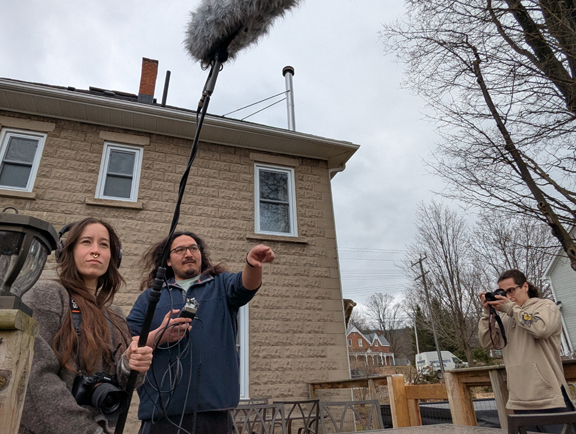
Aki Tours lead Christopher Akiwenzie taught us camera and video production techniques to inform our storytelling opportunity, and Bagida’waad Alliance shared a film produced about a Ceremonial Paddle.
Creating headwaters capacity with our TWOEYEDS collaborator: Osprey Museum
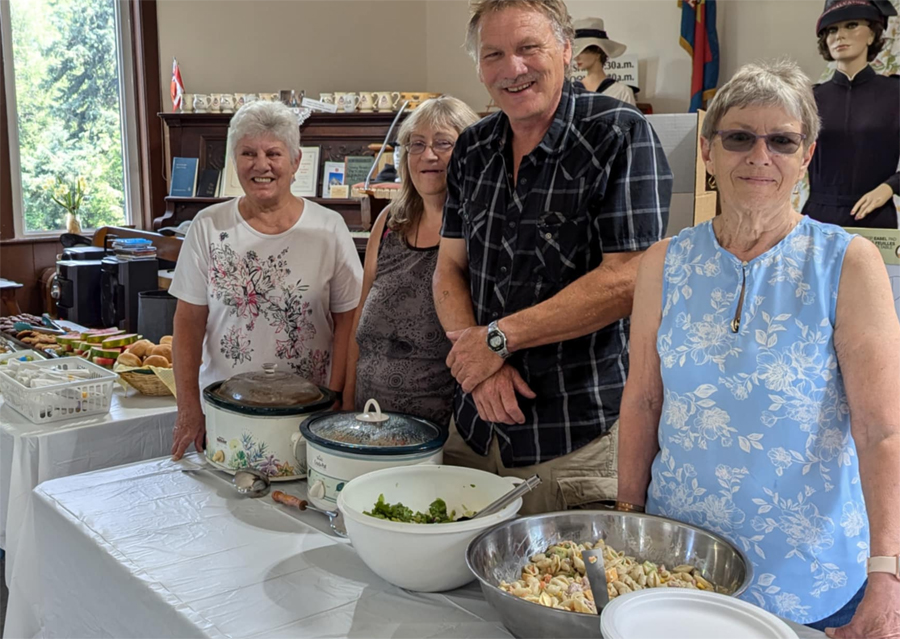
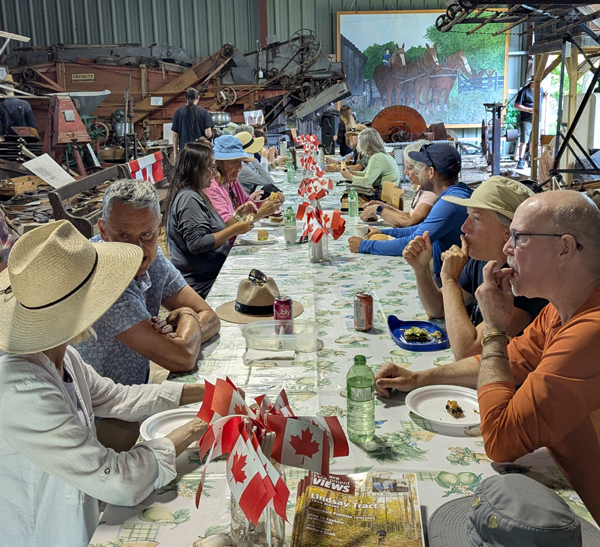
The Osprey Museum was the lead organization for our Ontario Trillium Foundation Seed Grant. Osprey Museum celebrates the community culture and heritage of the former Township of Osprey by operating two historic sites – a one-room school house in Rob Roy and a former Salvation Army Church in Feversham.
Enhancing our TWOEYEDS experiences with funding from Community Foundation Grey Bruce
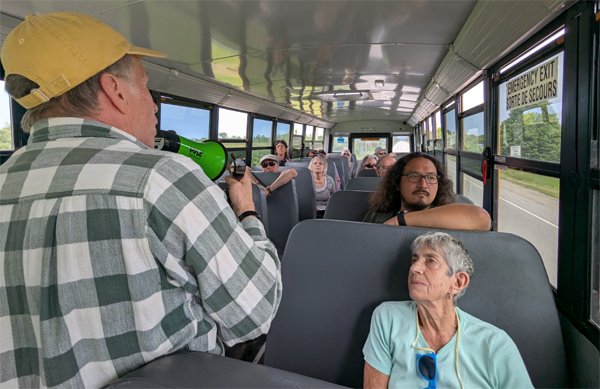
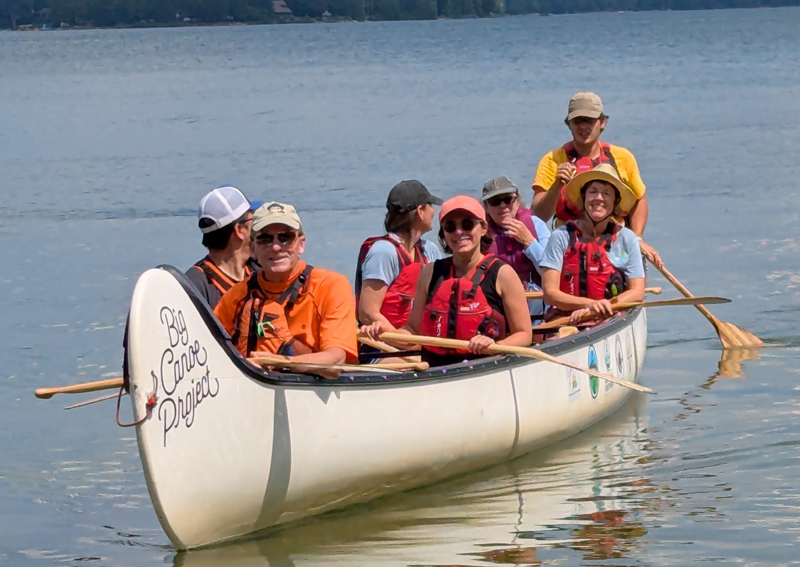
Also enhancing Our TWOEYEDS Project was a grant from the Community Foundation Grey Bruce (CFGB), which funded additional costs involved in our events, including a bus for the watershed tour and an additional big canoe for the paddle experience.
Three Stewardship Circles raising watershed awareness
Stewardship Circles are built on the concept that community itself is the table at which discussions about the care of our home take place. All community members are invited: businesses, government, civic groups, landowners, and anyone who calls this place “home”. The structure is an informative presentation followed by a community conversation. Beaver Valley Destination Stewardship facilitates these Circles to benefit the community—both people and nature—and to support sharing responsibility for the holistic care of our home. We held three Stewardship Circles in 2025.
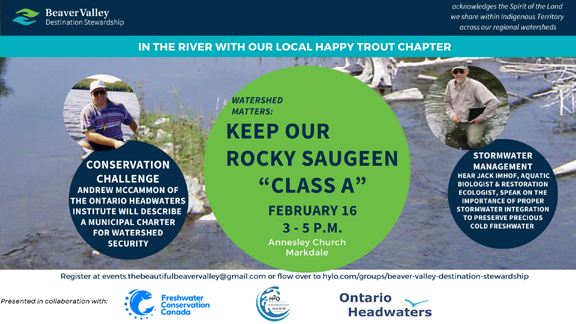
A community-level conversation was forming around the management of stormwater from redevelopment near Brackenbury and Lawler: How can we be exemplary in protecting the Rocky Saugeen while respecting property values and municipal needs?
Jack Imhof is an aquatic ecologist and watershed scientist for over 45 years, former National Biologist for Trout Unlimited Canada, active on the Saugeen system for over 50 years with over 20 years of working with the local Happy Trout Chapter of Trout Unlimited (now Freshwater Conservation Canada), including in many efforts to restore Armstrong Creek. Jack described how and why Markdale should pursue the highest standards of stormwater management.
Andrew McCammon of the Ontario Headwaters Institute described the need for Ontario to shift from the current approach of watershed management to a new framework that includes a Municipal Charter for Watershed Security alongside recommendations at the provincial level as well as for the revitalization and expansion of the role of Conservation Authorities.
Jack and Andrew expanded on their previous delegations to the Municipality of Grey Highlands, which you can watch at this link, starting at minute 22.
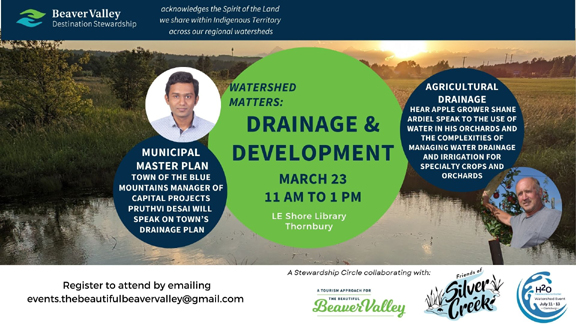
Water is essential to our region – it supports our farms, sustains our local businesses, and influences the character of our town. Effective land drainage is vital for our agricultural enterprises, while also playing a key role in accommodating our growing developments. By coming together to discuss these interconnected issues, we shared insights, strengthened our relationships, and discussed best practices for watershed management that benefit our entire community.
Apple Grower Shane Ardiel discussed the vital role of water in orchards, the challenges of managing drainage and irrigation for specialty crops, and potential solutions from an agricultural perspective.
Pruthvi Desai, Manager of Capital Projects for the Town of Blue Mountains spoke about the town’s comprehensive approach to drainage management and how it addresses challenges related to urban development, such as floodplain mapping and stormwater management.
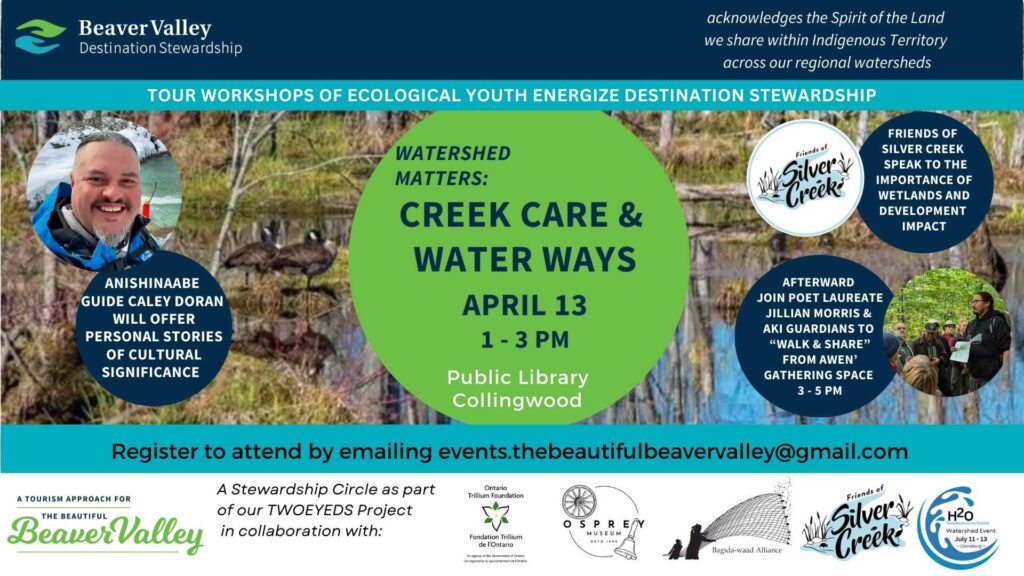
Caring for our creeks, streams, rivers and wetlands often seems secondary to the push to develop and build along these precious resources essential to life. Like beavers, we build up our community around water – but where the beaver may develop a new ecosystem to support natural growth, human development risks negative impacts and ecological harm.
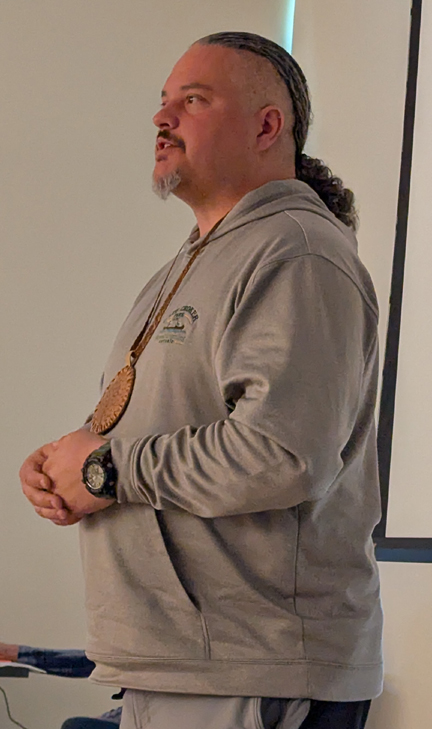
Caley Doran is an Anishinaabe Interpretive Guide, who presented his personal perspective on the ways of water, drawing from his experience leading interpretive programs for Cape Croker Park Anishinaabe Cultural Experiences program at Neyaashiinigmiing, Chippewas of Nawash Unceded First Nation, Indian Reserve #27.
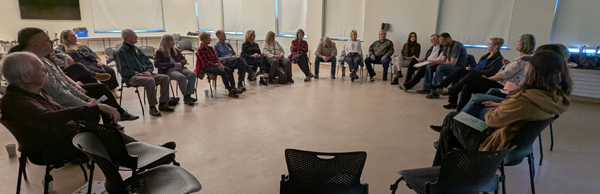
Sharon Carr of Friends of Silver Creek provided an overview of the challenges related to development on Silver Creek and its wetlands, outlining their efforts over the last two decades to bring the community together to protect this vital watershed.
Six “Walk & Shares” on community trails
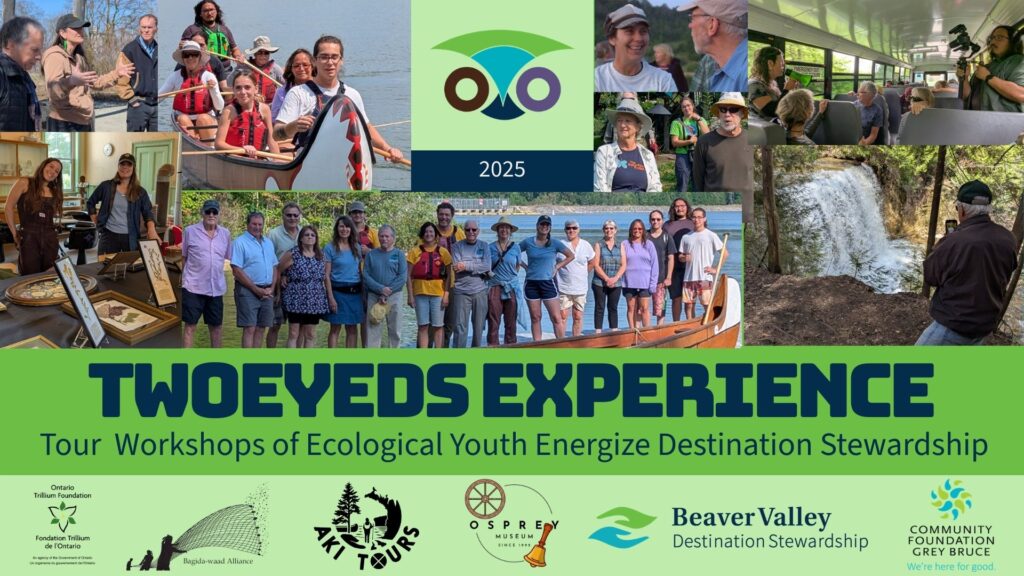
Beaver Valley Destination Stewardship worked in collaboration with Bagida’waad Alliance and the Osprey Museum on a series of “Walk and Share” events through the summer of 2025, funded by the Ontario Trillium Foundation, with support funding from the Community Foundation Grey Bruce. The project, called TWOEYEDS, was a series where Tour Workshops of Ecological Youth Energize Destination Stewardship. The community was invited to participate in these experiences, as together we endeavored to see the whole picture with responsibility, reciprocity, respect, and relevance.
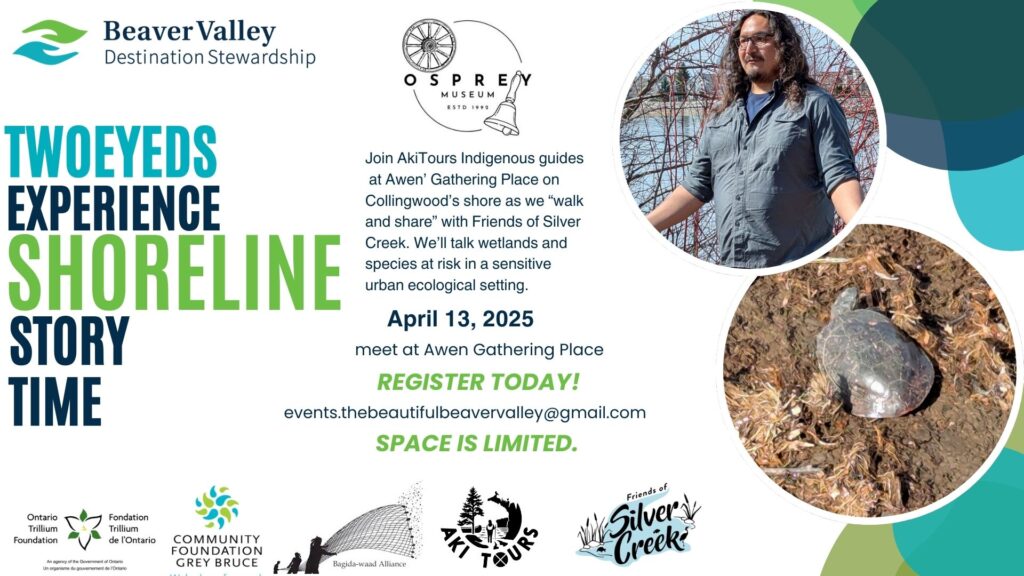
Water is life, wetlands are sacred, and shorelines are gathering places for animals and people to share. Neighbours within a watershed community of care reflect this to each other and work together to sustain their mutual home. By coming together to discuss the importance of water, we can share insights, build strong relationships, and seek best practices to benefit our watershed community.
Jillian Morris, Poet Laureate of Collingwood is an Indigenous writer exploring her culture in words and essays. Her poem “A Tribute to our Stolen Spirits” is installed at the Awen Gathering Circle. As her term as laureate ends in 2025, further installations will take place along the rail trail, so that she can continue to share her visions with the public.
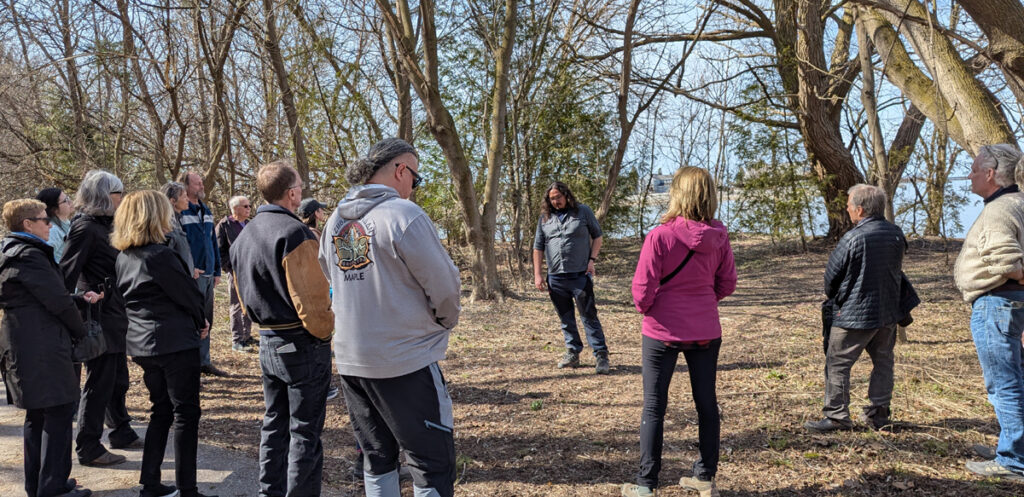
Christopher Akiwenzie of Bagida’waad Alliance is the lead guide for the Indigenous youth Aki Guardians program. Based at Neyaashiinigmiing, the Aki Guardians travel the traditional territories of the Saugeen Ojibway Nation offering interpretive hikes, species at risk surveys, ground truthing and stewardship planning services, while helping to foster a deep respect for the land and water.
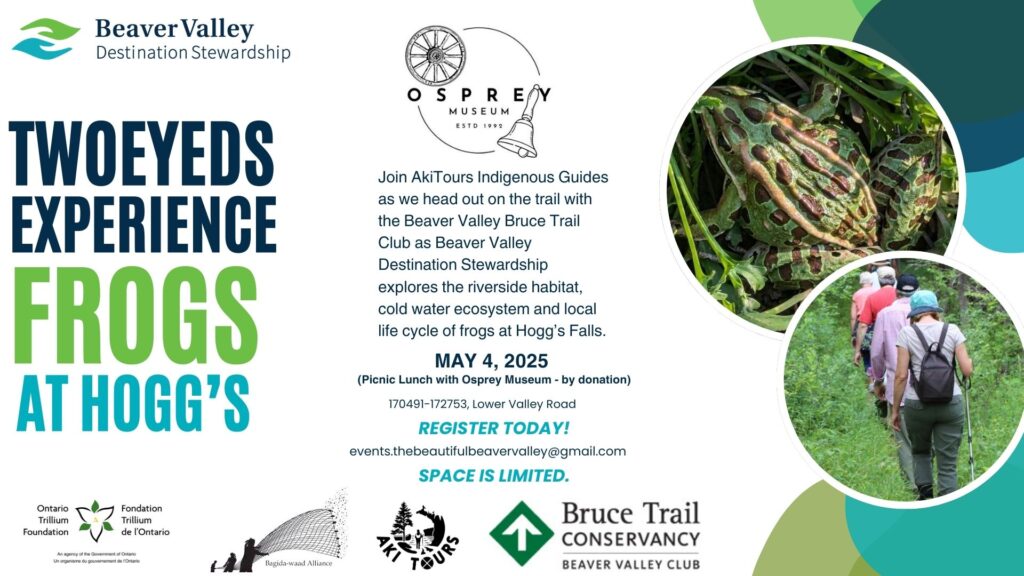
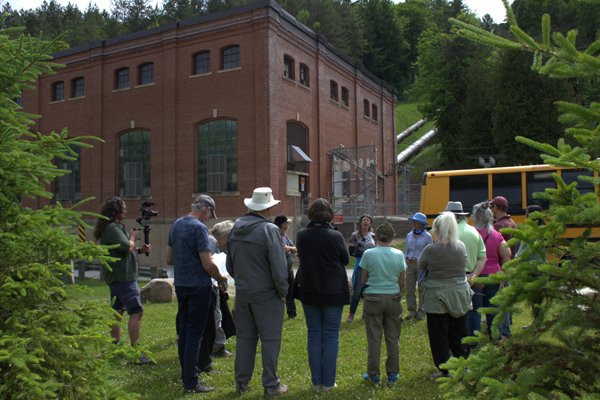
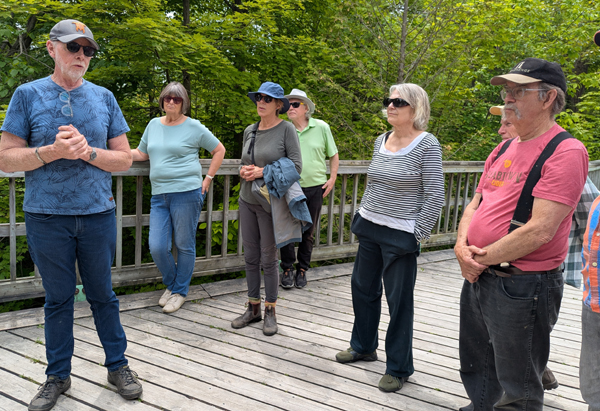
We joined the Beaver Valley Bruce Trail Club and our Indigenous Guides to “walk and share” along the boardwalks of the lower Boyne River, at a place before it joins the Beaver River, getting a little closer to the sounds of spring and looking for frogs at Hogg’s. Water is everything to these amphibians, as their permeable skin is like a lung, which needs to stay cool, moist and clean at all times, and the broad shoulders of the Boyne near Hogg’s Falls are perfectly suited with their cool damp cedar forests, vernal pools, and wet riparian areas.
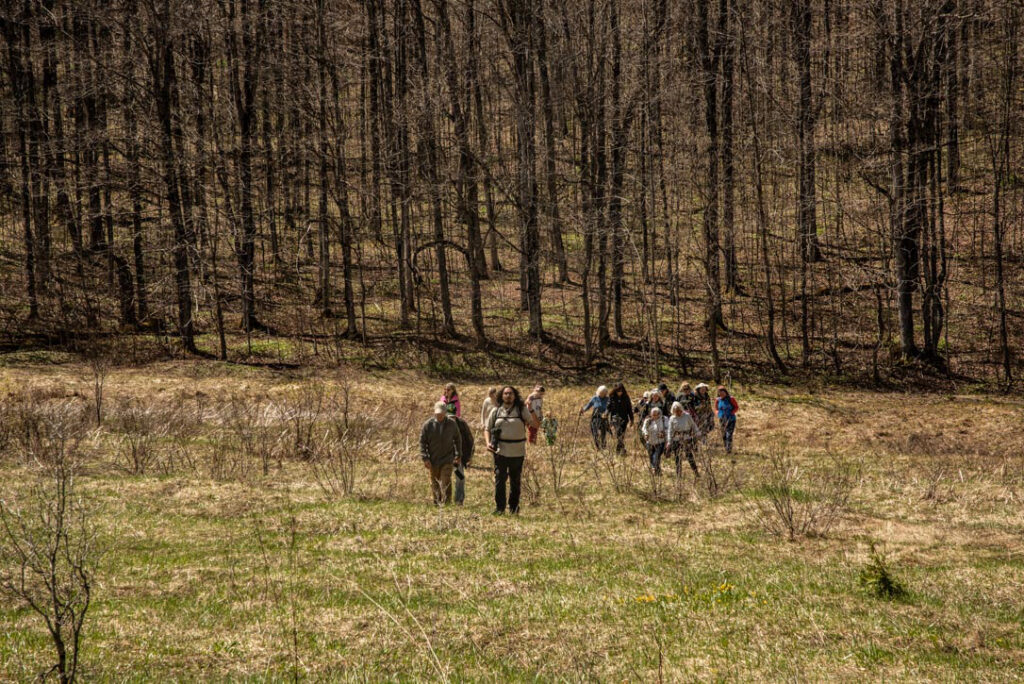
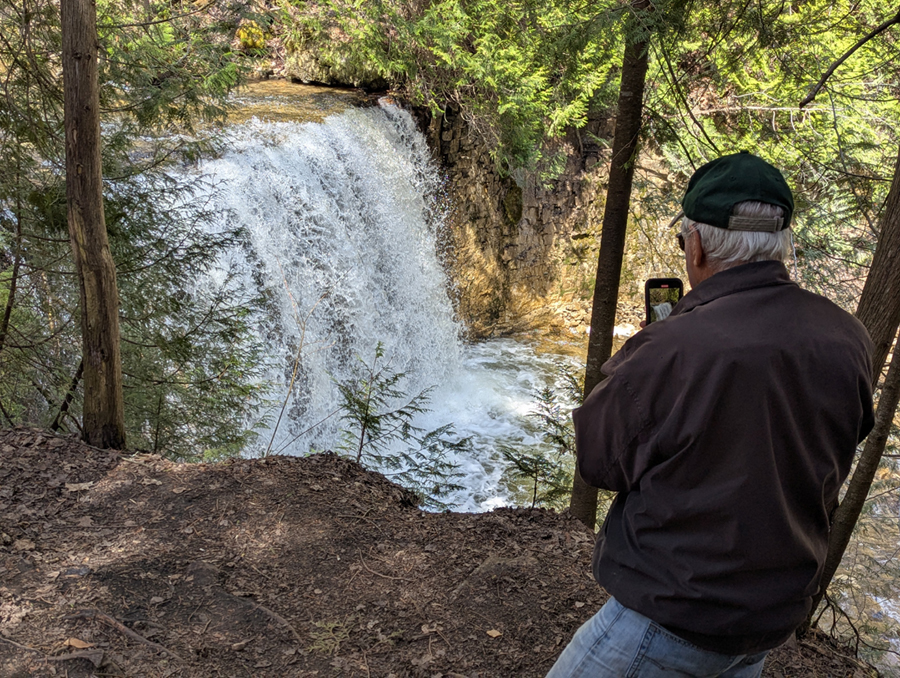
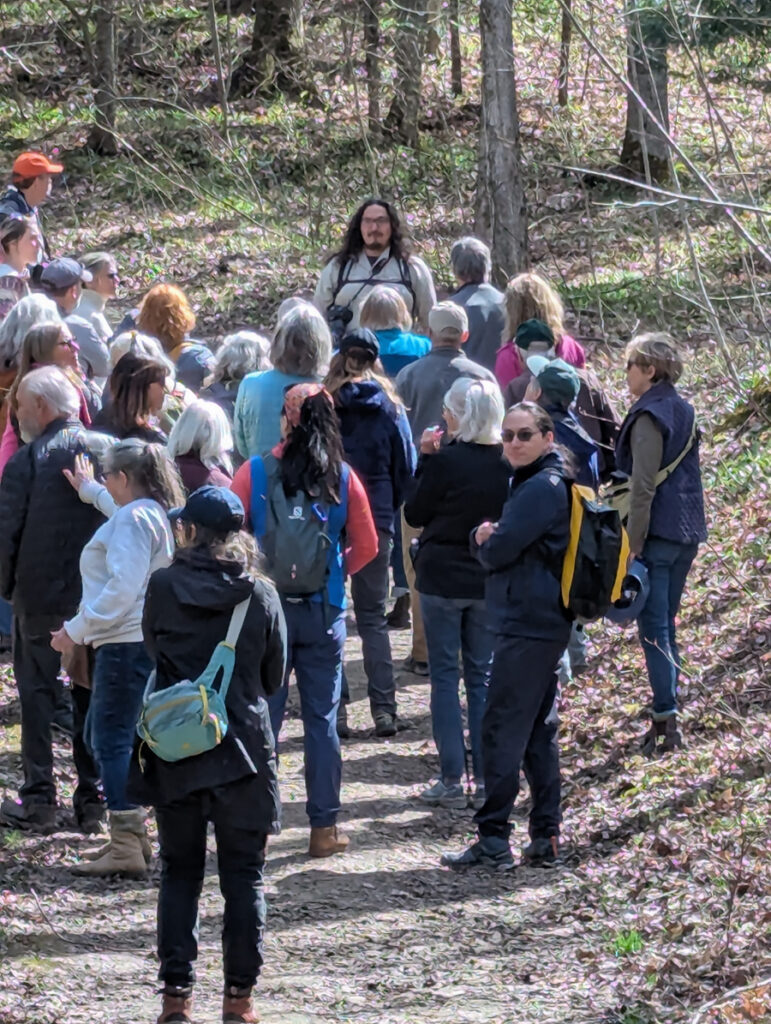
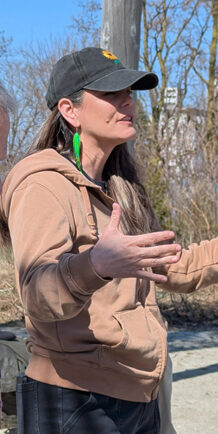
To lead the hike, Chris Akiwenzie was joined by Jane Mei, the Communications and Publicity director for the Beaver Valley Bruce Trail Club. Her love of the trail extends not only from her family’s personal enjoyment of it, but also from an awareness of how impactful and meaningful grassroots conservation efforts such as the Bruce Trail can be. She loves that the Bruce Trail can be a first foray for many into learning how to enjoy, protect and steward our natural spaces.
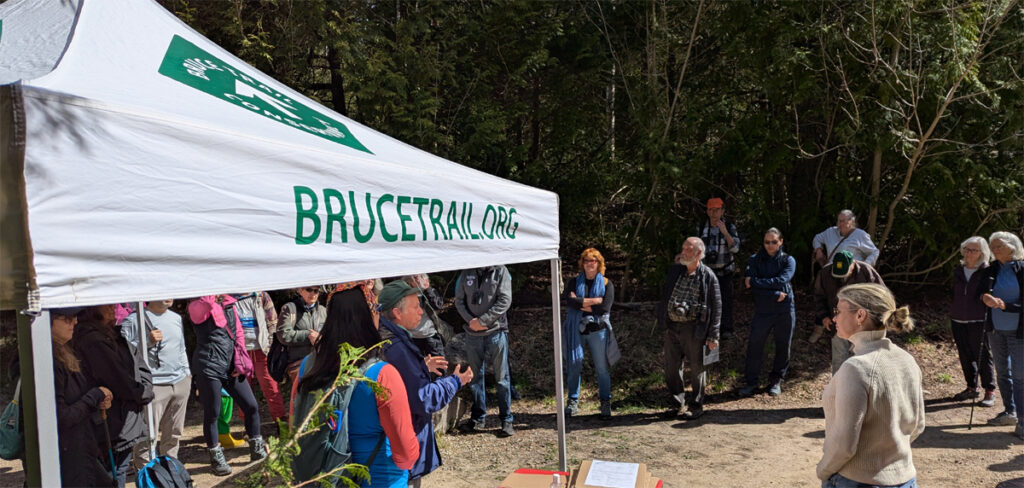
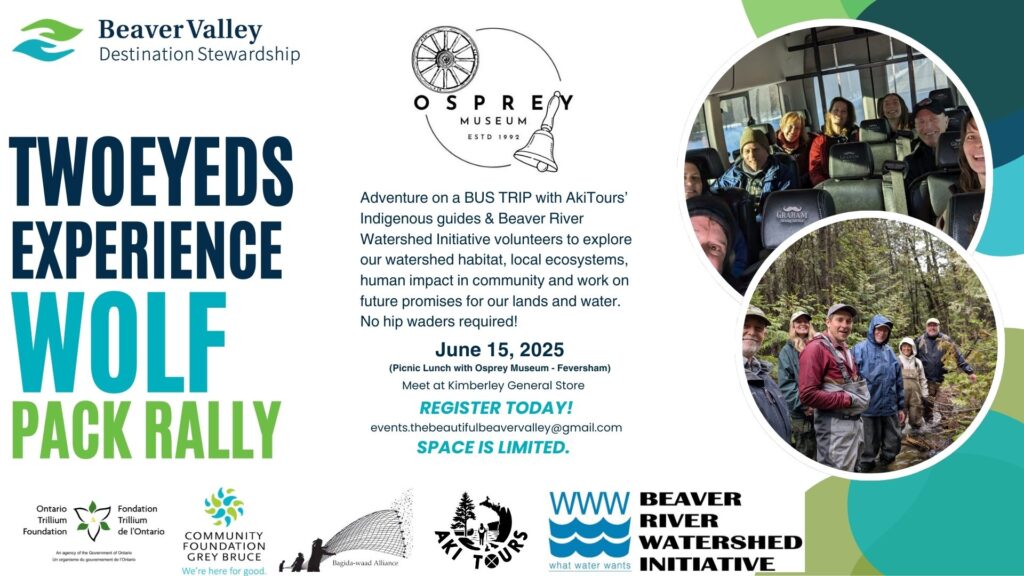
This road tour took us around the beautiful Beaver River watershed to explore the waterscape from the fringes of the headwaters, through springs, swamps, and waterfalls to the river’s mouth at Georgian Bay.
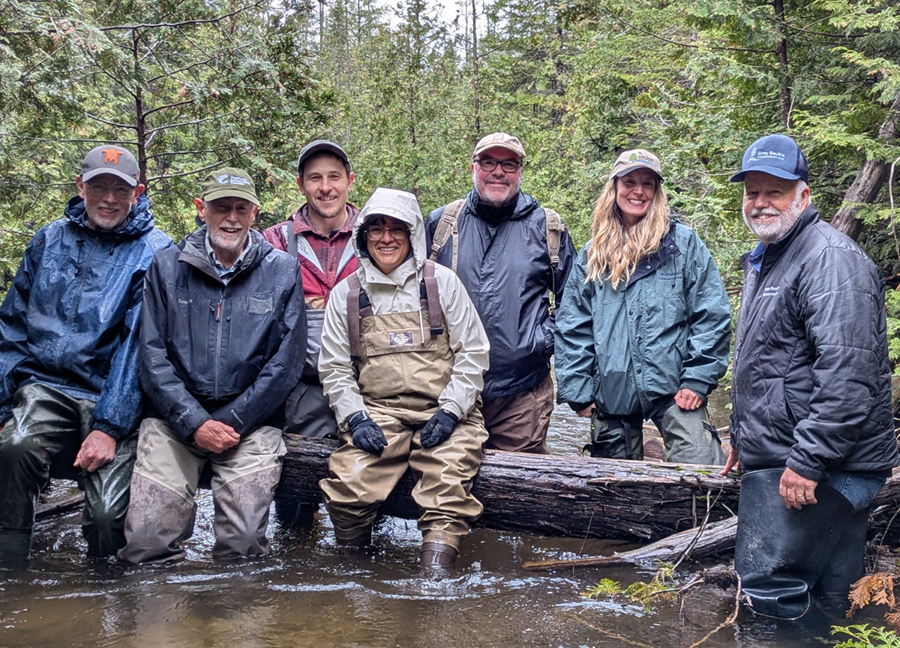
Christopher Akiwenzie was joined by Andy McKee, volunteer chair of Beaver River Watershed Initiative, a retired fish and wildlife biologist who worked for the Ontario Ministry of Natural Resources for 35 years. In his time with the province, Andy was involved in fish culture, white-tail deer and wild turkey management, fishway operations, stream rehabilitation and wetland protection programs. His last four years, he was the Lake Huron COA (Canada-Ontario Agreement) Coordinator at the Upper Great Lakes Management Unit in Owen Sound. Now chairing the BRWI, he takes a waders-in-the-river approach to rehabilitating local streams and rivers within the watershed.
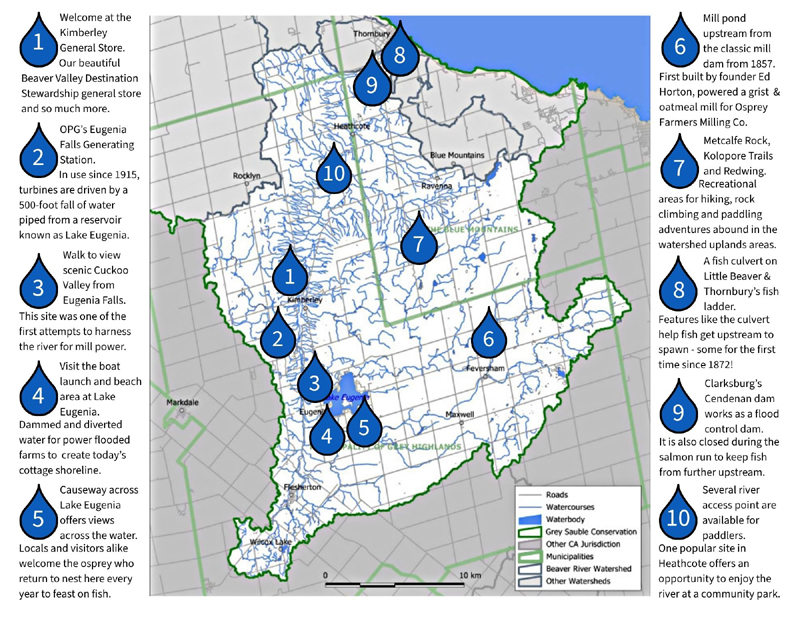
Human connection to water in this area goes back tens of thousands of years. Hunting, trapping, fishing and foraging along these ways of water sustained long ages of Indigenous habitation. More recently, homesteaders used the river to build grist mills and hydroelectric generators, powering local industry.
But truly outstanding is the biodiversity that has flourished in the interconnected natural corridors along the waterways, allowing us to bring tourism to our current economy.
While our clean cold waterways have physically sustained life, the ever-increasing patterns of settlement and visitation require us to consider the balance between what we need and what water wants. What is our responsibility in caring for our home? How can we lighten our footprint, and leave space for other species?
A scientific worldview brings us the concepts of carrying capacity and ecological restoration; an Indigenous worldview invites us to see fellow creatures as kin. When we thoughtfully hold space for both world views at the same time, we develop a profound tool for fostering the level of care and love for our watershed home that promises a better future for us all.
The bus tour highlighted some of the incredible work that has been done in our watershed over the past decades and provided an opportunity to consider our own role in the future safeguarding of our land and water.
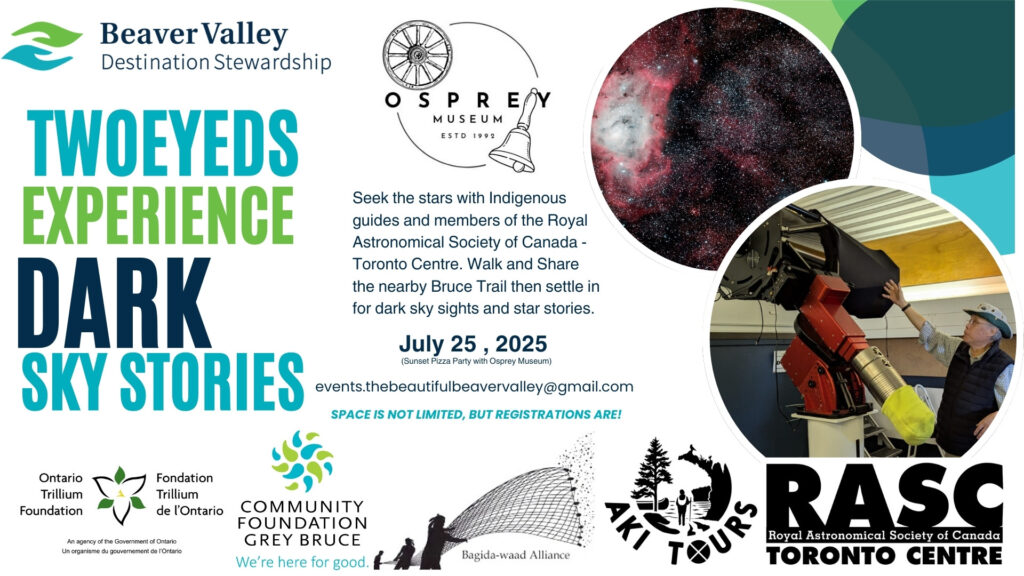
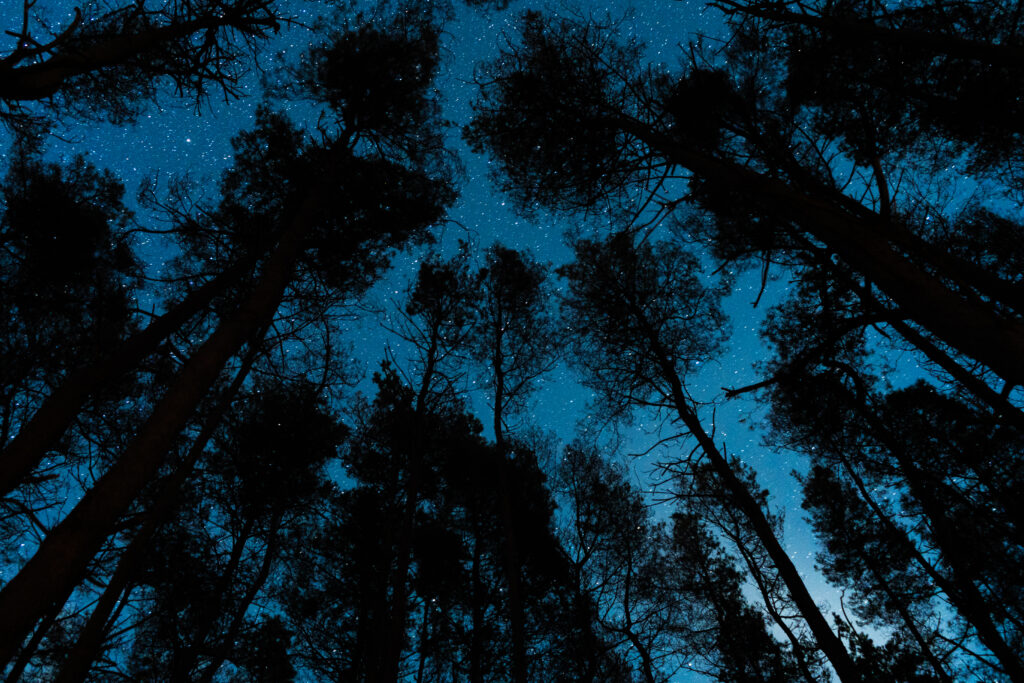
Seeing the whole picture takes on a different and literal meaning when you can see part of the whole picture through the lens of a telescope! The Royal Astronomical Society of Canada -Toronto Centre invited the community to their volunteer-run E.C.Carr Observatory in the beautifully dark Loree forest area of our watershed to expand our sense of awe.
Once night sets, the Milky Way comes to life and bids us to seek the stars across the entire sky. We observed constellations such as Lyra, Cygnus, Aquila, Cassiopeia, Sagittarius, and Scorpius, as well as the Andromeda Galaxy. The Perseids meteor shower was ongoing during our time out in the darkness, and we peered through the telescope to see star clusters, nebulae and galaxies. Star-gazing has always inspired story-telling as humans grapple with our curiosities about the universe.
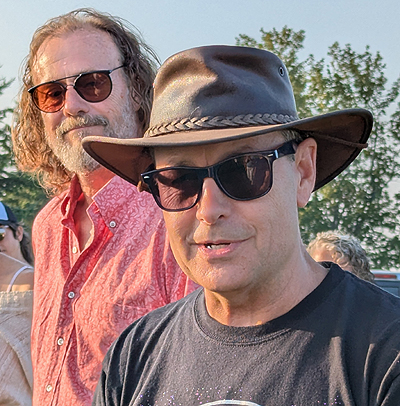
Christopher Akiwenzie joined renowned local astronomers for this special evening of sharing stories that originate from deep cultural world-views. Chris Vaughan, aka “AstroGeoGuy”, is an award-winning astronomer and Earth scientist with Astrogeo.ca. Based in Collingwood since 2023, he He collects star lore from around the world to inform star parties and solar astronomy sessions and often delivers presentations about astronomy and Earth and planetary science in his Digital Starlab portable planetarium. His weekly Astronomy Skylights blog is enjoyed by readers worldwide. His book “110 Things to See with a Telescope” was released in 2021. Chris shared stories and had his planetarium standing by in case it rained.
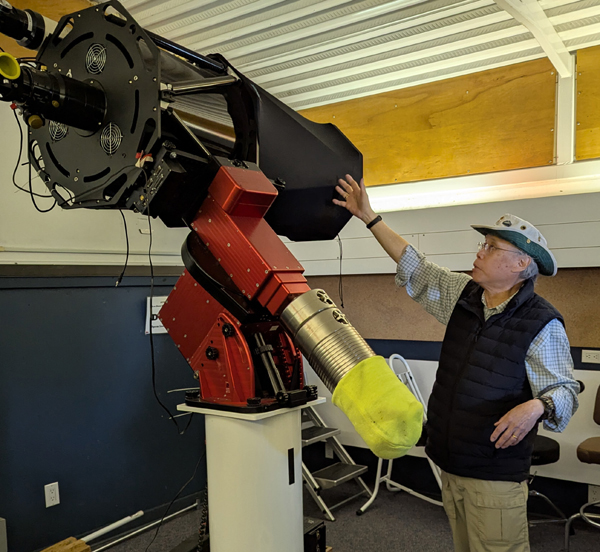
Ralph Chou is the world’s leading expert on safely viewing solar eclipses and has been a leading member of the Royal Astronomical Society of Canada, Toronto Centre for over 50 years. His contributions to solar eclipse eye safety were recognized in 2022 by the International Astronomical Union with the naming of asteroid 10491 Chou. (Learn more about safely viewing eclipses.) For our Dark Skies event, Ralph helped us look at deep space through the largest telescope at the E.C. Carr Observatory.
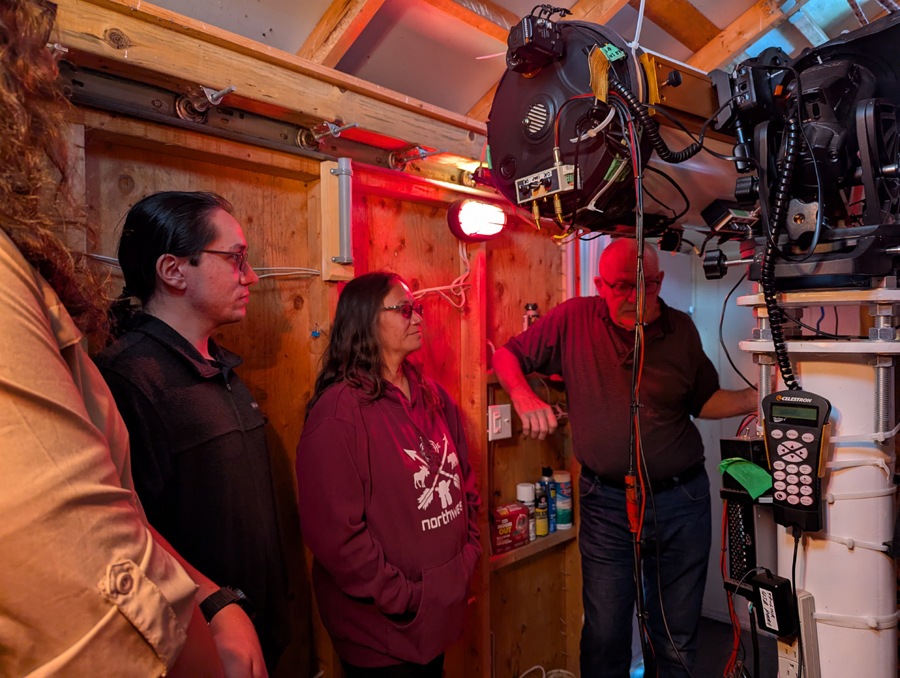
David Brodie is an avid astrophotographer who captures images of celestial objects from his private backyard on the west side and the E.C. Carr Observatory on the east side of Beaver Valley. You can see some of his astrophotography here. David showed us his photos and photography equipment.
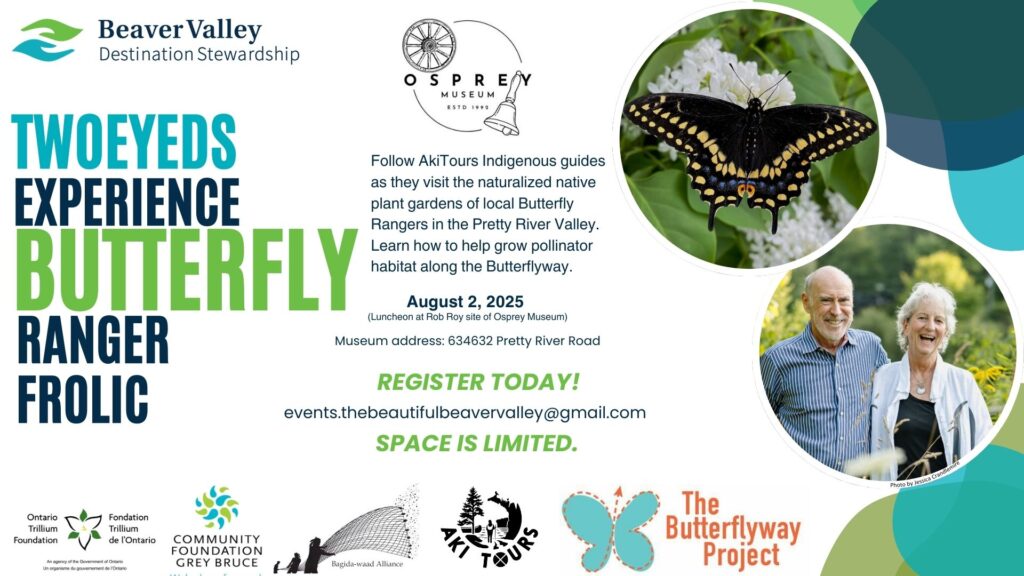
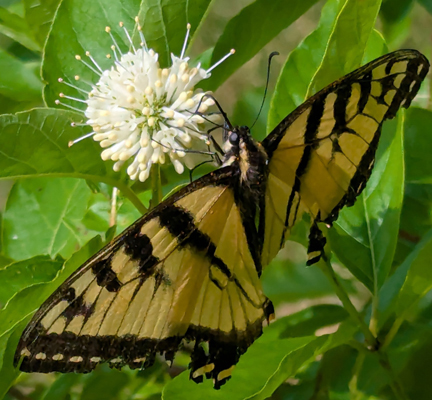
As we headed into the heat of summer, the flowers that our watershed pollinators helped fertilize earlier in the season were now bearing fruit. Butterflies represent transformation and beauty, and remind us of our role in caring for the natural spaces they depend on.
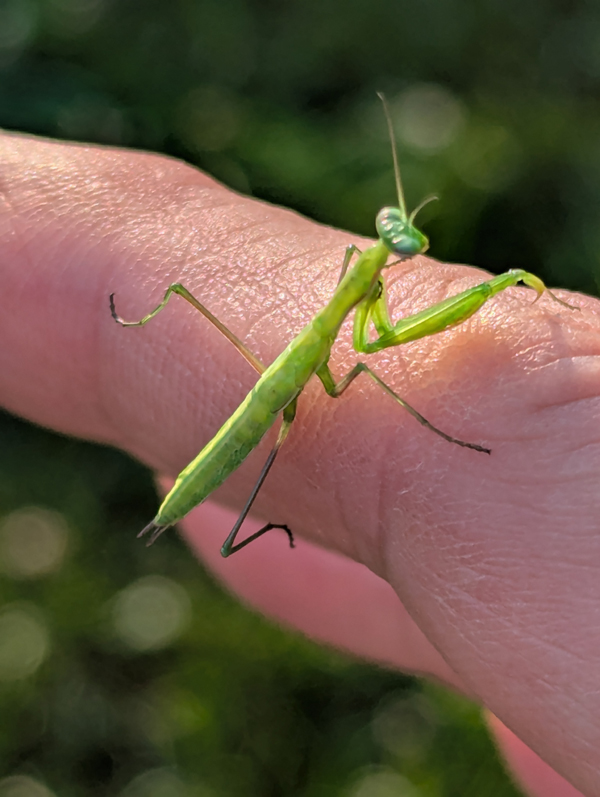
The community joined us for a morning tour of a naturally-planted native plant garden on private property, which has become a vital part of the Butterflyway Project’s cross-Canada habitat-supporting efforts. We met Butterfly Rangers and local Pollinate Collingwood volunteers as they talked about all things habitat and pollinator support. We learned what plants are best for local gardens to bring in butterflies, birds and beneficial insects.
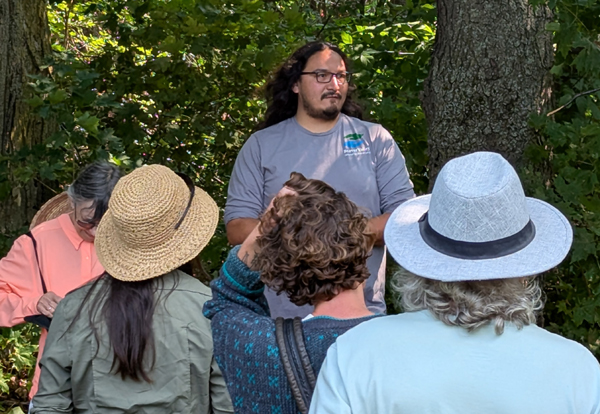
Our Indigenous guides spoke of the native plants on hand and offered insights into butterfly and pollinator species and their local ecosystems.
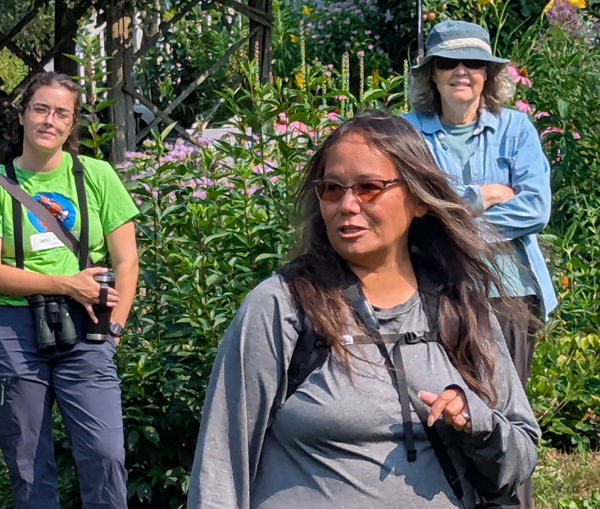
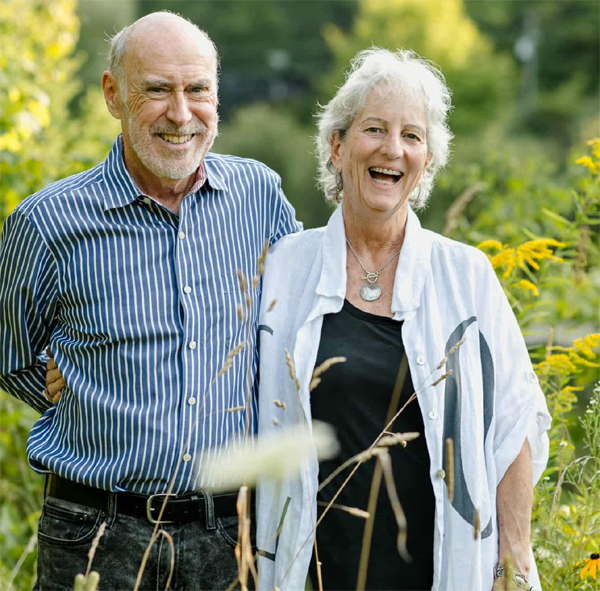
Suzanne Jarvis is a Butterfly Ranger and local supporter of the David Suzuki Foundation’s Butterflyway Project. Suzanne and her husband Dr. Charles Murphy have spent years gardening their four-acre plot of land on Reid’s Hill. More recently, they have begun to focus on native plantings to attract butterflies and pollinators to their land. Keen observers of nature and the creatures they share the land with, they are also bird lovers who enjoy providing habitat on their property.
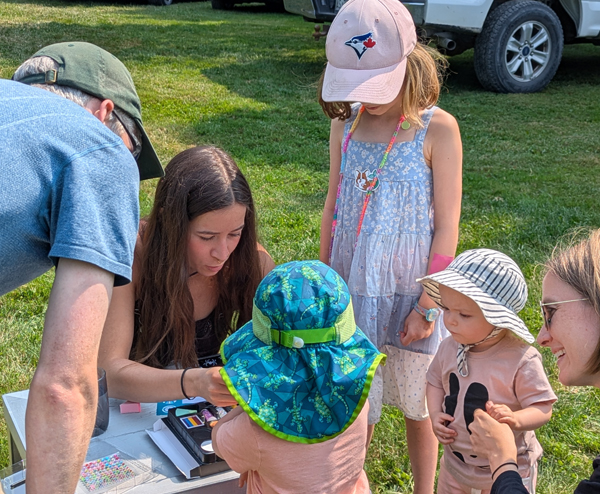
Jade Michael Ryann is a local artist who creates beautifully designed mandalas made from natural flowers and things including the wings of ethically-sourced butterflies. Jade had her artworks on site at the Rob Roy site of the Osprey Museum, where she led children’s scavenger hunt activities painted faces, and helped create colourful pictures from resources supplied by the David Suzuki Butterflyway Project.
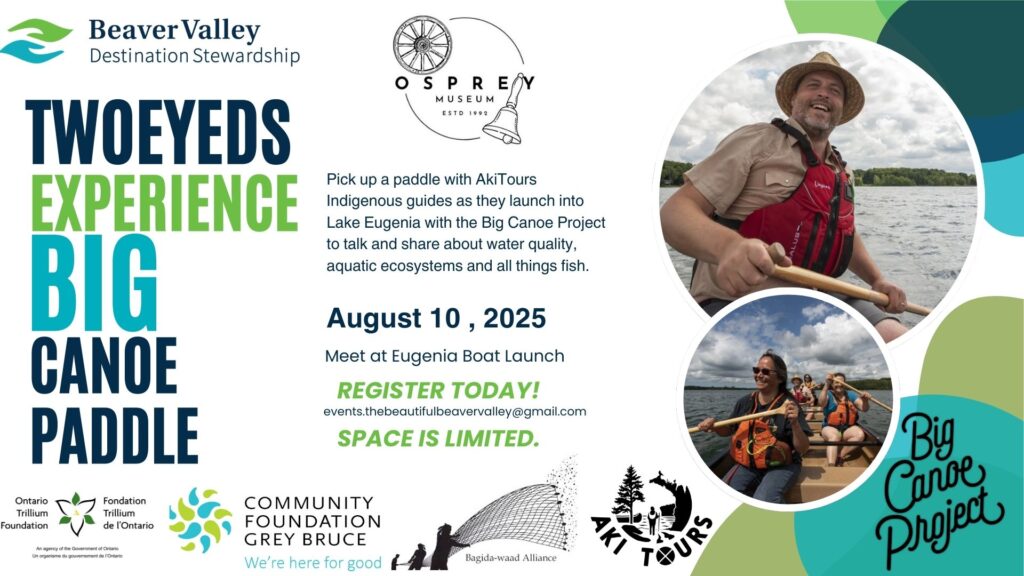
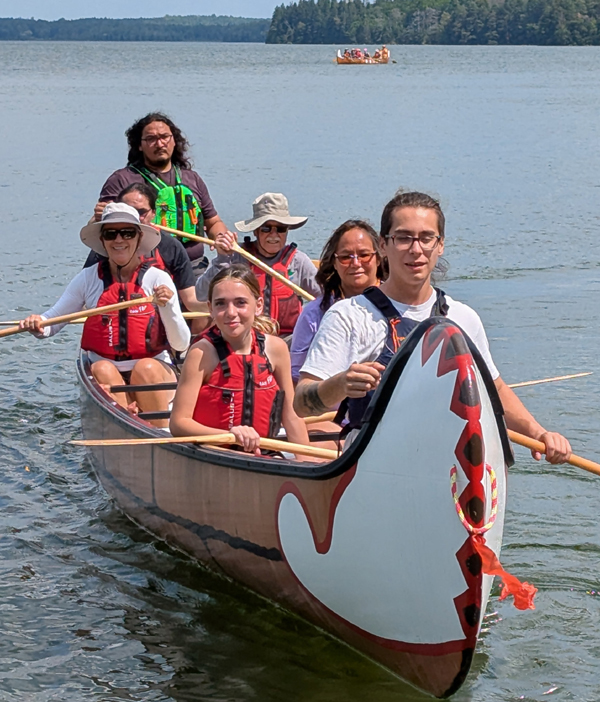
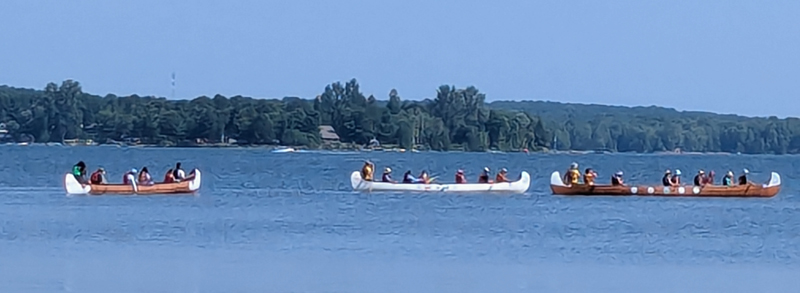
The community joined join Aki Tours and the Big Canoe Project in three “clipper” canoes to paddle out into Ontario Power Generation’s Beaver River reservoir, lovingly known as Lake Eugenia. We talked about fish, ecosystems, habitat, and water quality. We also considered the history of the lake’s formation, how it is affected by the upstream river quality and how flooding sometimes causes downstream challenges.
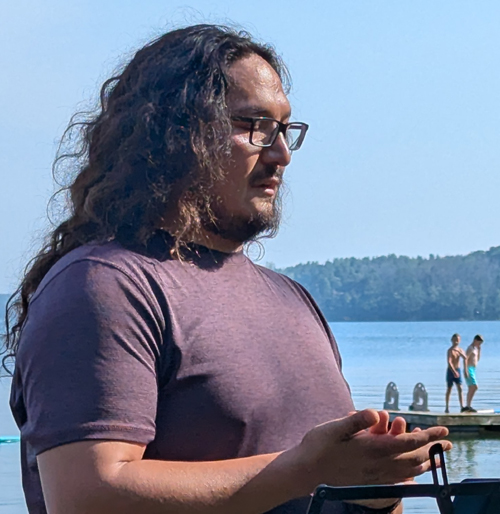
Christopher Akiwenzie was joined by Ethan Young, another Aki Guardian and Indigenous Guide with expertise in species at risk identification and monitoring and ecological land classification. He is certified through BEAHR training, which combines Indigenous knowledge and scientific methods. A true two-eyed practitioner, Ethan works in environmental consulting and ecological guiding.
Our Indigenous leads from AkiTours offered stories and talked about the cultural importance of water, fish, canoes and more as they brought their unique insights to our watershed.
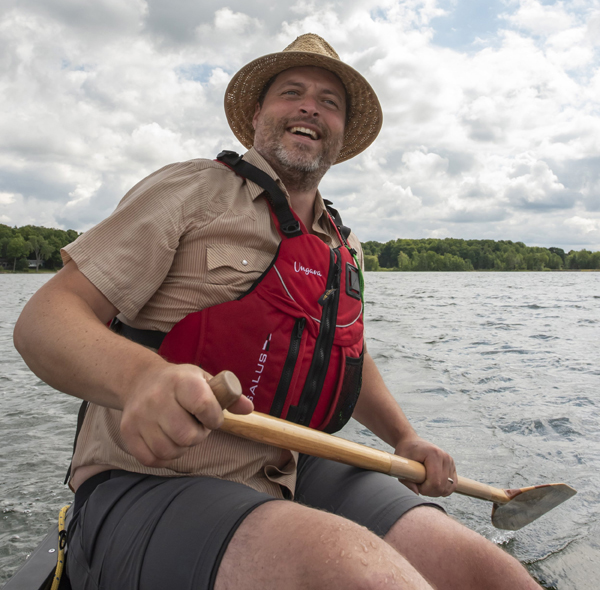
Tom Thwaits grew up in canoes and has worked on the shoreline and in the bush, bilingually, throughout Ontario. He holds voyageur canoe certification with ORCKA, building on his experiences paddling a 29’ canoe from Sault Ste. Marie to Mattawa in 2010 and from Georgian Bay to Rice Lake in 2023. He’s the local rep for ORCKA and for the Canadian Voyageur Brigade Society and has long been a part of the outdoor ed programs at the two local high schools. He’s been living, teaching, paddling and raising a family in Grey County for over 10 years. He took pride in showing us his local lake.
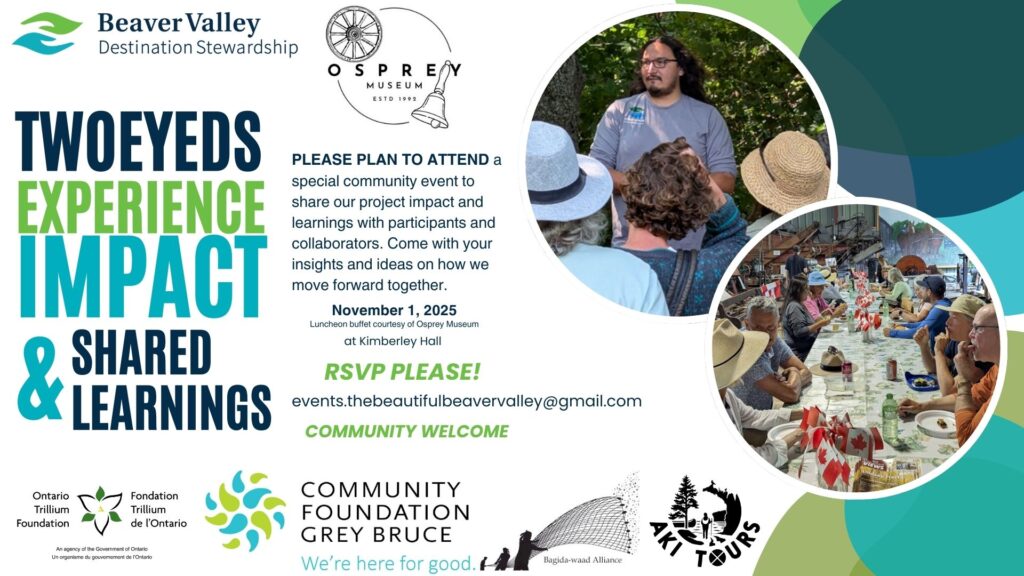
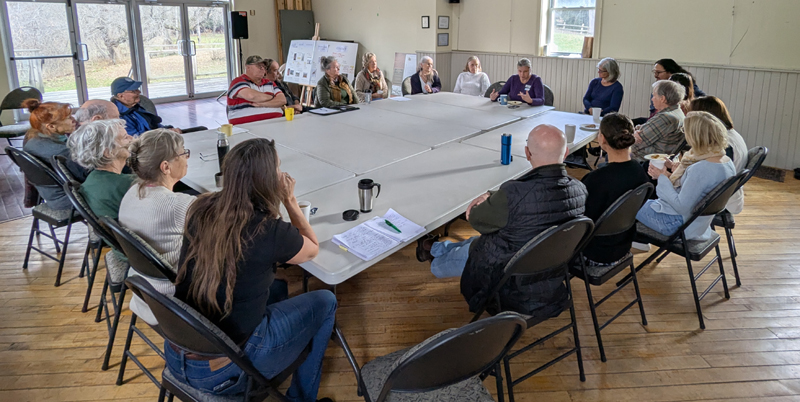
As the season came to a close, we invited community collaborators to join us in reviewing our summer TWOEYEDS experiences. During this Indigenous-informed day of deep listening, open sharing, and community conversation, we offered a presentation on our outreach and engagement for the year, received feedback on how we did, and ask for input on how we carry forward together through a process of sharing learnings, discussing community impact, and co-planning the continuation of our collective work.
Next steps for our community of care
Seek your feedback and input
Converse about community ideas
Continue to deepen relationships
Honour Indigenous voices in Circles
Story map our destination online
Connect together to follow the energy
In memory of Lan Lamon
Cultural creative
Walked on June 18th, 2025
In memory of Jill Badgerow
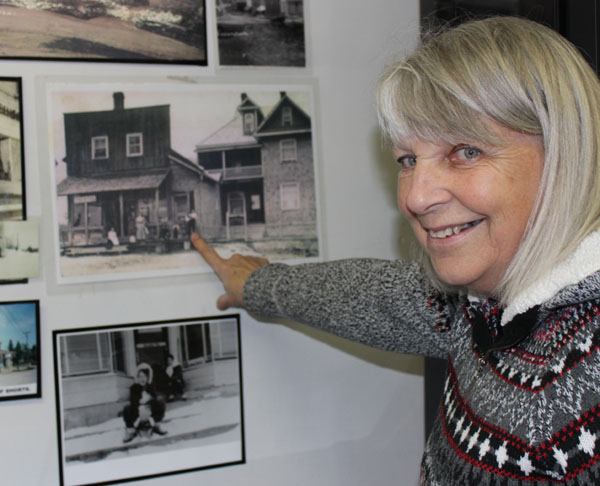
Community historian
May 20th 1949 – August 31st 2025