

Submitted by Stacie Howe
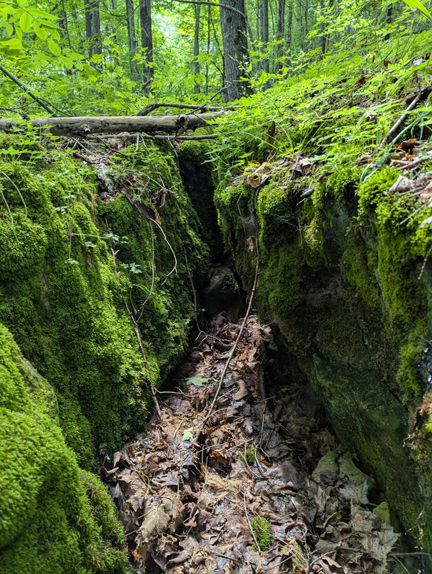
On July 21st we visited the old foundation of an early barn on a short Bruce Trail sidetrail near the Wodehouse Karst Management Area.
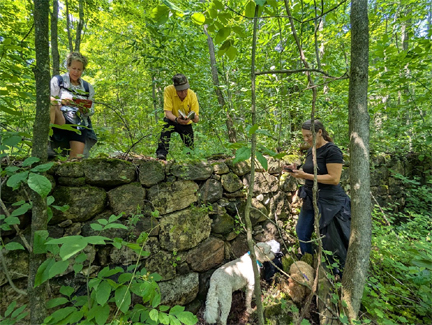
The foundation was built of a mixture of glacial erratics and native limestone and we were eager to see the diverse moss community.
The mosses didn’t dissappoint.
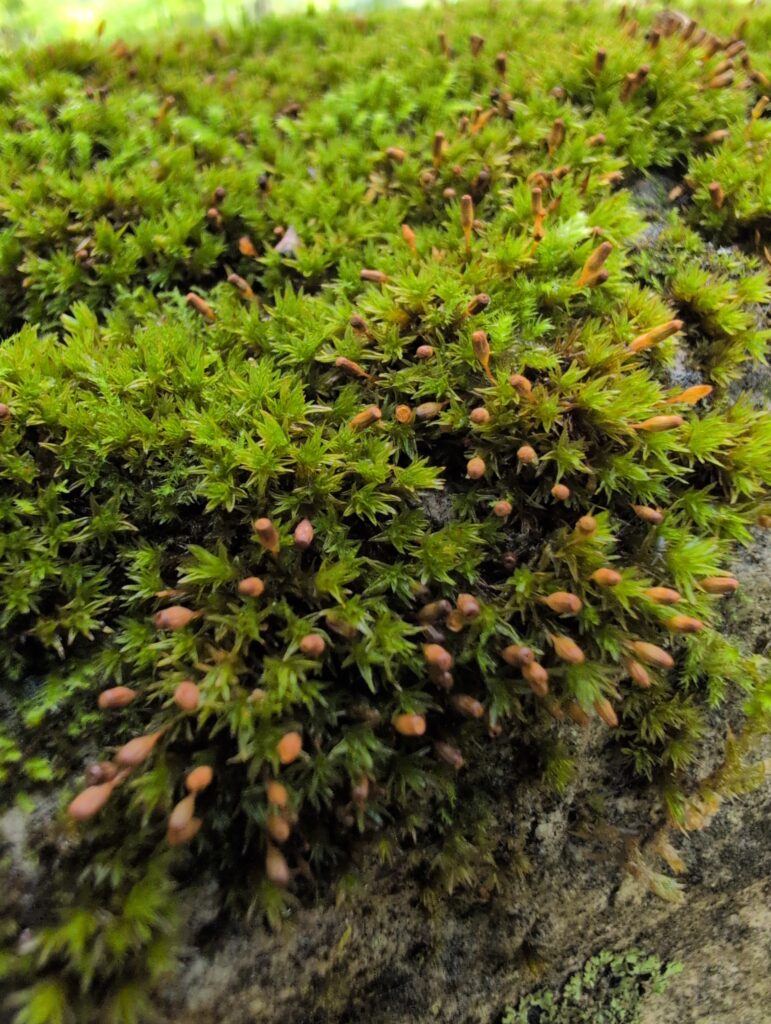
This Orthotrichum anomalum (Ribbed Bristle Moss) has ribbed and hair-capped sporophyte capsules. Mosses are fascinating through a hand lens.
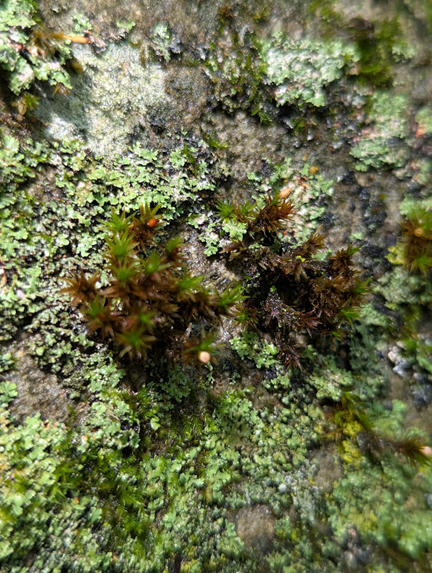
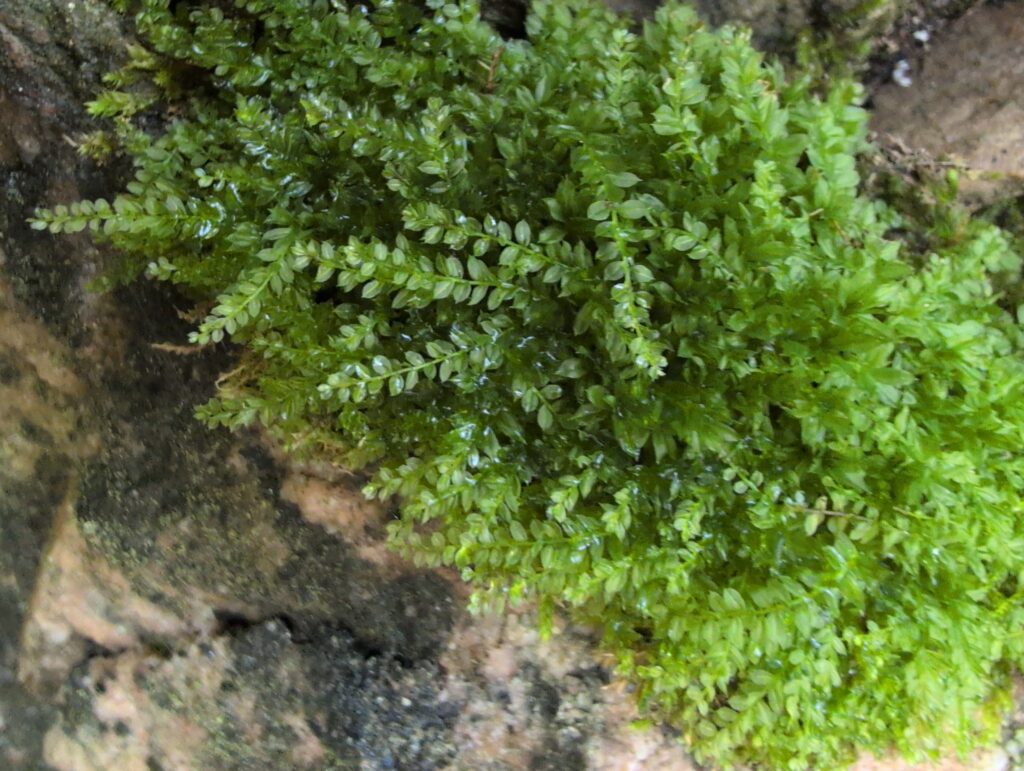
The translucent leaves of the Plagiomnium cuspidatum (Baby Tooth Moss) are one cell thick!
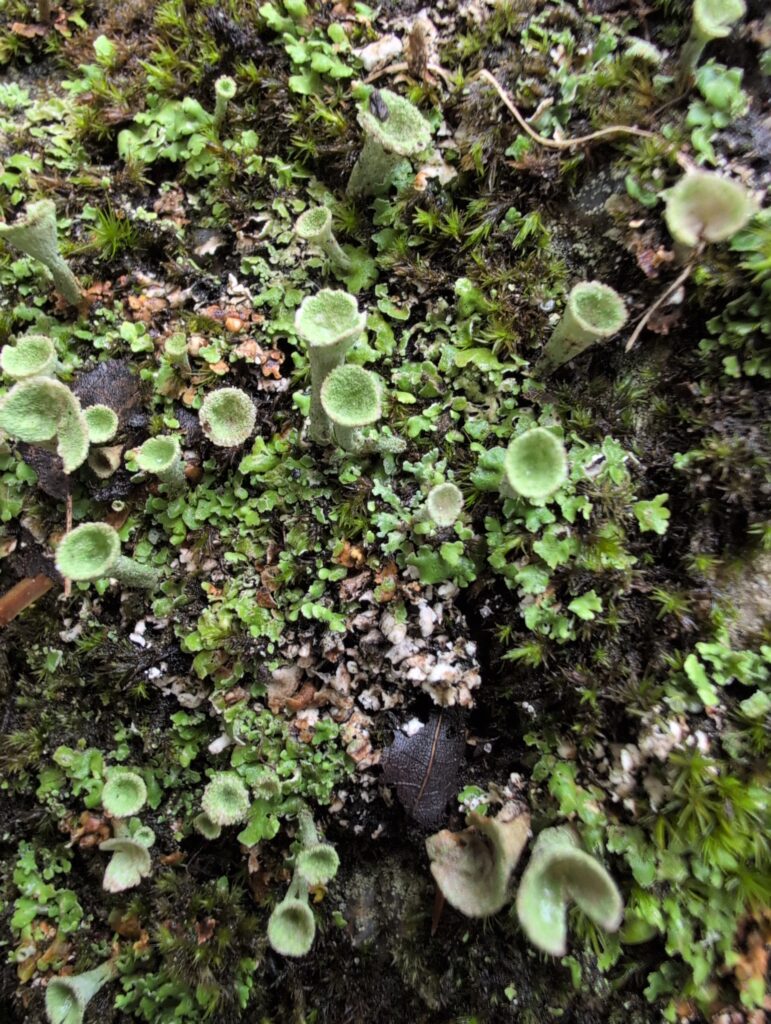
The miniature world in this photo is populated by Cladonia gracilis (Smooth Cup Lichen), a composite organism formed by the symbiotic relationship between a fungus and an algae.
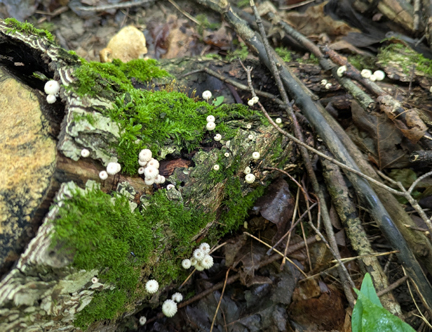
Growing among the mosses, we were mesmerized by the Marasmius rotula (Pinwheel Mushroom), which is a small saprotrophic fungus.
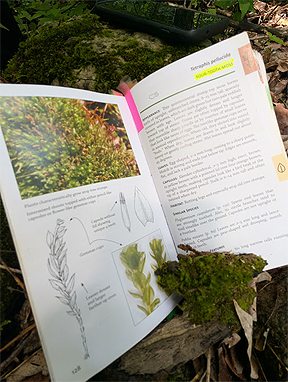
We appreciated Bob’s method of tracking species in the field– a photo of the moss with the book open to its page. Here we have the Tetraphis pellucida (Four-toothed Moss).
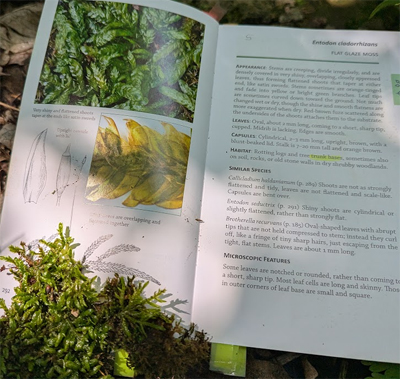
And here is a sample of Entodon cladorrhizans (Flat Glaze Moss). Mosses can handle being spread around a bit, as it helps them propogate. This is very different from picking a fern frond, for example.
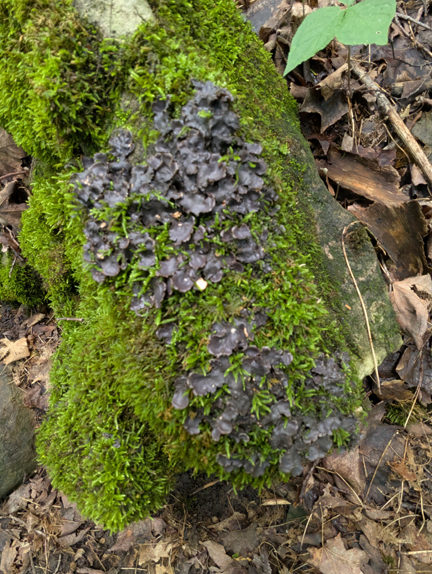
This Pelt Moss, in the Peltigera genus, is not a moss at all, but another lichen. It often grows interspersed with feather mosses.
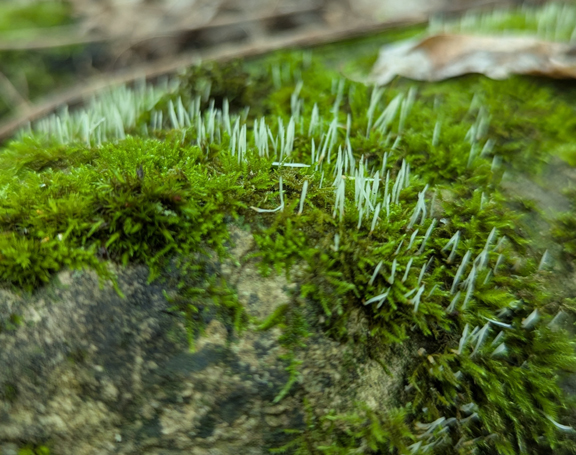
The most exciting find was the Eocronartium muscicola (Moss Rust) which is actually a moss parasite that intercepts the nutrients that the gametophye is passing to the sporophyte, and it sends up small white thread-like fruiting bodies where the sporophye capsule would normally be.
So cool!!
It was so great seeing these tiny worlds living under our feet! It is fascinating to look closer.