

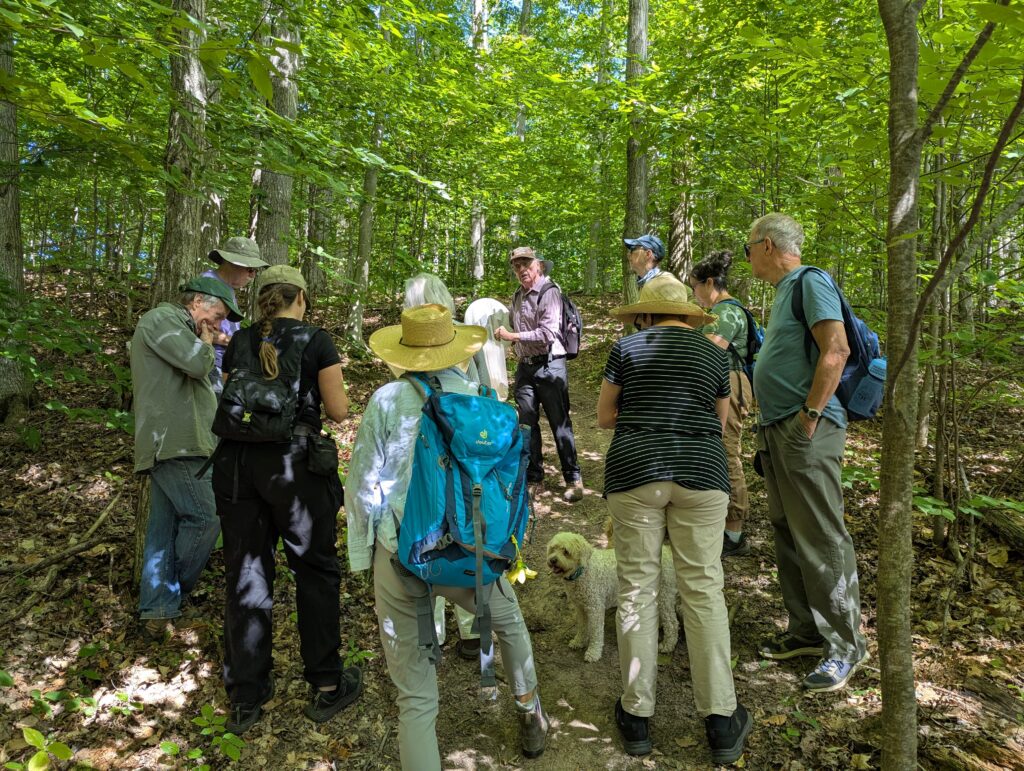
While on one of our mid-August Tuesday Walks with Bob Bowles, renown naturalist, we spent time looking at the two common species of Baneberry growing in abundance along the Bruce Trail on the western slopes of the Valley.
Actaea rubra (Red Baneberry) and Actaea pachypoda (White Baneberry or Doll’s Eyes) are fascinating native North American woodland perennials in the buttercup family (Ranunculaceae).
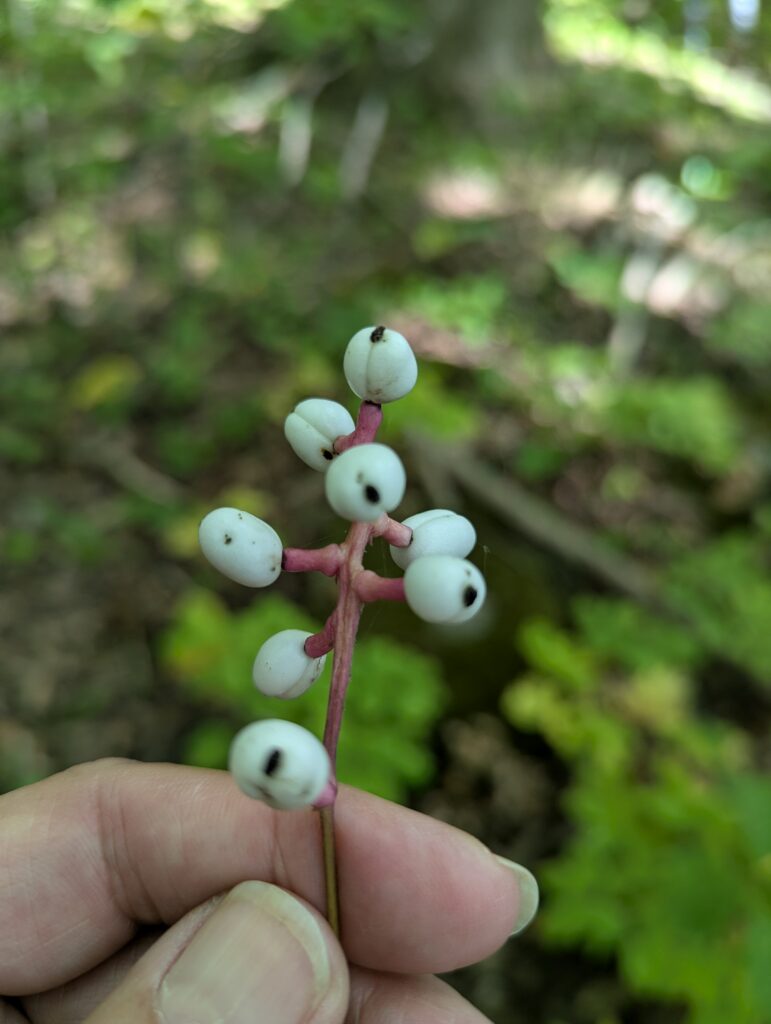
Actaea pachypoda (White Baneberry) is famous for its striking, eerie appearance. The smooth, milky-white berries sit atop thick, fleshy, bright red stems (“pachypoda” means “big feet”). Each berry features a prominent dark purple-to-black stigma dot where the flower was attached before fruiting, making the cluster look remarkably like a collection of porcelain doll eyes.
Actaea rubra (Red Baneberry) typically produces glossy, bright cherry-red berries held on much thinner, delicate, hair-like stalks.
Both these Actaea species contain dangerous cardiogenic toxins (ranunculin and protoanemonin) along with essential oils. Ingesting the berries—even as few as 2 to 6—can cause severe gastrointestinal distress, rapid drops in blood pressure, cardiac arrest, and respiratory paralysis.
While highly toxic to mammals, birds can safely eat the berries and serve as the primary seed dispersers.
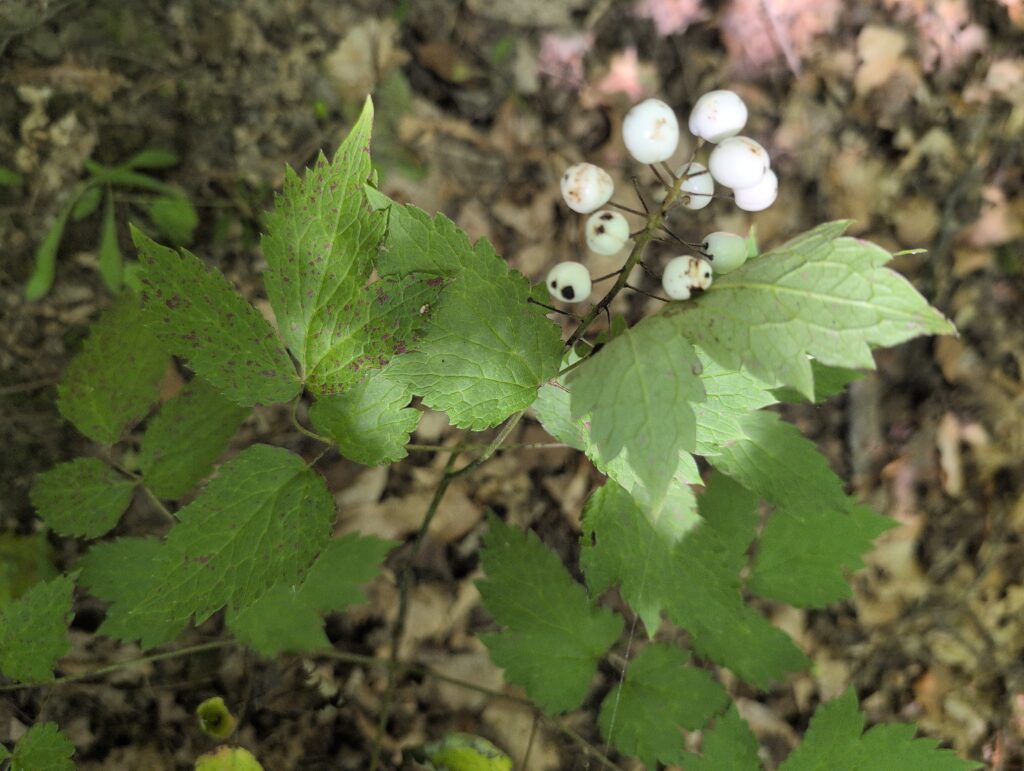
With our eyes freshly noticing the Baneberries around us, one of our group saw a white-berried Actaea that didn’t have the big “feet” (pedecils) that we had just observed on the other plants, and we called Bob back to take a closer look.
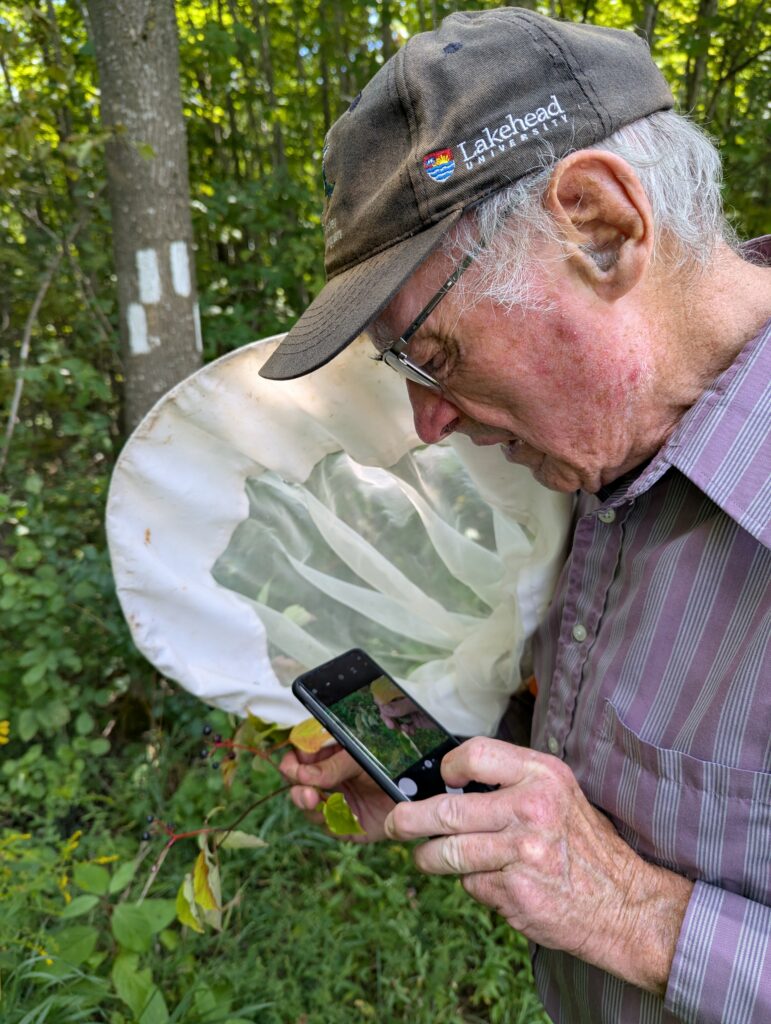
Bob’s first reaction was to suggest that it may be a hybrid of Red Baneberry and White Baneberry since there were so many plants grouning together in close proximity, and where they overlap in range, they can cross to form a rare natural hybrid called Actaea × ludovici (Louis’s Baneberry).
These hybrids exhibit intermediate traits: they often feature moderately thickened stalks and berries that range in color from off-white to pale pink or mottled dull red, sometimes producing partially sterile fruit. The stigma dot (“eye”) in the hybrid is also prominient.
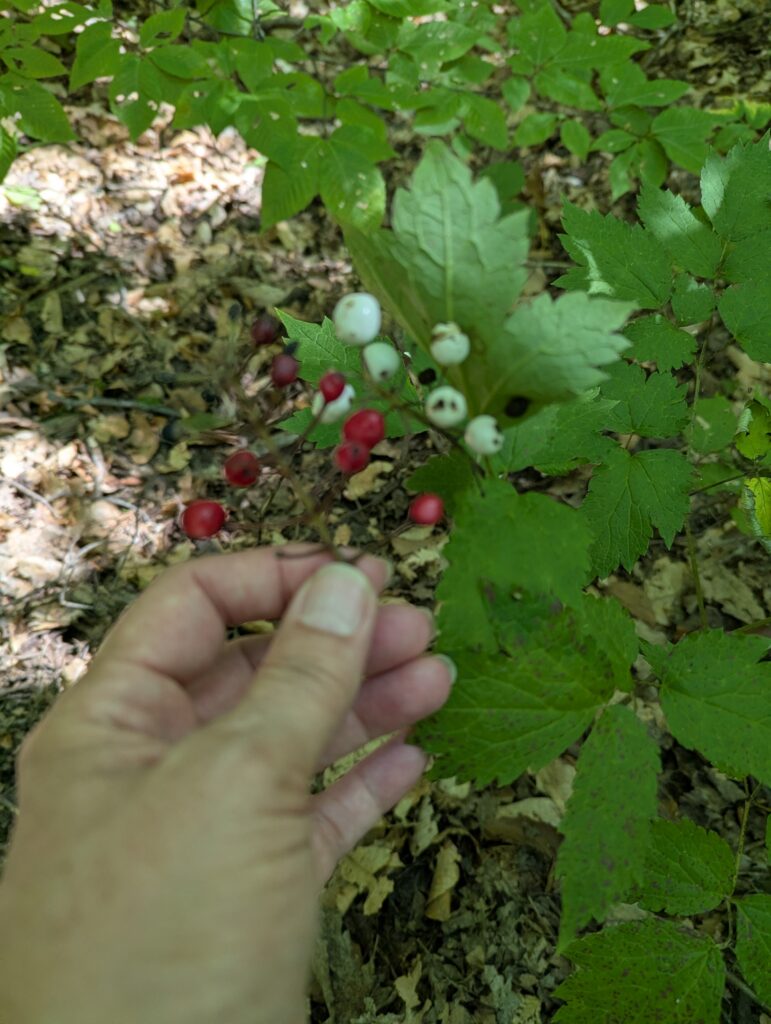
However, when we looked at our specimen in detail, we could see the thin stalks of Red Baneberry, not a thicker pedicel as they would be if White Baneberry genes were present. Also, the berries were pure white and not pink from the mixing of Red Baneberry and White Baneberry genes.
As we dove deeper, we learned that A. rubra has a naturally occurring white-fruited form known as Actaea rubra f. neglecta. Because this rare variety bears white berries, it is frequently mistaken for A. pachypoda. It features the same thin pedicels of the A. rubra, pure white berries, and a less prominent black dot.
We believe our specimen is this white-berried variety of the Red Baneberry instead of the rare hybrid, but let’s keep our eyes open for the hybrid since there are so many plants of both species growing in close proximity.
There are many unique and rare plants to still be found in the beautiful Beaver Valley!