Submitted by Audrey Deyman
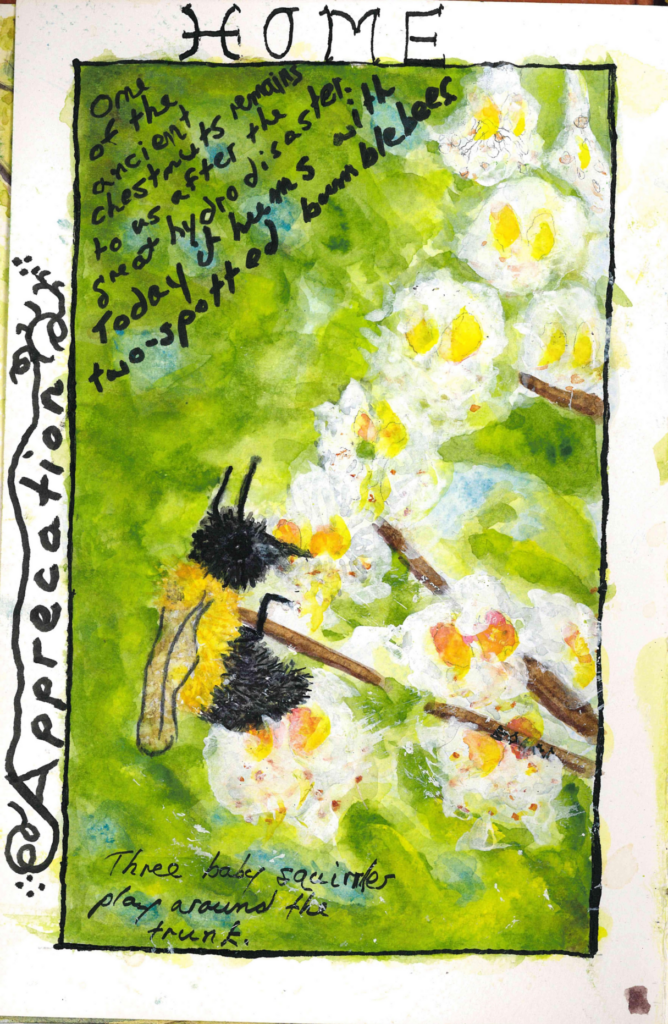
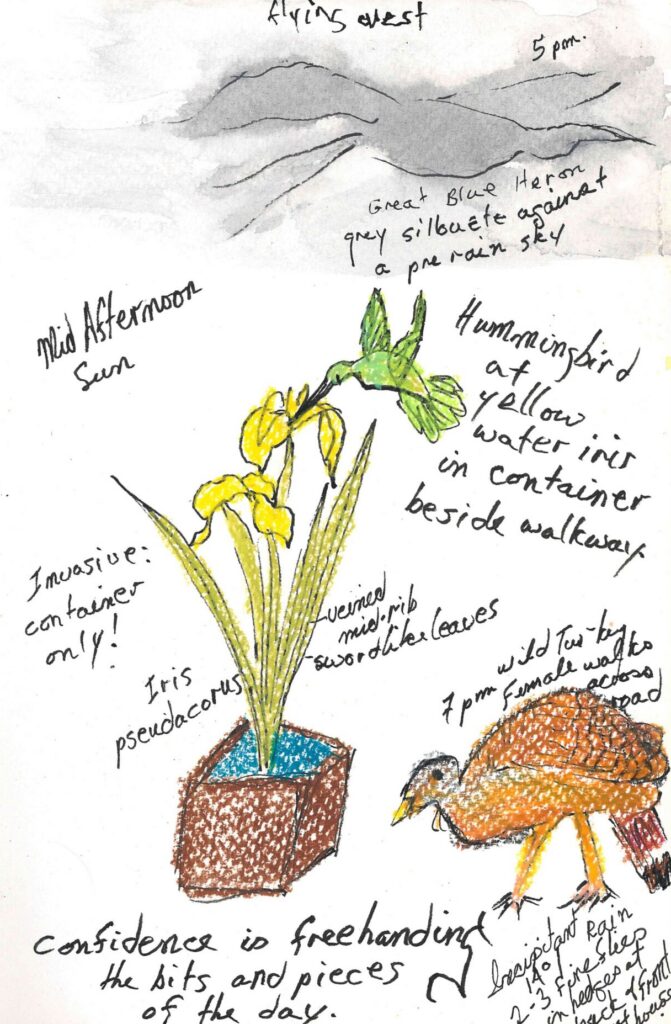
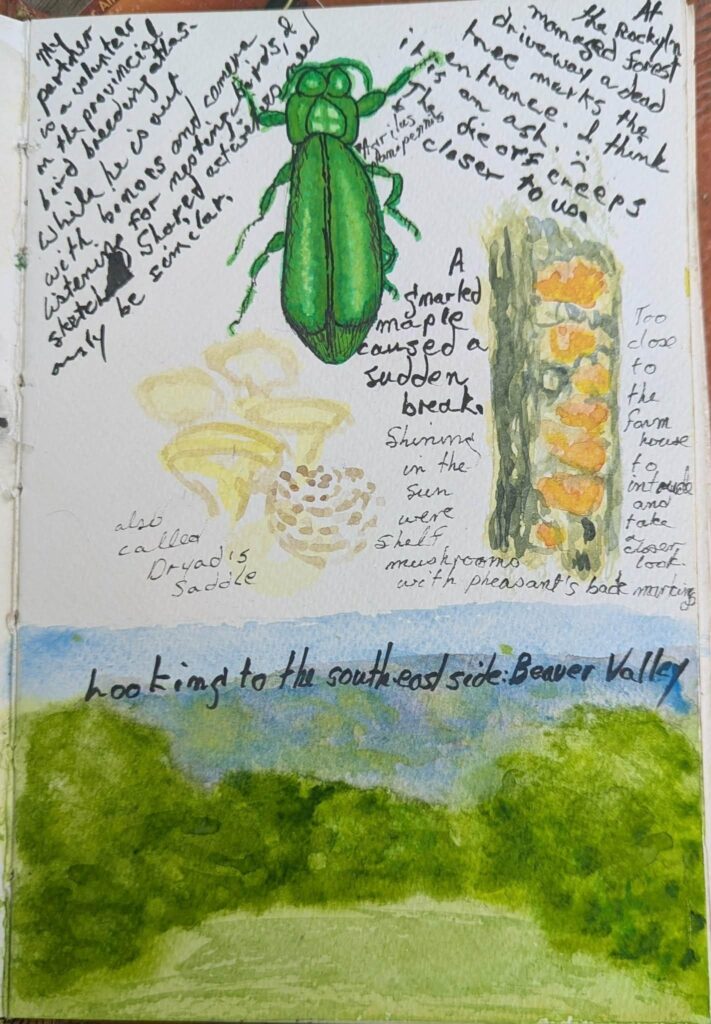
Some people are familiar with nature journaling, others will not have heard of it. At its most basic, nature journaling is the act of recording in text or pictures what one observes that sparks curiosity, appreciation or a desire to understand more about the world around us. Usually this is from something observed outside, but indoors, people record things like the growth of seeds—or leaves forming on partially used up vegetables. The key is engagement, and we live in one of the most engaging places on the planet: the beautiful Beaver Valley.
International Nature Journaling Week began as an event in 2020. Co-founded by Bethan Burton in Brisbrane, Australia and Jules Woodford in Bristol, U.K., the first year attracted participants from 93 countries. Each year is organized around a theme; every day has a focus and those from 2020-2025 can still be found on the website or on the Journaling With Nature YouTube channel. This year’s theme is: COME JOIN US OUTSIDE!
Day 1. Presence
Day 2. Hope
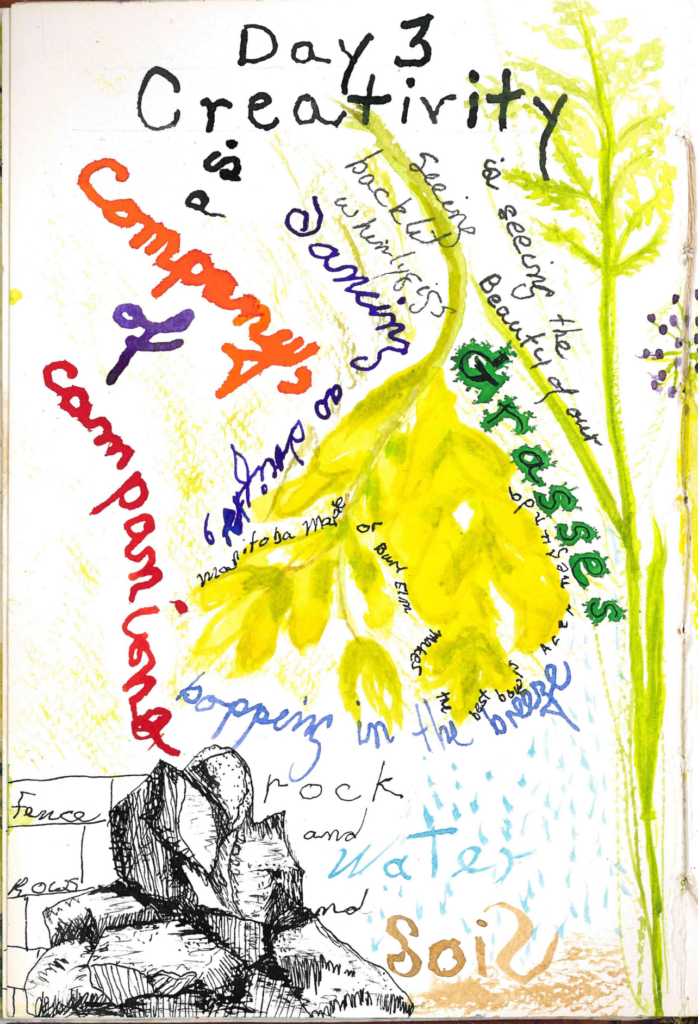
Day 3. Flourishing
Day 4. Gratitude
Day 5. Honouring
Day 6. Community Connection
Day 7. Transformation
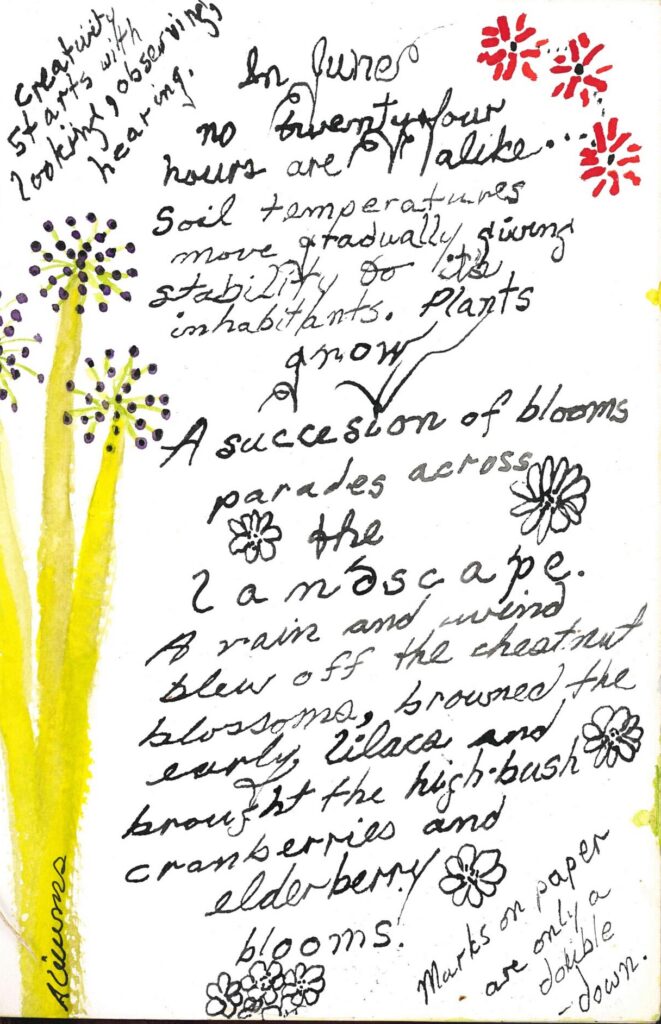
At the time of this writing, this 2026 year’s schedule of live events has not yet been released. In past years times have varied in order to accomodate people in different timezones.
So why do Nature Journaling? Everyone has their own reasons. Recording the world around us serves a number of functions. It gets us to be curious about what we see, especially in our own backyards. Why is the Beaver Valley a trough valley? Where do the Beaver River’s headwaters start? Are any of the fossils at the mouth of the Valley on the shoreline of Georgian Bay still in existence today? Why are cedar leaves shaped so differently from pine needles if both are evergreens? Everyone has their own questions. Finding answers, even if only partial ones, means we see things differently than before we asked the question or identified something.
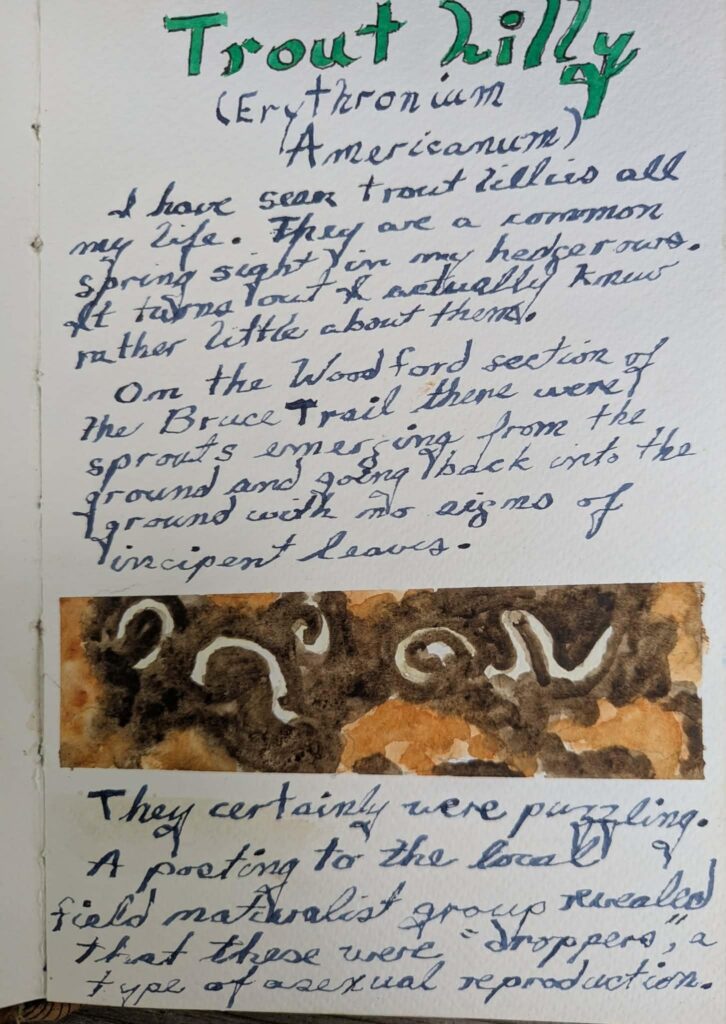
On an Owen Sound Field Naturalists hike at Woodford in early June 2024 I saw these weird things arching in and out of the bare ground at the side of the trail. Someone identified them as trout lily “droppers”. Never heard of them. Hadn’t noticed any before. One question led to another and resulted in these journal pages.
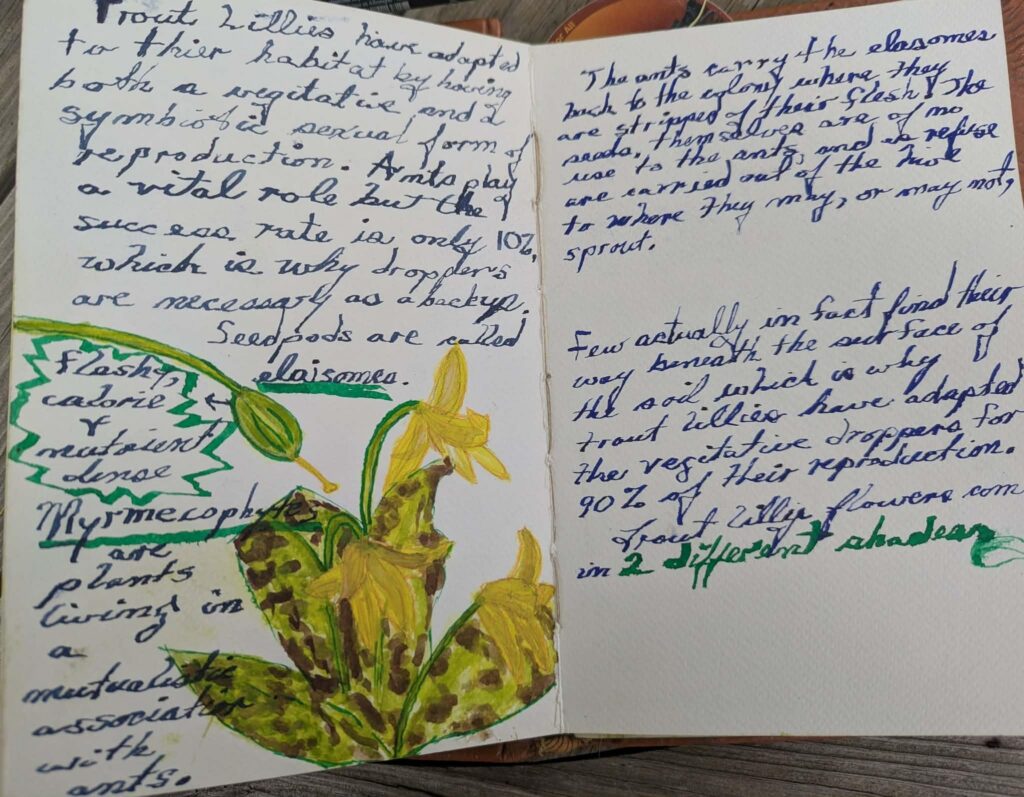
I now know trout lilies have both asexual and sexual reproduction and that the sexual reproduction is in a symbiotic relationship with ants to work. I also found out that there was an ongoing project to understand why some trout lilies have orange-red anthers. I see trout lilies differently now, which brings us to another reason for keeping a nature journal. If I hadn’t done the journal pages I’d have filed the droppers away in the back of my mind to be half forgotten and never discovered the fascinating relationship with ants or that someone is genuinely interested in the colour variation.
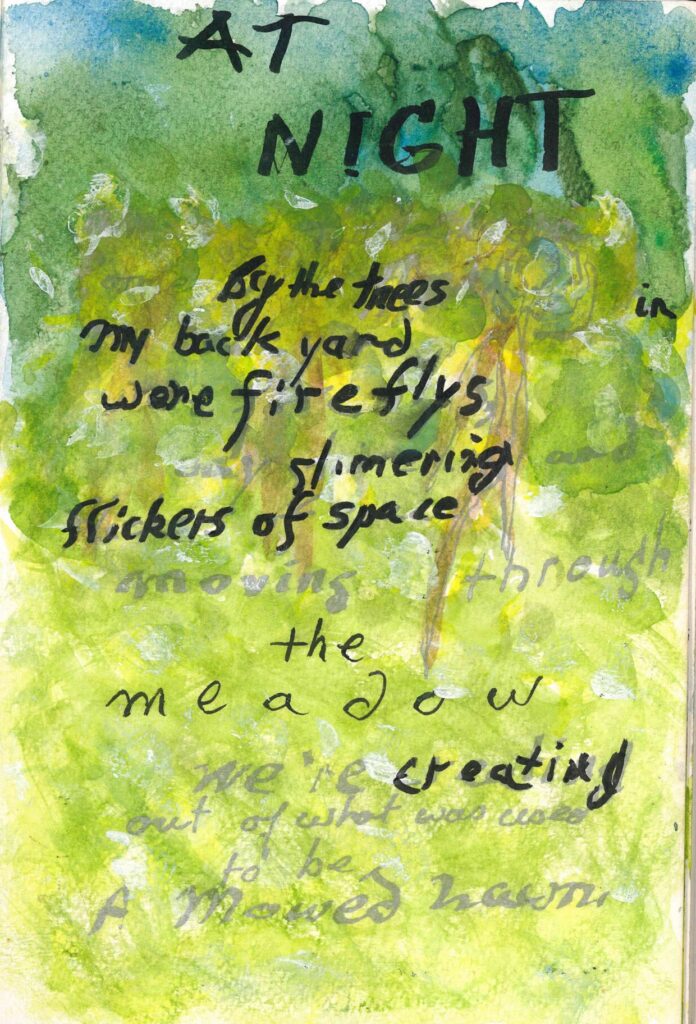
Another reason to keep a nature journal has to do with memory. My journal impression of the droppers isn’t a great drawing. That doesn’t matter. In fact, it’s actually pretty irrelevant. What matters is that it results in a recall mechanism where I instantly remember how the droppers looked at the side of the path. It’s becoming quite well established that notes written by hand have more recall than notes made by keyboarding. The combination of hand-written notes and the act of drawing something, even if it’s only stick figures, results in the journal maker having much more than if they had just looked at something, done a quick Google search, and moved on.
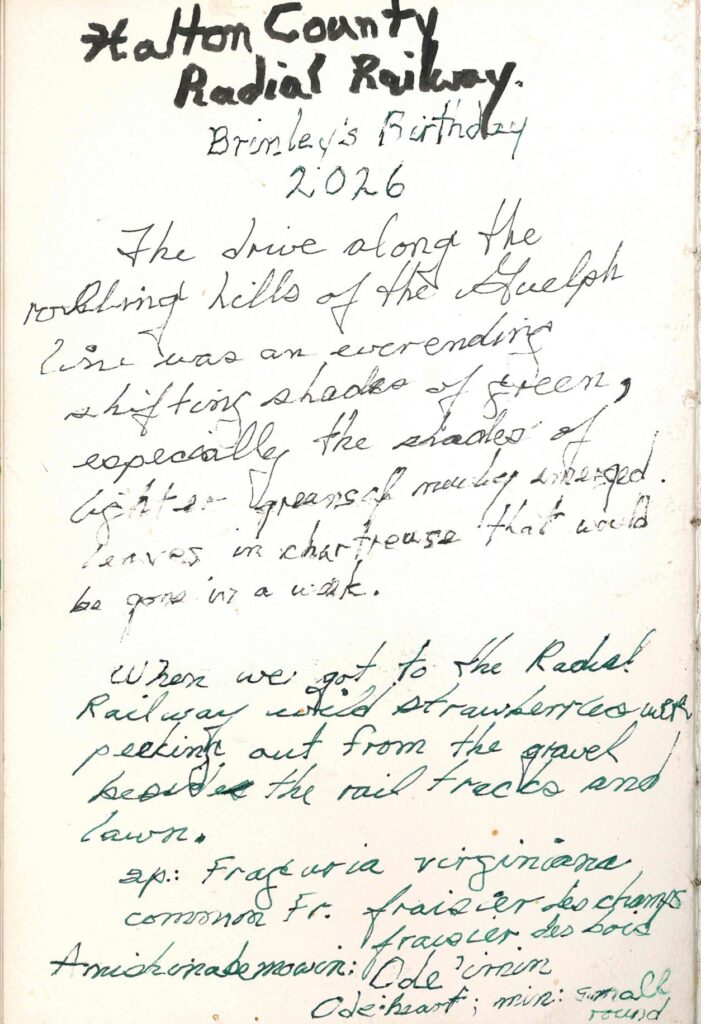
Peoples’ journals function as a snapshot in time. Around the Valley,we live in a period of change in terms of both climate and development. Edith L. Marsh is most known for her historical writing. Area historians still find her History of Grey County to be an invaluable resource. Even amongst birdwatchers, less is known of her naturalist writings. Locally many don’t know that Peasemarsh Conservation Area was gifted by her as a sanctuary at the mouth of the Beaver Valley on Grey Road 2.
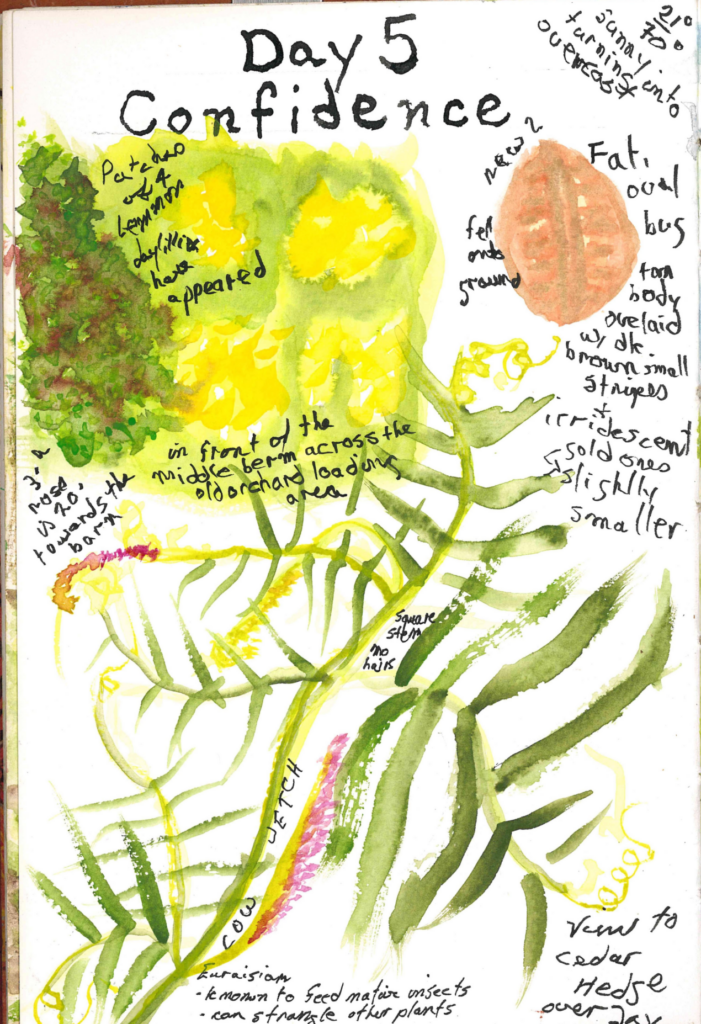
We don’t know if Edith kept a nature journal but those who know her writing assume she did. Fortunately, we do have her 1919 published Birds of Peasemarsh. Edith had wild quail in her garden and quite loved that they kept her potatoes free of beetles. She worried that hunters and cats were decimating the population and advised setting up a winter shelter with feed to protect them. Try asking any local birder when they last heard a bob white quail in the wild: the stare you get could be quite interesting. Nature journals created today will have a similar function: they will show what has survived– and what has not.
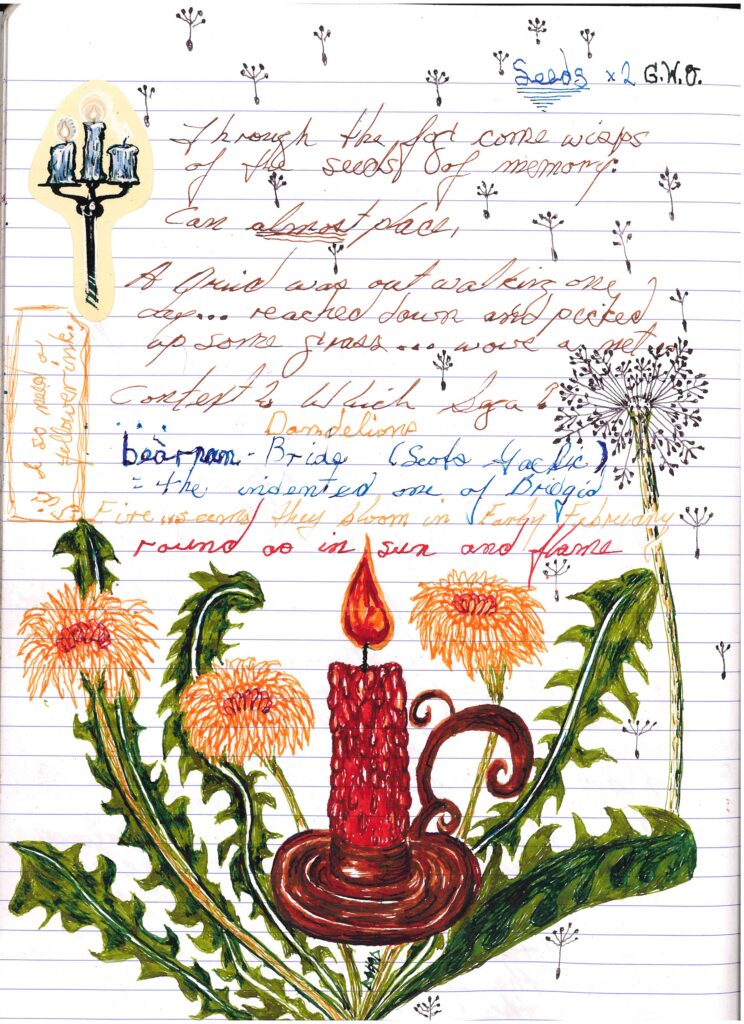
So what are the rules of keeping a nature journal? There’s really only one: it’s your journal, your way. It can be as simple as loose printer pages done only with pencil and pen kept in a folder. Others like a multi media sketchbook or bound journal. Some use coloured markers, pencils or their children’s crayons. If you’re out in the field, weight is an issue in terms of what you’re carrying. A basic set of watercolours works for me with a pencil, eraser and waterproof fine line marker but weighs more than you think it would. Your cell phone can help create a reference to finish at home but it really does see things differently than the human eye. Part of the point is to really slow down and observe details closely for things you might not otherwise notice.
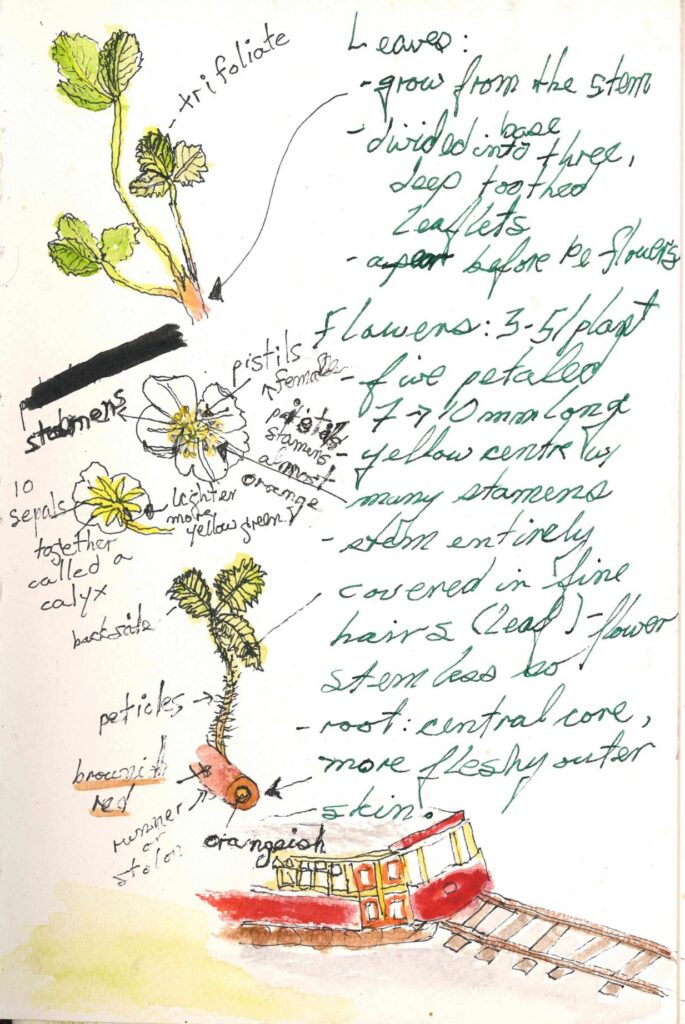
How to begin? Naturejournalingweek.com has a Start Here page as well as pages for reluctant artists and writers, the blog and links to past years. (The 2025 links aren’t working for some reason but previous years are.) There are also links to the YouTube Journaling With Nature channel and podcast. Check out the Who’s Behind the INJW page for links to the session leaders home pages. Have the days prompts made anyone think of something they want to do or explore? Hope might get me out to the old Talisman property and gratitude down to Peasemarsh to see if the ladyslippers are blooming.
Does anyone want to do something for the community day?