

By Heather Reid, February 2026
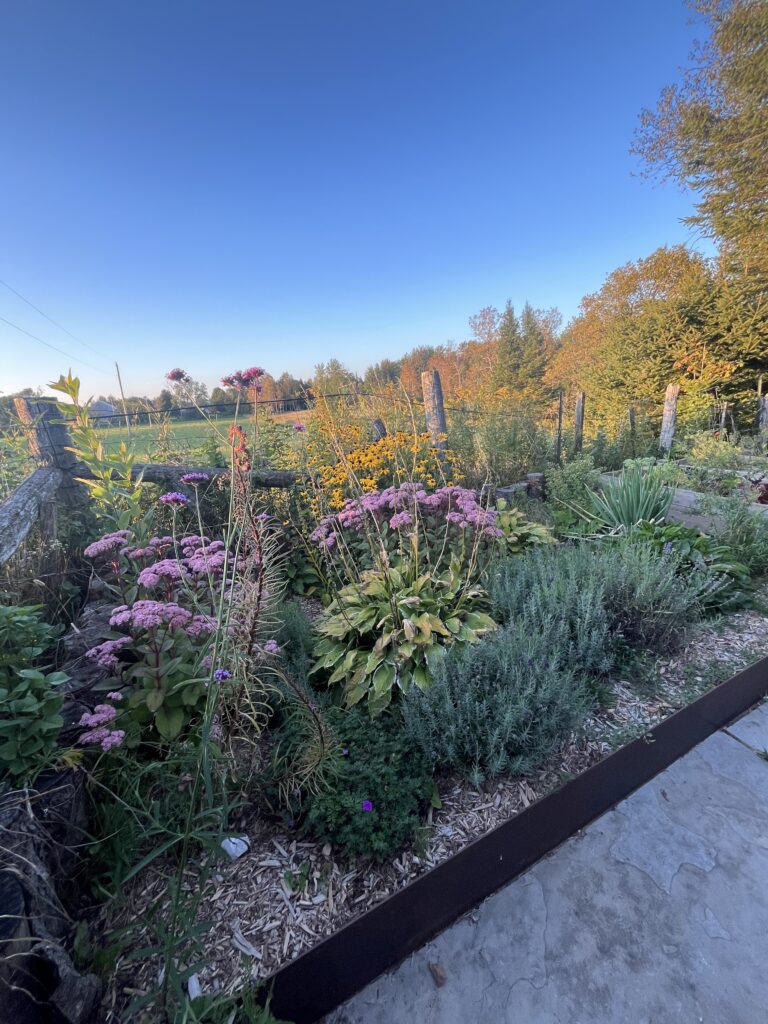
By late summer 2025, the pollinator garden I had planted earlier in spring was teeming with life and was home to beautiful monarch butterflies. In the shimmering heat, flashes of orange and black appeared with increasing frequency, transforming the garden into a vibrant hub for the monarchs’ long journey ahead.
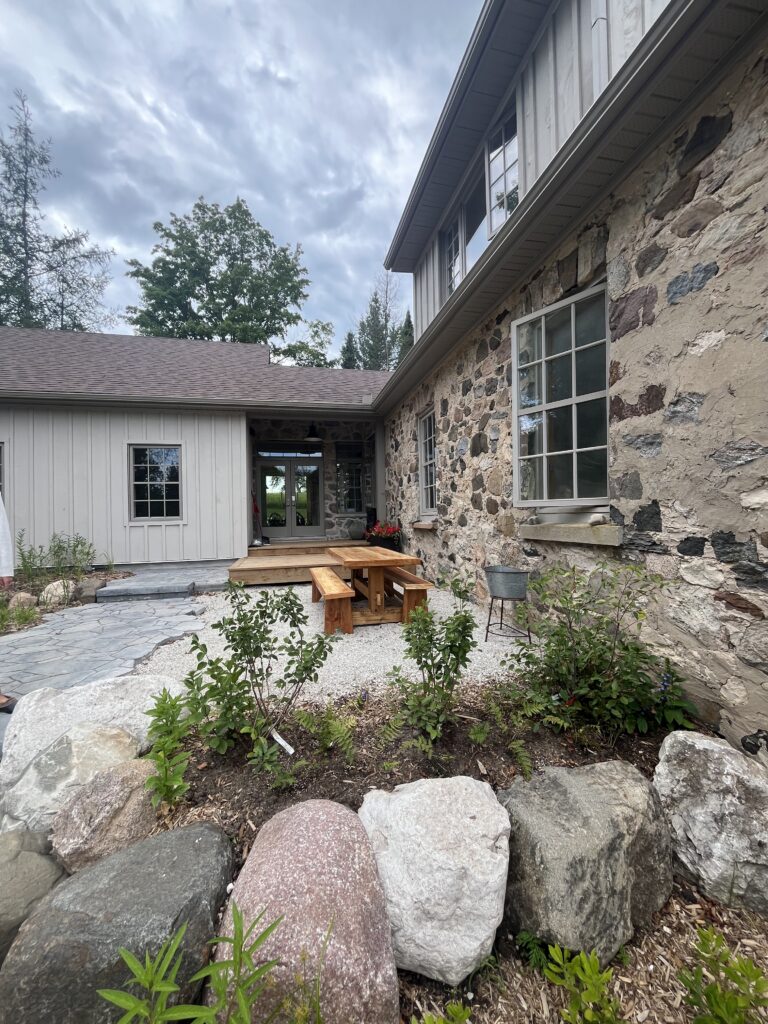
Watching them, my fascination with monarchs evolved into a profound realization of the remarkable scale of their survival.
Later in the fall, a persistent colleague convinced me to join her on a pilgrimage to the Mexican sanctuaries. Yet, as I mapped the staggering 4,000-kilometer link between our Beaver Valley and the hidden peaks of Mexico, that hesitation vanished, replaced by a deep sense of wonder.
In February 2026, we finally traveled south to the Monarch Butterfly Biosphere Reserves. What I witnessed there fundamentally changed how I look at our own local meadows and backyard ecosystems. These aren’t just gardens; they are vital waystations in an impossible, ancient journey.
1. The History of the Sanctuaries
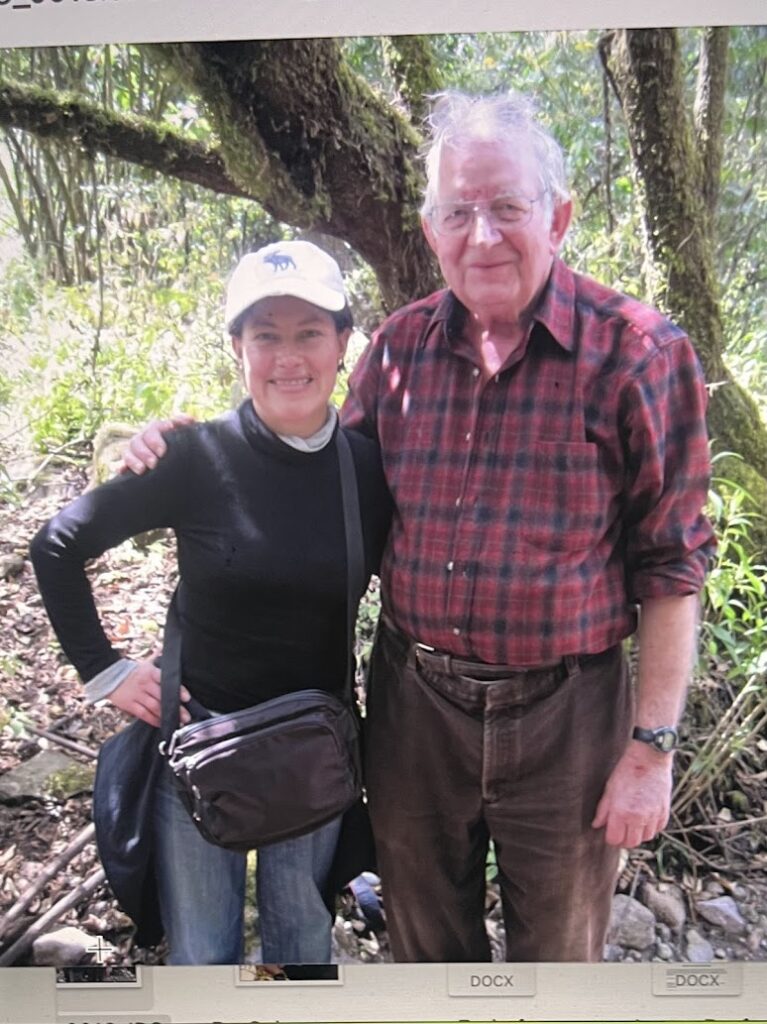
[Estela Romero, our tour guide, with Canadian Scientist Dr. Fred Urquhart who supported bringing the sanctuaries onto the stage of public awareness in the 70’s.]
Though Western science only “discovered” the monarch’s wintering grounds in 1975, the Indigenous Mexican Purépecha and Mazahua communities have protected the sanctuary mountains for generations, long revering the butterflies’ arrival as the returning souls of their ancestors.
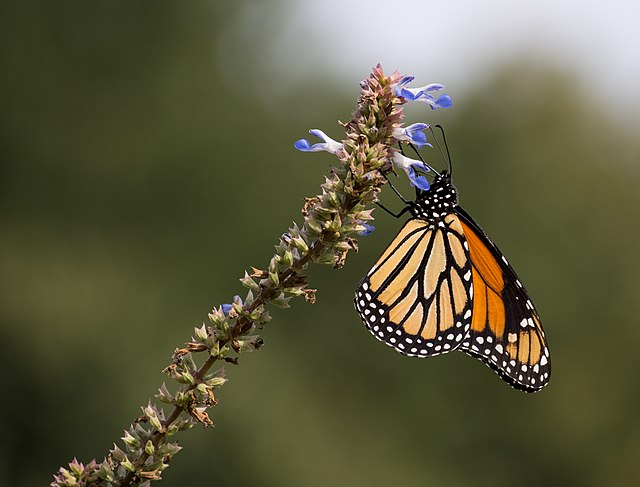
In 1975, the project brought global attention to the Oyamel forests, leading to the 1986 creation of the Monarch Butterfly Special Biosphere Reserve and its later designation as a UNESCO World Heritage Site in 2008. So, while 1975 was the “scientific” discovery that triggered international conservation efforts, it was a “rediscovery” of a site that had been a sacred part of local Indigenous life for generations.
2. The Heart of the Migration Journey to Sierra Chincua and El Rosario Sanctuaries
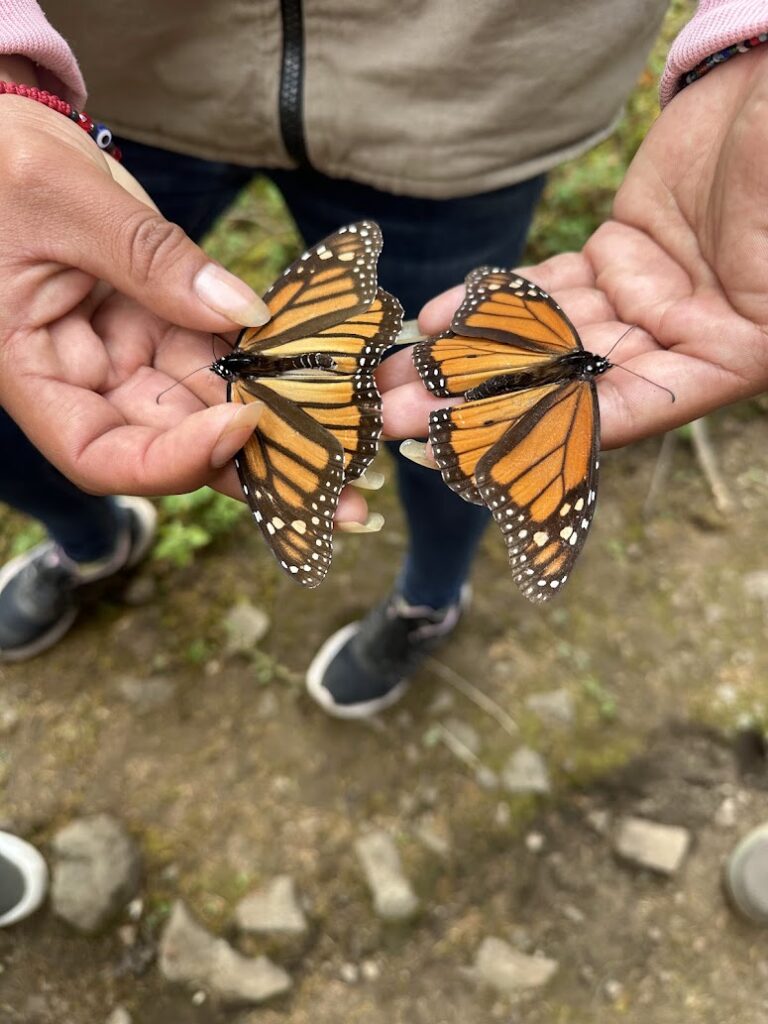
[Male and female monarch butterflies are distinguished primarily by two features: males have a small, black scent spot on each hind wing and thinner black vein lines. Females lack these spots, possess thicker, darker vein lines, and often appear darker in color overall]
Monarchs east of the Rockies perform a staggering feat of endurance, traveling up to 4,000 km from southern Canada to central Mexico. While typical monarchs live only a few weeks, this “super generation” from our northern regions survives up to nine months to complete the journey overwinter in the Sierra Chincua and El Rosario Sanctuaries located in the Mexican state of Michoacan.
To endure the high-altitude winters of central Mexico, the monarchs seek out a very specific sanctuary environment known as a ‘natural thermos,’ the Oyamel Fir Tree. These trees create a precise “Goldilocks” microclimate engineering required for their survival. The dense canopy acts as a blanket, trapping ground heat to prevent freezing, while the shade prevents butterflies from overheating and burning vital fat storage.
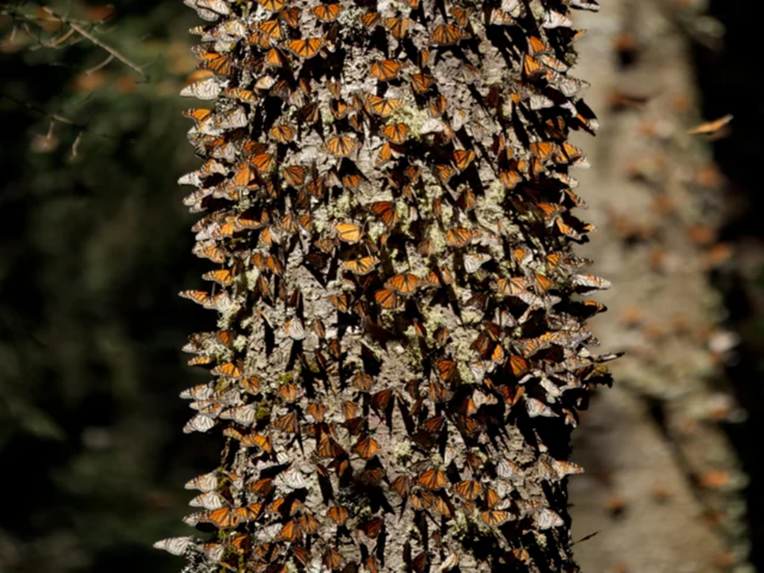
[Monarchs Resting on the Oyamel Fir Tree]
3. Arriving at the Sanctuaries, Guided by Generations: The Local Perspective
Leaving the concrete sprawl of Mexico City behind, we traveled by bus and car toward a much older world waiting at the forest’s edge. There, at the gateway to the sanctuaries, we began two immersive days under the guidance of Estela Romero. As a third-generation resident, environmental educator, and local interpreter, Estela acted as our bridge—connecting the deep cultural history of her home with the urgent science of monarch survival.
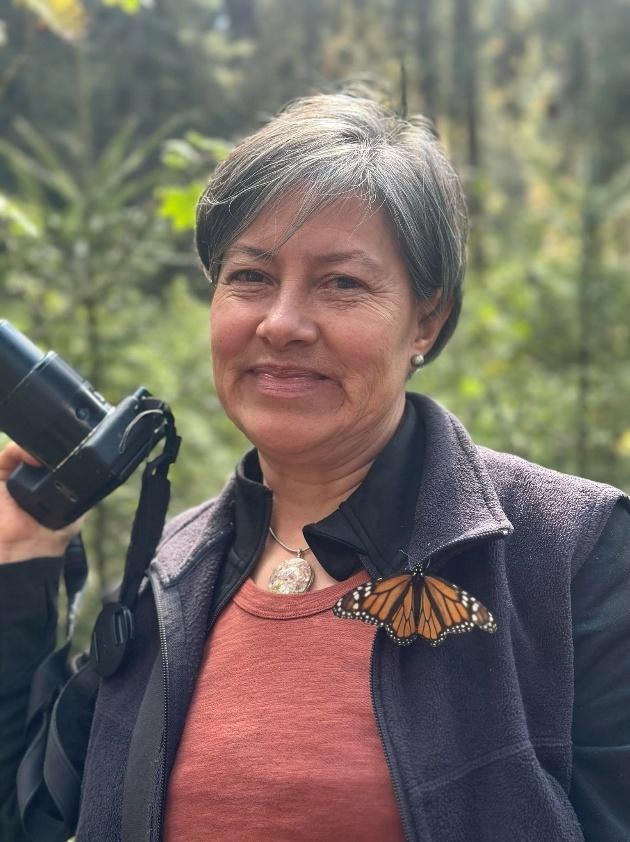
[Estela Romero, a third-generation resident of Angangueo located near the Sierra Chincua and El Rosario Sanctuaries. Estela is a community leader, environmental educator, and local interpreter.]
Having grown up in the heart of the monarch region, Estela provided more than just a tour; she shared a lifetime of stewardship. Over our two days together, she led us through the intricate history and science of the reserves, while speaking candidly about the modern threats facing the monarchs—from habitat loss to the encroachment of avocado farms. Her work reminds us that the survival of the monarch is inextricably linked to the empowerment of local experts who act as the butterflies’ primary guardians.
4. The Silent Heights and the Shimmering Trees
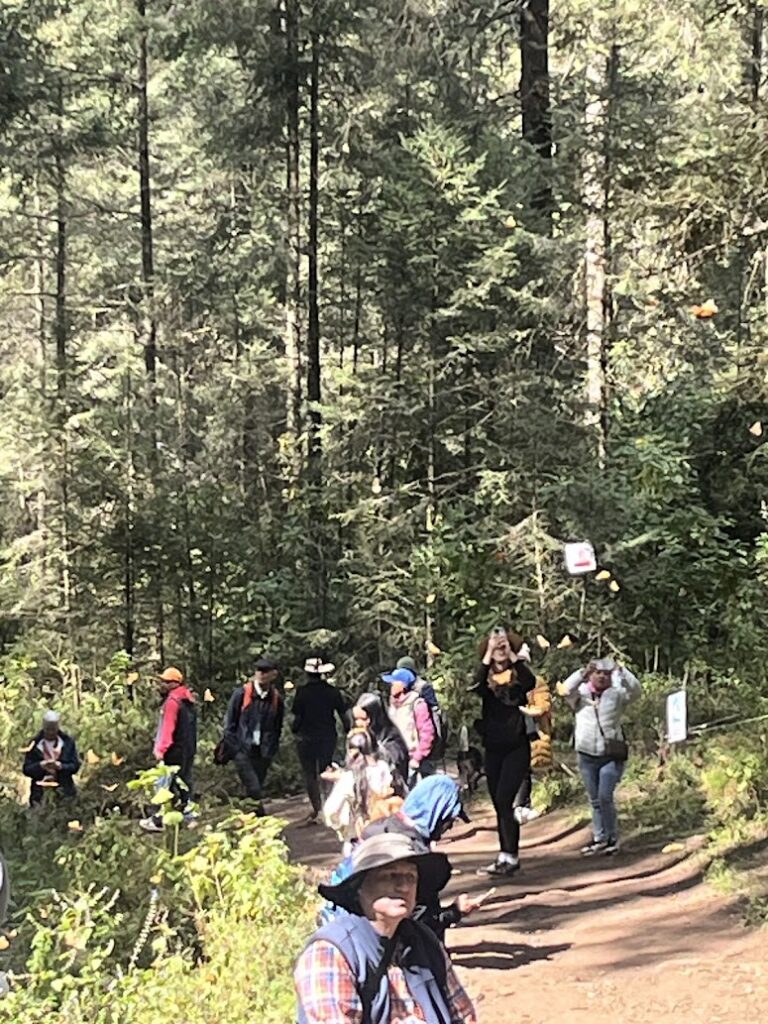
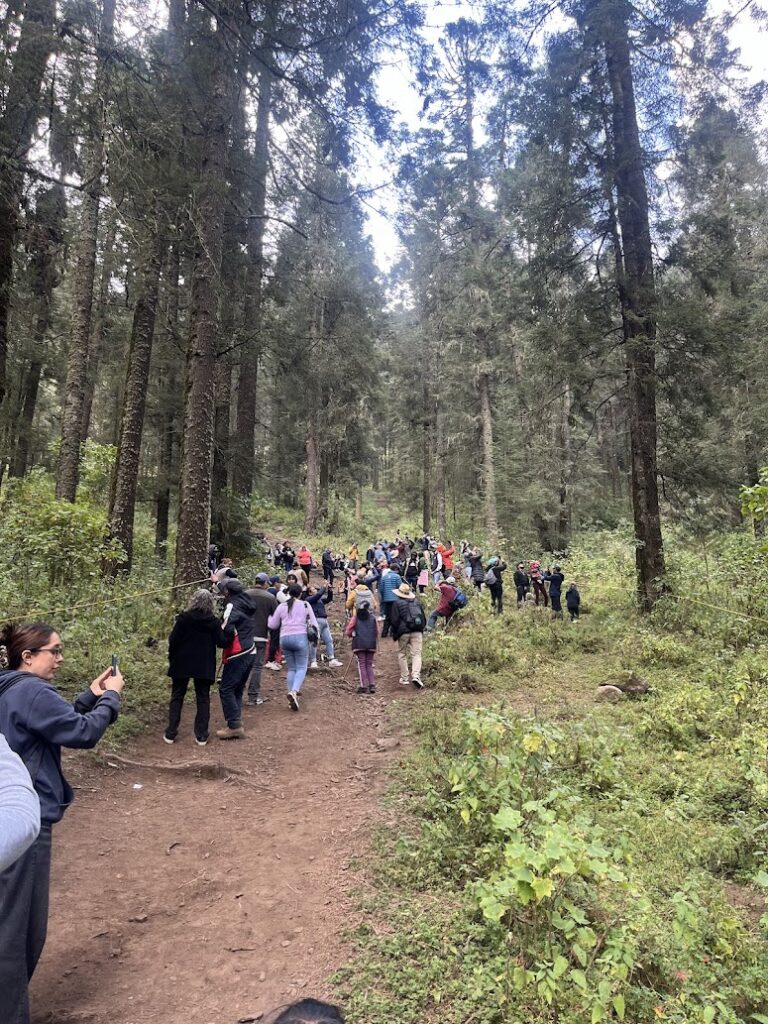
[There is no speaking on the tours in the sanctuaries as the monarchs need complete serenity.]
Our first experience was at the Sierra Chincua Sanctuary, which felt like a cathedral. Located high in the clouds, this site offered an intimate encounter, passing through vast mountain meadows (llanos) before entering the dense Oyamel trees. Because it is less crowded than other sites, the silence was profound. You can hear a single butterfly’s wings—a faint, dry flicker. Standing at that altitude, looking out over the mountains of Michoacán, you realize how miraculous it is that these tiny creatures find this exact peak after traveling all the way from the Beaver Valley.
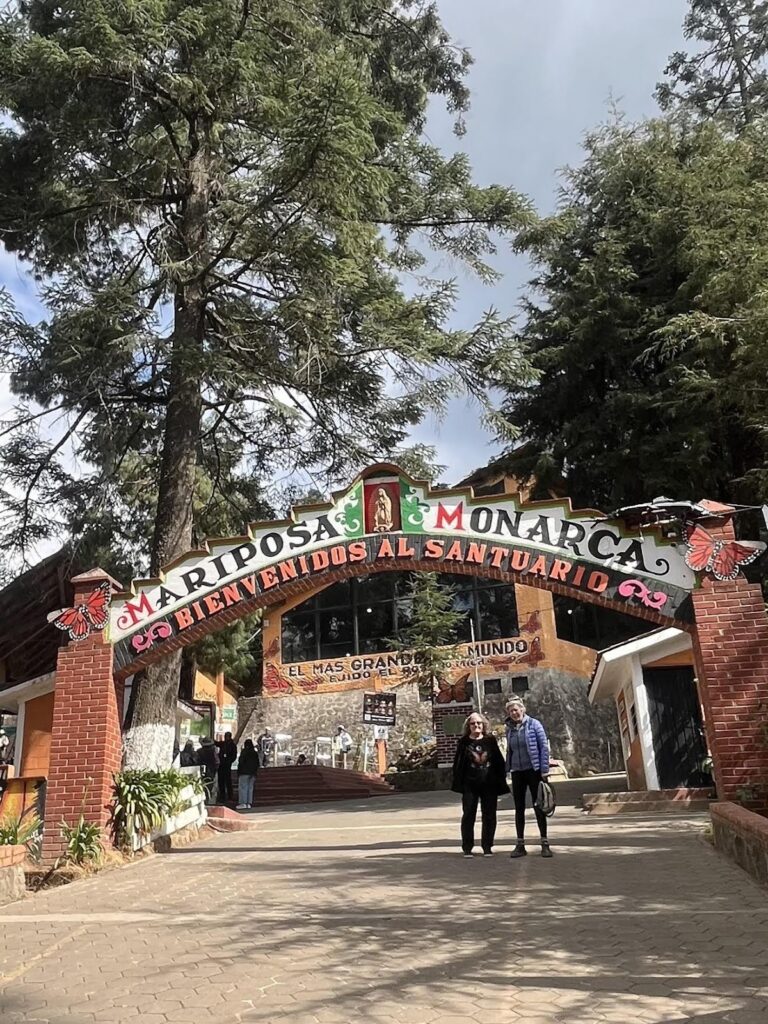
[Standing outside the entrance to the El Rosario Sanctuary]
Our arrival at the second reserve, El Rosario, was an immersive experience in community-led conservation. Managed by the local ejido (communal landowners), the sanctuary is the lifeblood of the indigenous community. We opted for the horseback climb, greeted by local guides who have walked these steep trails for generations.
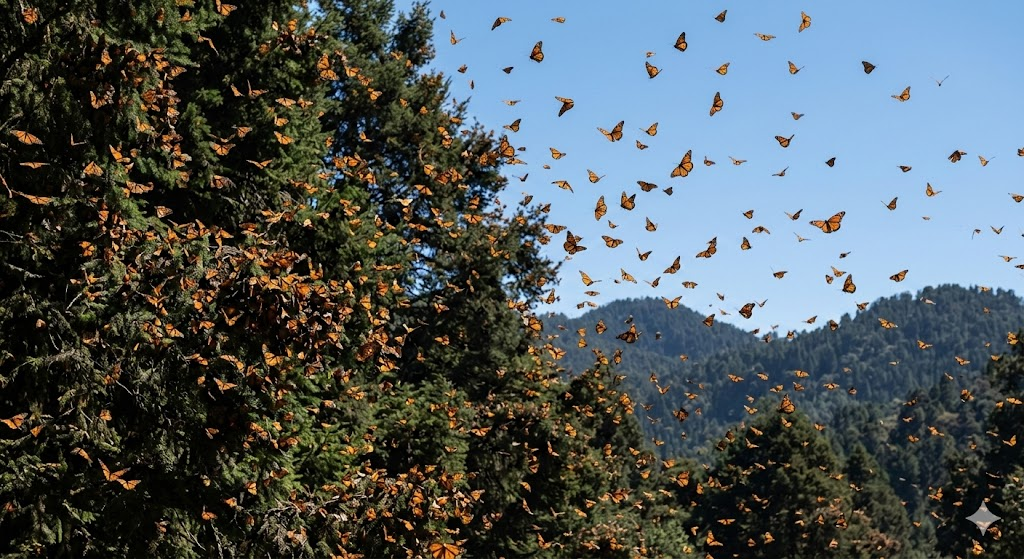
When the sun broke through the clouds, the trees “ignited” into a shimmering kaleidoscope of orange. The sound was the most unexpected part—like a persistent summer rain or the soft rustling of dry leaves as millions of wings took flight at once.
The Relay Race for Survival: From Mexico to Beaver Valley
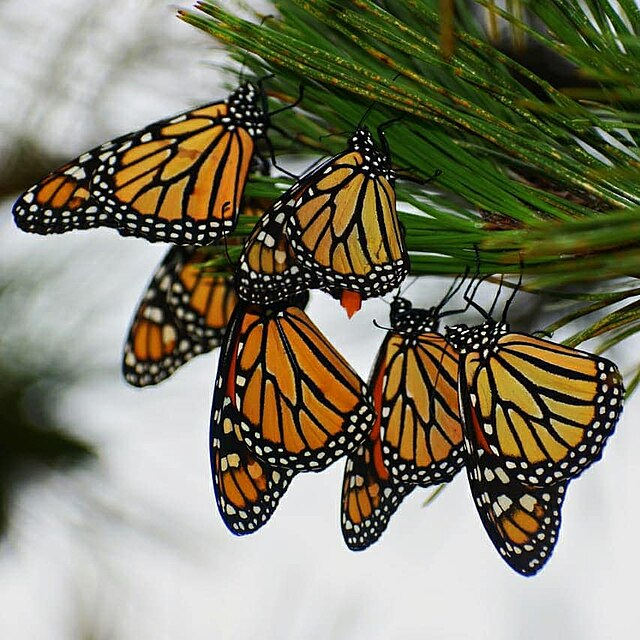
The Monarch migration is a miraculous biological cycle spanning five generations. The butterflies we witnessed in Mexico in February 2026 are the ‘great-great-grandparents’ of the ones arriving this July in the Beaver Valley.
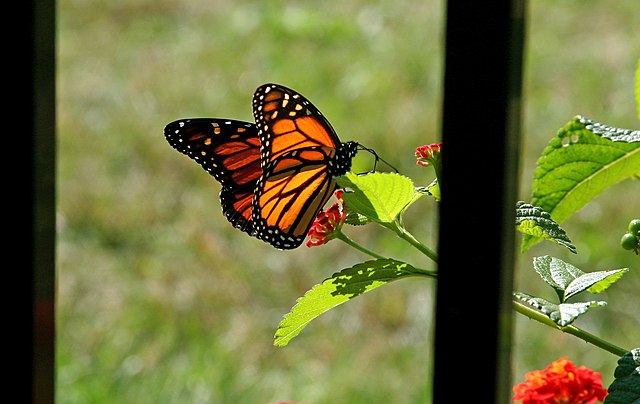
This 4,000 km journey is a multi-generational mission where each generation completes its specific leg of the trip before the next takes up the flight.
Generation 0: The “Methuselah” (The Overwintering Survivors)
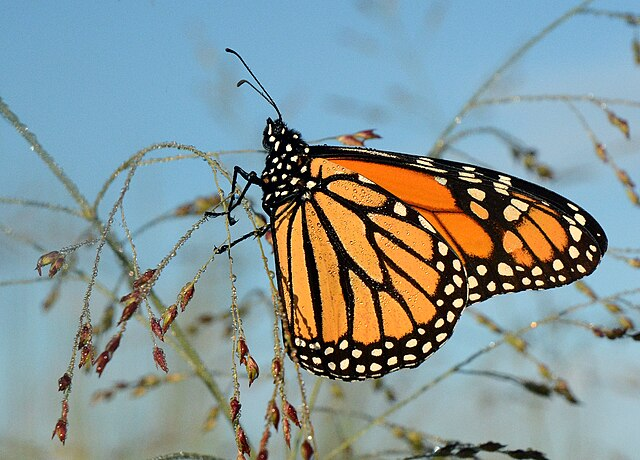
The Journey Begins: These are the butterflies that thrive in the sanctuary all winter. Born in the Beaver Valley in late summer 2025, they have lived for an incredible 8 to 9 months—nearly ten times longer than a typical monarch.
The Spring Awakening: As the February sun warms the Oyamel forests, their dormant reproductive systems “turn on.” In March, they leave Mexico, flying north into Northern Mexico and Texas.
The Mission: Their goal is to find the first emerging spring milkweed. They lay their eggs on these fresh shoots and then, having completed a nearly year-long journey of thousands of miles, their life finally comes to an end.
Generation 1: The Spring Pioneers
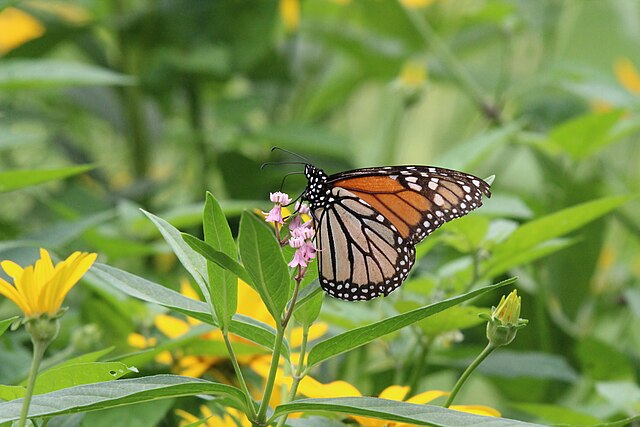
The Journey: Born in Texas and the Southern U.S. in late March and April, these are the children of the survivors.
The Expansion: Using the sun’s position and a “magnetic compass” in their antennae, they push further north, reaching the Midwestern and Mid-Atlantic U.S.
The Mission: Unlike their parents, they only live for 2 to 6 weeks. Their entire purpose is to be the vanguard—flying as far north as possible to lay the next round of eggs on the next wave of spring milkweed.
Generations 2 & 3: The Beaver Valley Summer Residents
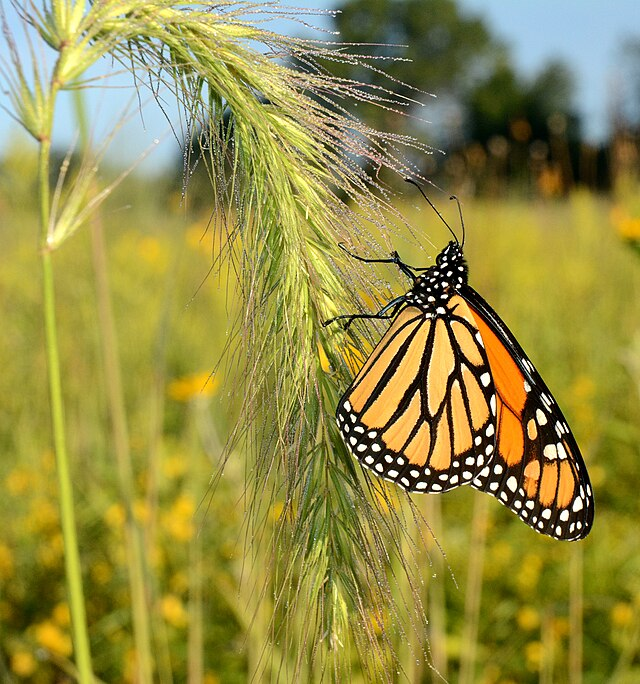
The Journey: These generations hatch in May, June, and July as the weather warms across the continent.
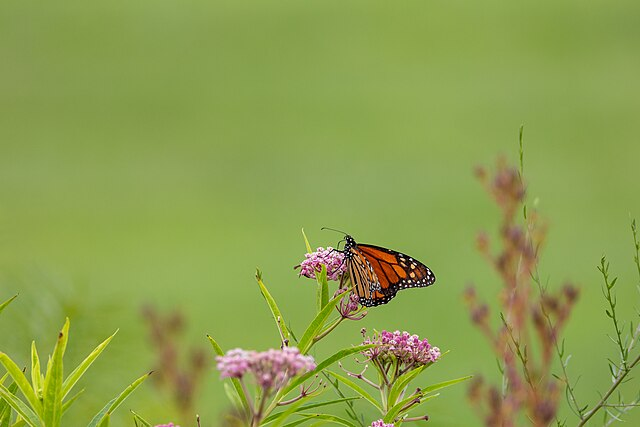
The Mission: They are the “multipliers.” Living short, high-energy lives of about a month, they spend every moment mating and laying eggs in our local meadows. By Generation 3, the population is at its peak; these are the bright orange beauties we see dancing over our gardens in the height of summer.
Generation 4: The “Super Generation” (The Travelers) from Beaver Valley
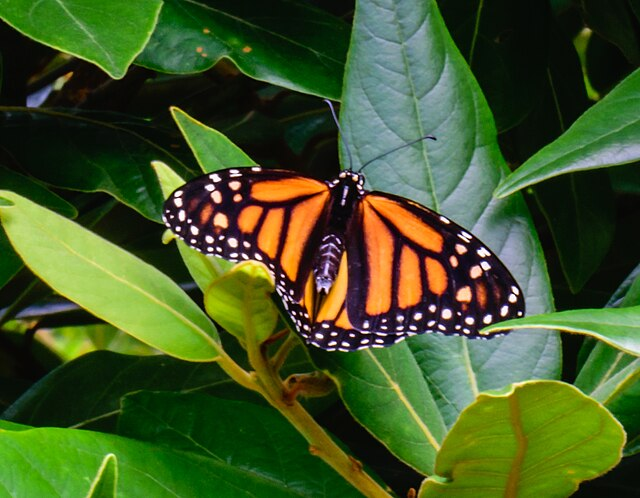
The Biological Twist: Born in the Beaver Valley in late August and September, this generation is physically different. As the days shorten and the air cools, they are born with a biological “pause” button (diapause) on their reproductive organs.
The Marathon: Instead of mating, they convert nectar into fat, building the “fuel tanks” needed for a massive flight.
The Mission: This single generation flies the entire 4,000 km back to Mexico in one go. They have never been to the Oyamel peaks, yet they find them with pinpoint accuracy, guided by an ancestral memory we still don’t fully understand.
Generation 5: The “Southern Buffer” (The Reinforcements)
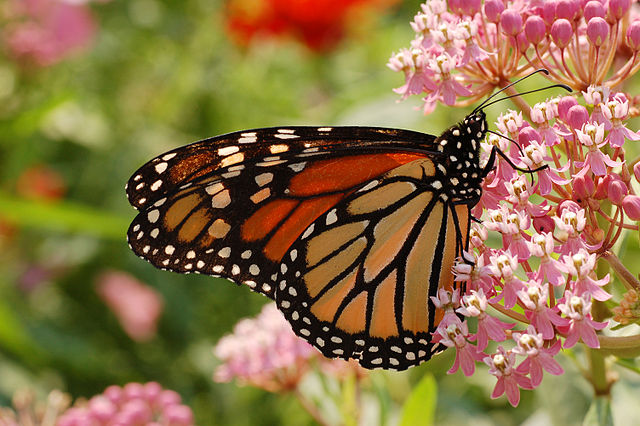
The Journey: In years with particularly warm autumns, some Generation 4 butterflies may stop in the Southern U.S. or Gulf Coast and lay one final “Generation 5.”
The Mission: These late-season butterflies hatch quickly and join the migration south. They act as a final reinforcement for the colonies, ensuring that even if the journey from the north was difficult, enough butterflies reach the mountains to sustain the population until next spring.
High-Tech Heroes: Tracking the 2026 Migration with the “Backpack” Revolution
For decades, tracking a monarch was challenging and relied on sticky paper tags and hoping someone would find a butterfly 4,000 km away. But in February 2026, the game changed thanks to a fusion of biology and Silicon Valley-style innovation.

Companies like Cellular Tracking Technologies (CTT) have developed the BlūMorpho—a solar-powered radio tag that weighs less than a grain of rice (about 60 milligrams).
How it works: These tiny “backpacks” are glued to the butterfly’s thorax using simple eyelash adhesive. Because they are solar-powered, they don’t need heavy batteries.
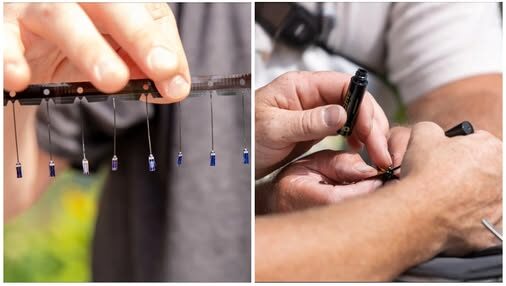
The Bluetooth Network: This is the “cool” part for our community—these tags ping any Bluetooth-enabled device they pass. If a tagged monarch flies within 100 meters of your smartphone, it can check in! This has turned millions of people into a giant, invisible tracking net.
The “Green Gold” Conflict and the Turning Point in 2026
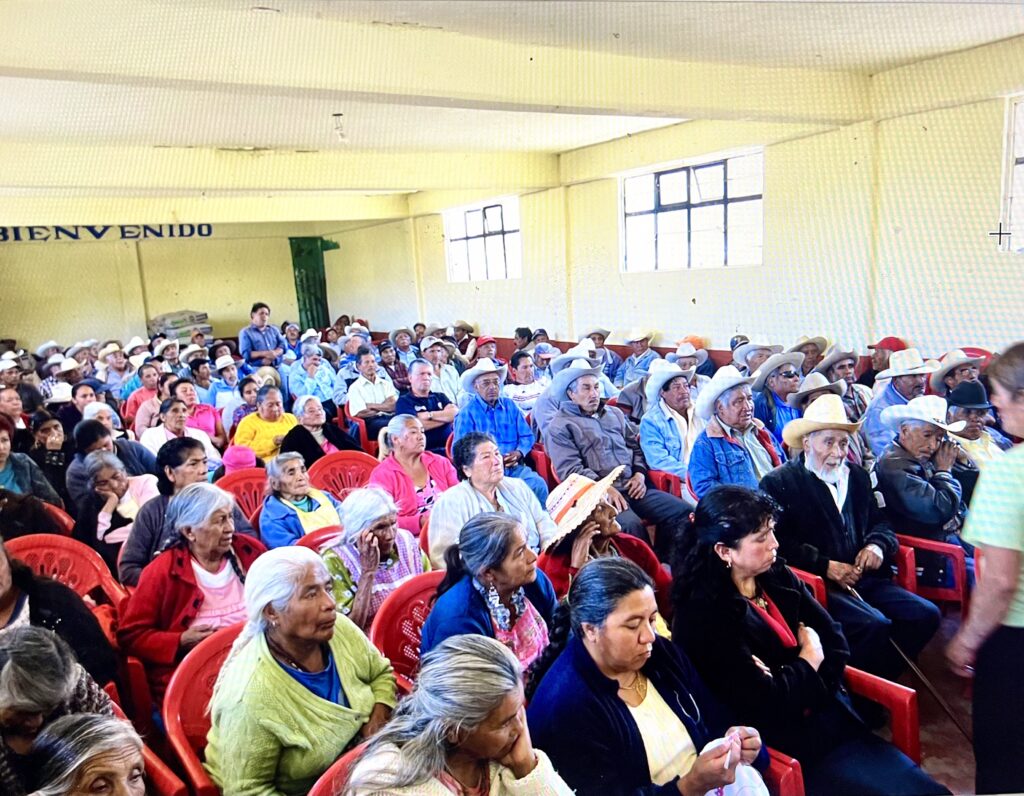
The very environmental “blanket” that ensures the monarchs’ winter survival is being unraveled by a human-driven demand for a different kind of green gold. The sanctuary is under threat from Mexico’s multi-billion-dollar avocado industry. Organized crime has seized control of many orchards, driving illegal logging in the forests bordering the reserves. These orchards jeopardize monarchs through water scarcity (avocados use 12x more water than native trees) and chemical drift from unregulated pesticides. Our visit to the region included firsthand views and stories of issues driving illegal logging and organized crime.
[Local Ejido Community Landowners of the Sanctuaries in Michoacan In Community Meeting]
As of January 2026, a major shift is underway. New federal rules ban the export of avocados grown on land deforested after 2024. Currently, 90% of exports to the U.S. and Canada are verified through the “Pro-Forest Avocado” certification, using satellite monitoring to ensure sustainable land use.
A Fragile Connection to the Beaver Valley
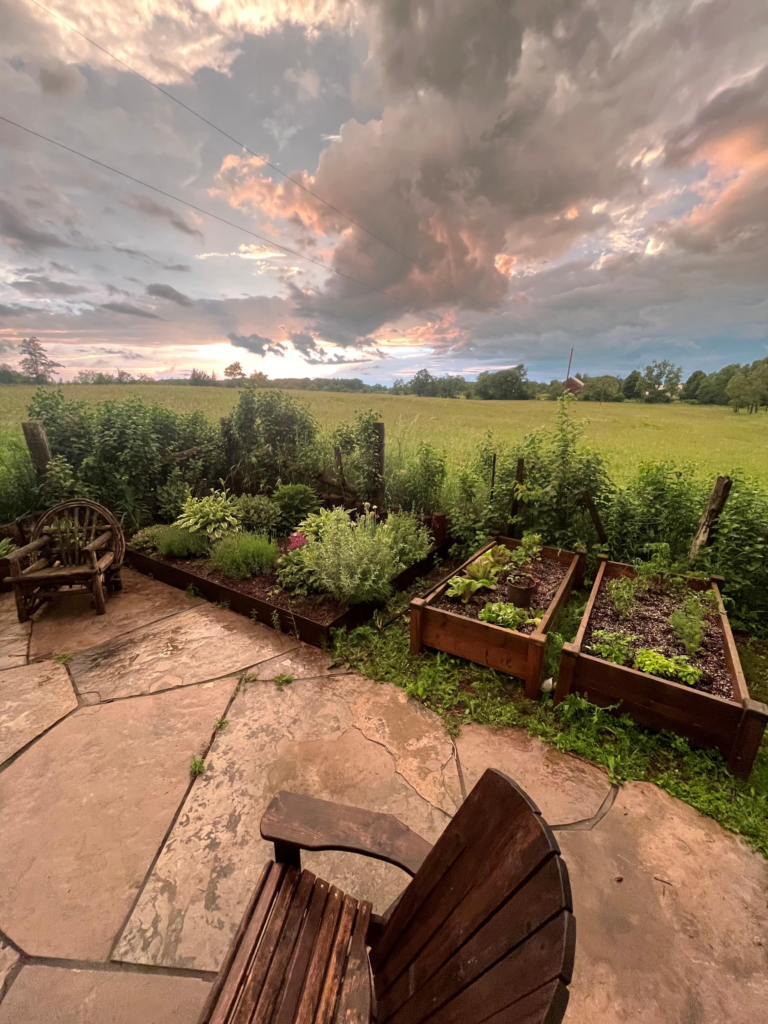
It is easy to think of Mexico and the Beaver Valley as two different worlds, but the Monarchs prove we are inextricably linked. The message from Estela and the local guides was clear: The Monarch cannot survive without a “green corridor.” If they arrive back in the Beaver Valley this spring to find their habitat paved over or stripped of milkweed, the survival bridge breaks.
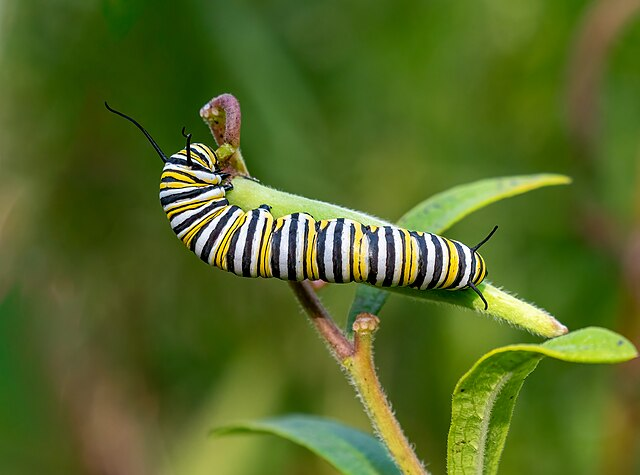
Because the timing of the migration is becoming less predictable, the “rest stops” we provide in the Beaver Valley are critical.
If a monarch arrives exhausted from a difficult trek through the U.S., a garden filled with native, pesticide-free nectar acts as an emergency refueling station. As Estela emphasized during our time in Michoacán, we aren’t just protecting a butterfly; we are protecting a chain of survival that spans an entire continent. When one link in the relay is weakened by climate, the strength of the other links—like our local conservation efforts—becomes their only safety net.
Beaver Valley “Fuel Station” Checklist
To support the 4,000 km flight starting in late August and September, we can help by focusing on native powerhouses plants.
The “Big Three” Nectar Sources:
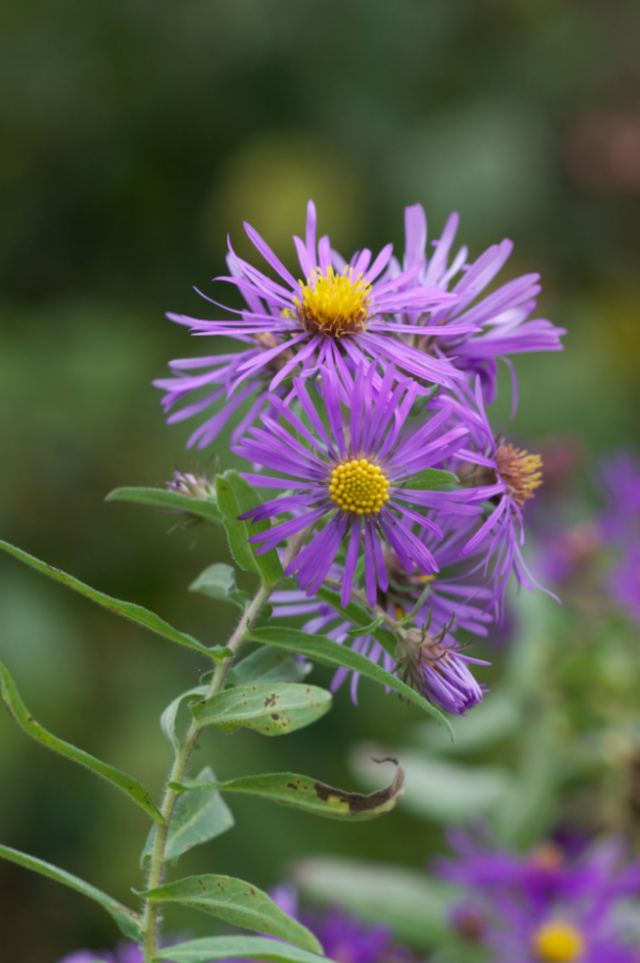
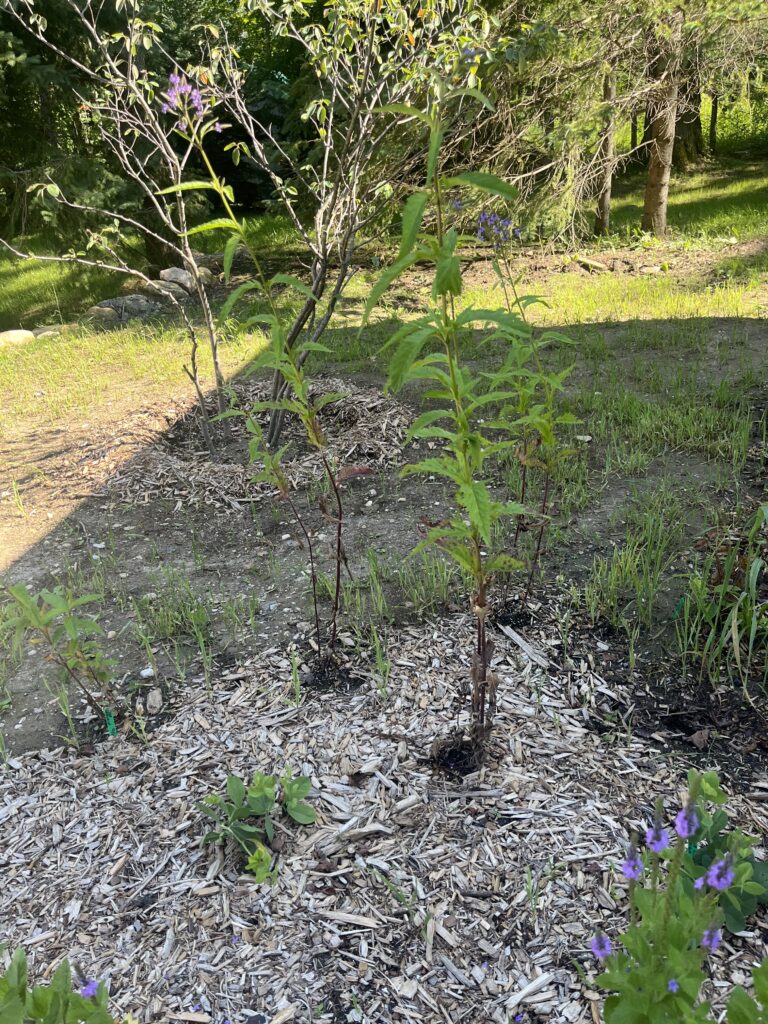
New England Aster (Symphyotrichum novae-angliae): These vibrant purple flowers are a monarch favorite. They bloom late into the fall, providing critical sugars when most other plants have faded.
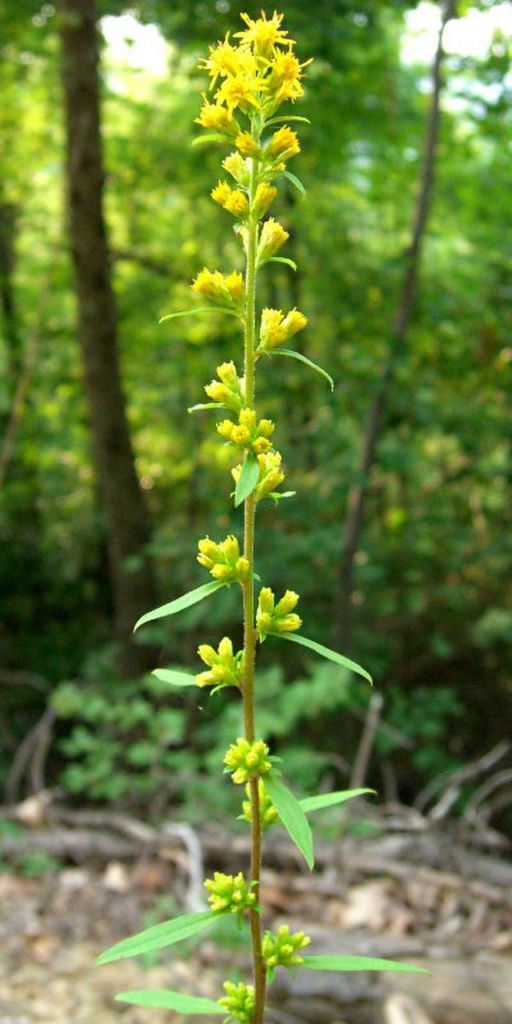
Showy Goldenrod (Solidago speciosa): Unlike the common goldenrod, this variety stays upright and offers dense clusters of yellow flowers packed with high-quality nectar.
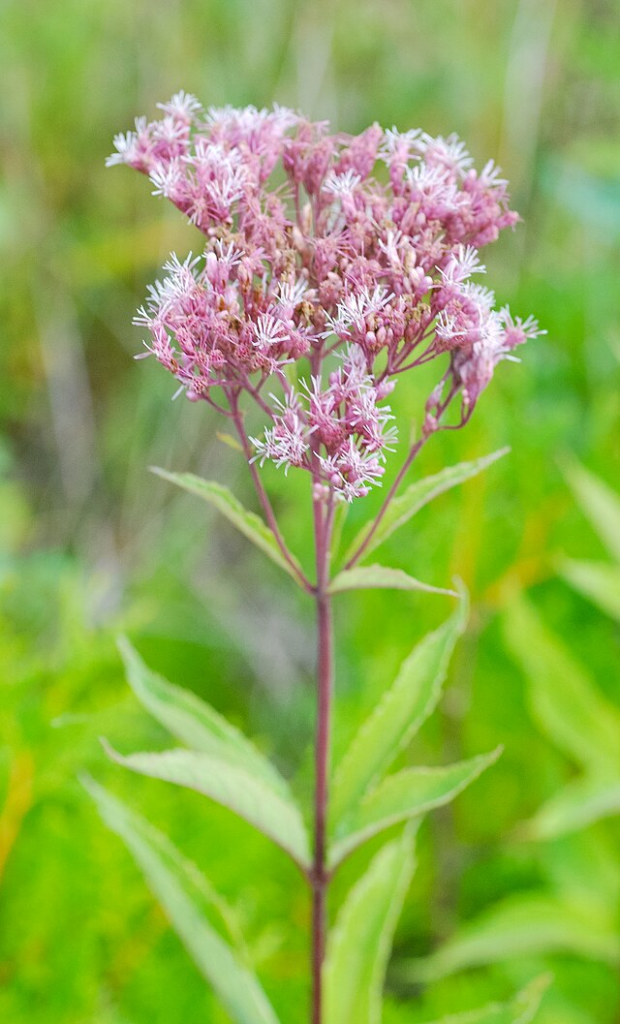
Joe-Pye Weed (Eutrochium maculatum): These tall, vanilla-scented towers are butterfly magnets in late summer.
The Milkweed Foundation (For Generations 2 & 3):
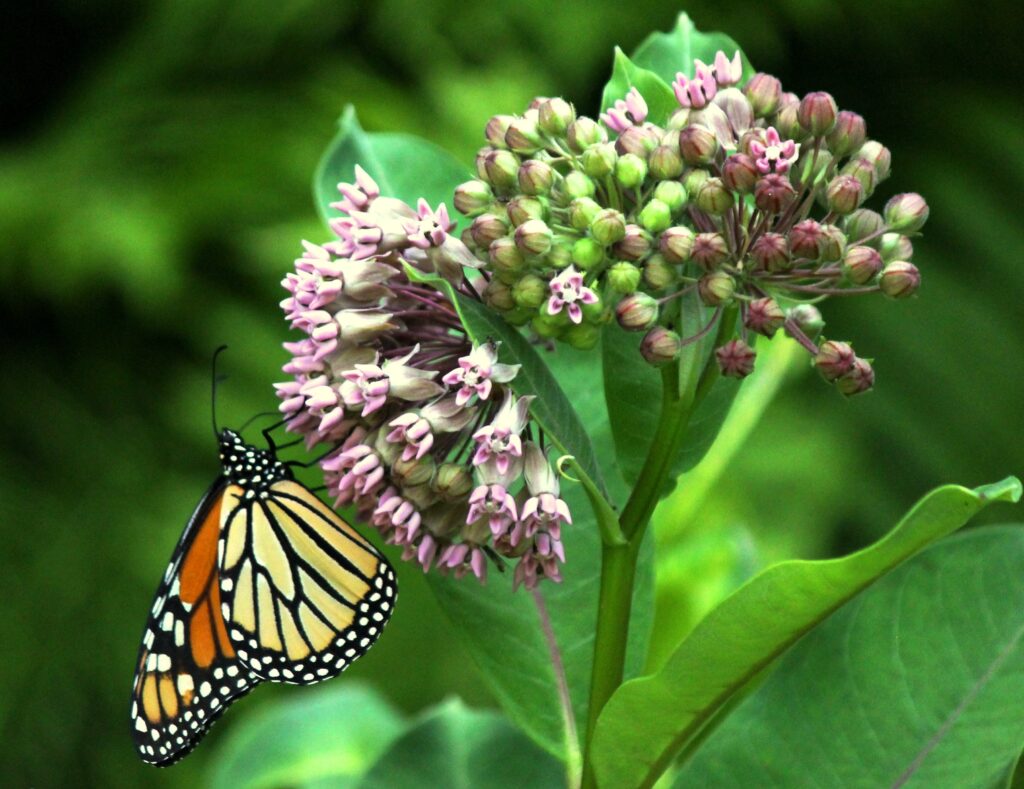
Common Milkweed (Asclepias syriaca): The classic host plant for our local “Summer Residents.”
Swamp Milkweed (Asclepias incarnata): A great alternative for heavier clay soils or wetter spots in the Valley; it’s less aggressive than common milkweed but just as nutritious.
Garden Maintenance for Migrators:
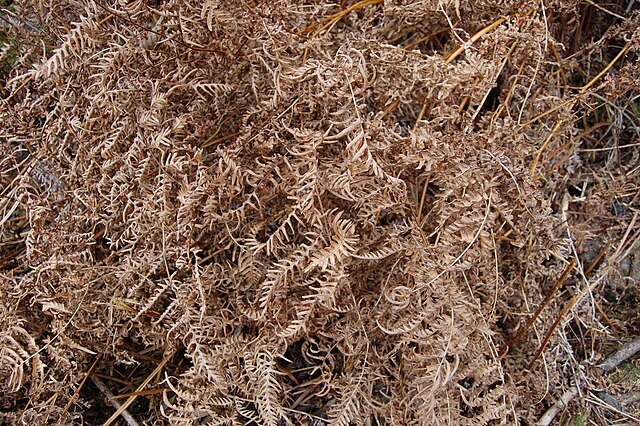
Skip the Fall Cleanup: Leave the dead stalks and leaf litter until spring. This provides overwintering habitat for other local pollinators that the monarchs rely on for a healthy ecosystem.
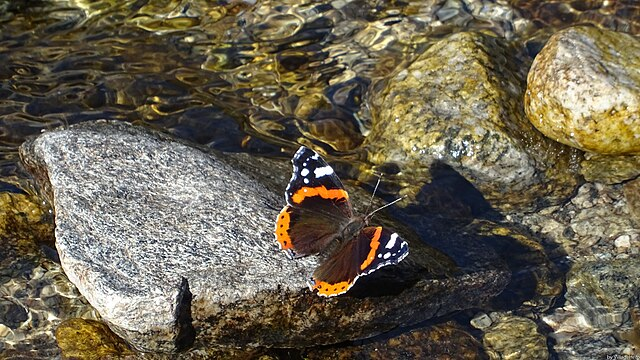
Provide a “Puddling” Station: Monarchs need minerals, not just sugar. A shallow dish with damp sand and a few flat stones allows them to land and drink safely.
Buy Local & Pesticide-Free: Ensure your plants haven’t been treated with neonicotinoids, which stay in the plant’s system and can be fatal to the very butterflies you are trying to save.
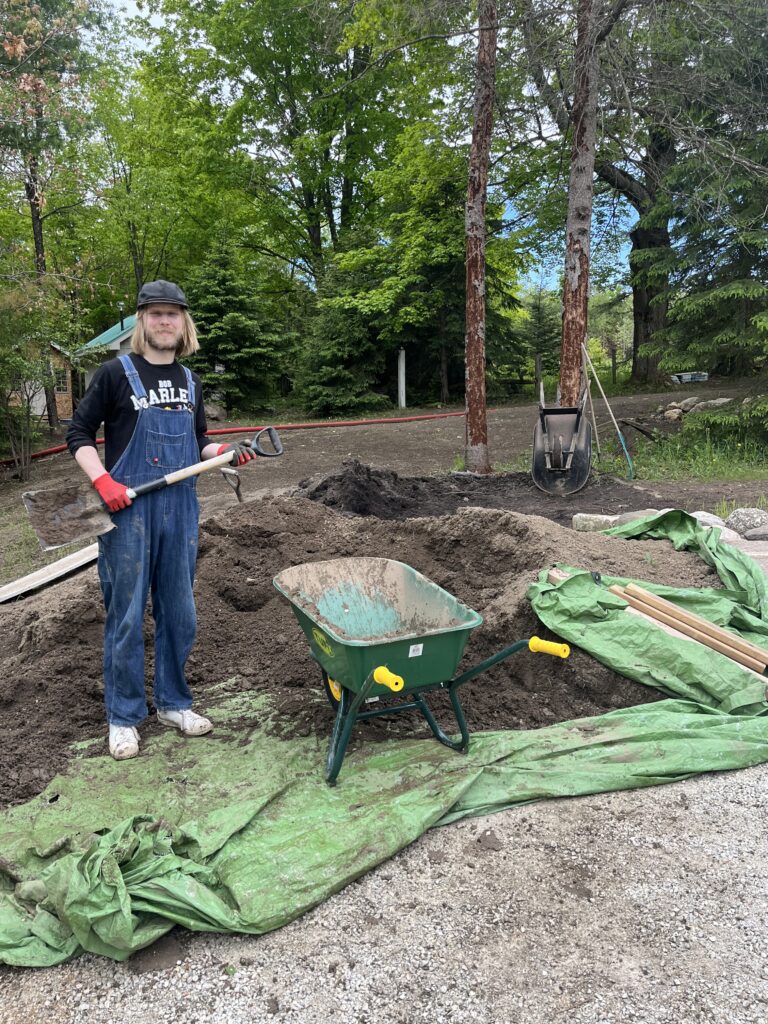
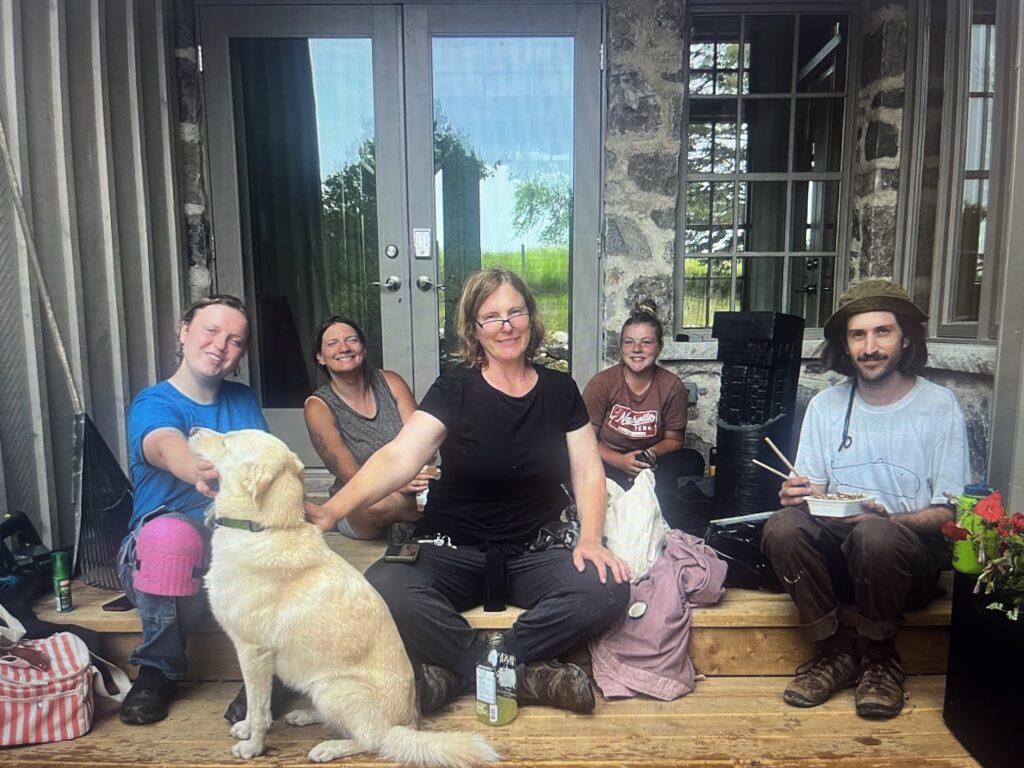
[Native plant gardening crew from Ontario Flora]
A Final Thought
As our guide Estela Romero led us through those “Silent Heights” in Mexico, she reminded us that every butterfly we saw was a survivor of a thousand threats. By planting these specific flowers in the Beaver Valley, you aren’t just gardening—you are participating in a 4,000 km act of hospitality.
Resources
1. Become a “Citizen Scientist”
Here are some options for Beaver River watershed residents to contribute data from their own smartphones:
Mission Monarch: The premier Canadian site for documenting monarch breeding. They provide a “how-to” guide for checking your milkweed for eggs and caterpillars.
Project Monarch (The App): Download this to your smartphone to join the “Bluetooth Tracking Network.” If a butterfly with a high-tech BlūMorpho tag flies near you, your phone will automatically help scientists track its path. Search your app store for: “Project Monarch” (developed by CTT and Monarch Joint Venture).
iNaturalist Canada: Join the “Monarch Migration in Ontario” group to upload photos of your sightings. This data is used by the Canadian Wildlife Federation to map migration timing.
2. Where to Get Native Seeds in Ontario
It is critical to plant native milkweed (Common, Swamp, or Butterfly Milkweed) rather than tropical varieties.
WWF-Canada (Seed Orchards): They partner with native plant growers across Southern Ontario to provide sourceidentified seeds.
The Canadian Wildlife Federation (CWF): Offers a “Medallion Garden” program and sells native plant kits specifically designed for Ontario’s climate.
Local Suggestion: Check with the Grey Sauble Conservation Authority or local native nurseries for “Beaver Valley friendly” seed mixes.
3. Resources and Organizations
Nature Conservancy of Canada (NCC): They do massive “on-the-ground” habitat restoration in Southern Ontario (like the Long Point area), which serves as a major “staging area” for monarchs before they cross Lake Erie.
Monarch Teacher Network of Canada: A fantastic resource if you want to bring this story into local Beaver Valley schools. They provide kits and training for educators.
Monarchs Migrating Through Ontario
Related posts:
 Citizen Scientists Monitor Plant Sales and Trails for Invasive Species
 Growing a Resilient Future Using Local Seeds
 Late Winter/Early Spring birds
 Damselflies and Dragonflies of the Beaver River
 Ramping Up for Spring
 E. C. Carr Observatory
 Keep Our Skies Dark
 Managing Stormwater as a Watershed Resource
 The Geology of the Beaver Valley
 The Wickens Family in Kimberley, 1857 and on