

Priceville was such a successful village it had a newspaper called the Priceville Courier. It was edited by S.M.L. Luke and published by Gouden and Company. It began printing in February 1868 but only lasted a few months.
Some of the earliest local settlers were escaped slaves from the United States who settled along the Durham Road when it was surveyed in 1849. The Old Durham Road Pioneer Cemetery marks their community with a commemorative monument. It is only a short drive away.
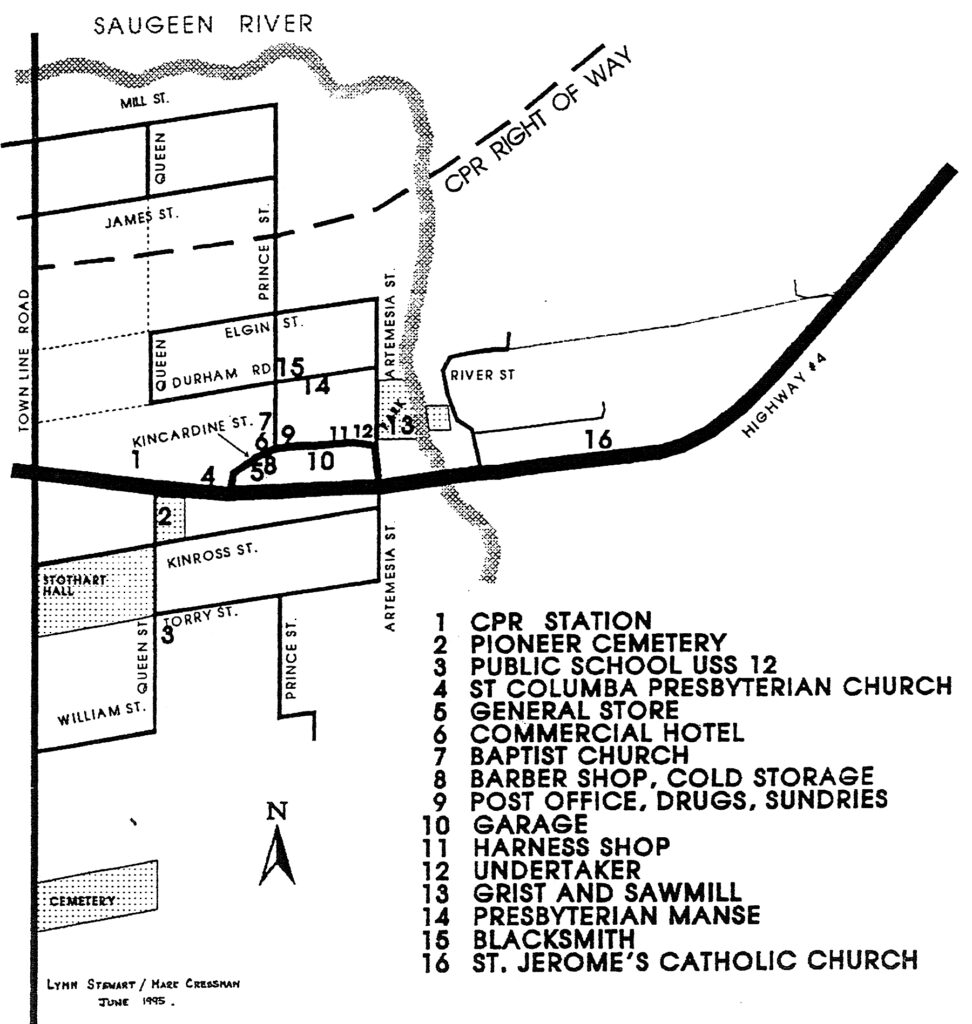
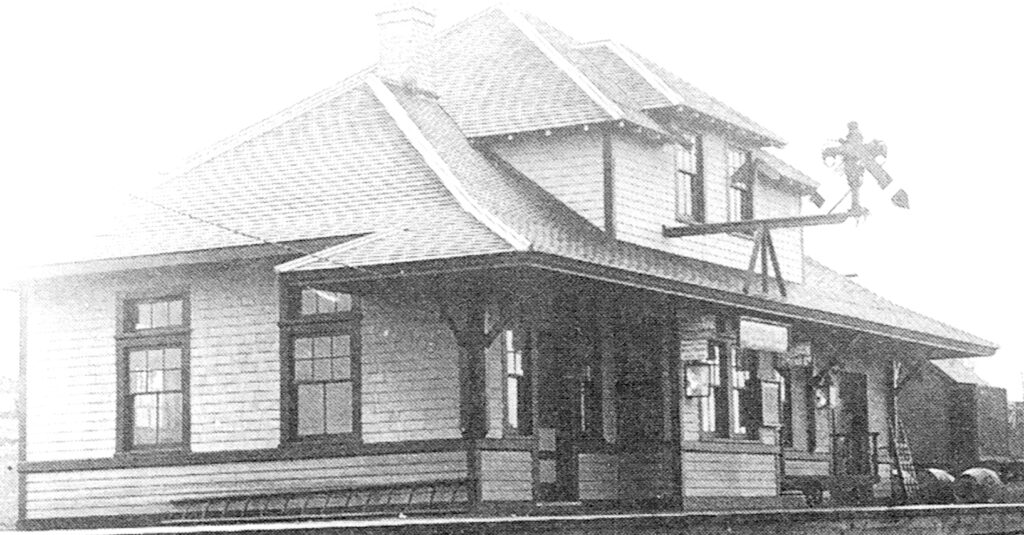
1. CPR Station
The Priceville Station opened in 1907 along the Walkerton branch line. It operated with passenger service to Saugeen Junction and from there to Owen Sound or Toronto. The station was sold at auction in 1959 and moved to its current location where it is a private home.
2. Pioneer Cemetery
The final resting place of many of Priceville’s earliest settlers, the headstones date back to the early 1800s when the village was a solid bush. The last burial was in 1949. In 1950, volunteers revived
the cemetery and it is now managed by volunteer board members.
3. Public school—USS 12
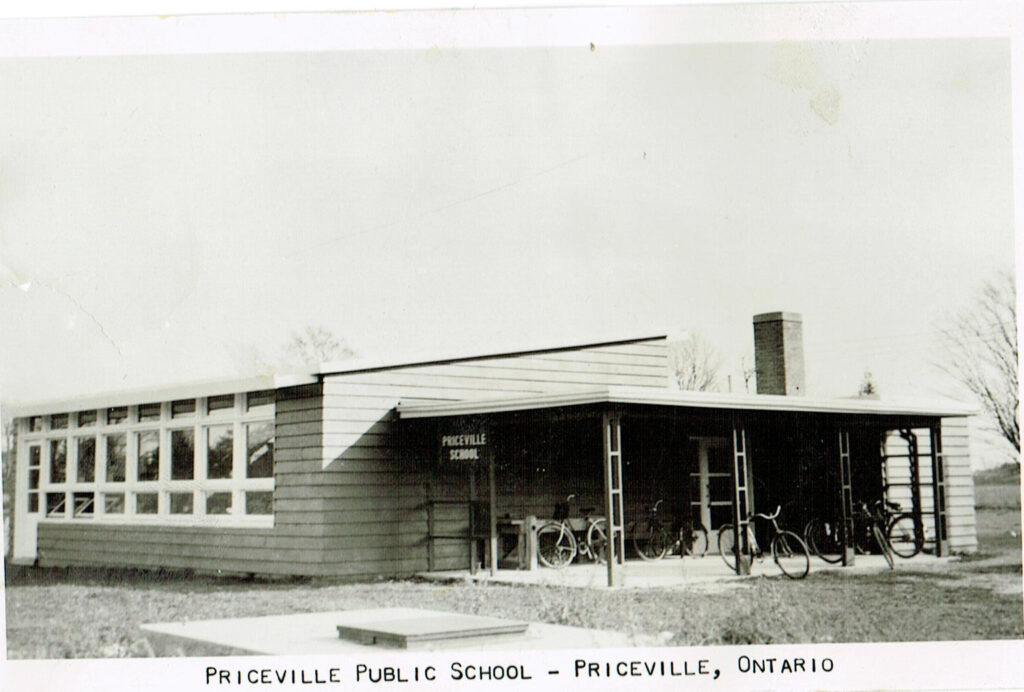
Built in 1881 with bricks from Webster’s Brickyard on the townline north of the village, this large two-storey brick school served the early community. It had stock pens outside used for the local fair and later for victory gardens. It was torn down in 1950.
4. St. Columba Presbyterian Church
This church was built in 1887 with brick teamed from Proton Station. The union of the Presbyterian, Methodist and Congregational churches took place in 1925. St. Columba then became the United Church. It closed in 1978 and is now a private residence.
5. General Store
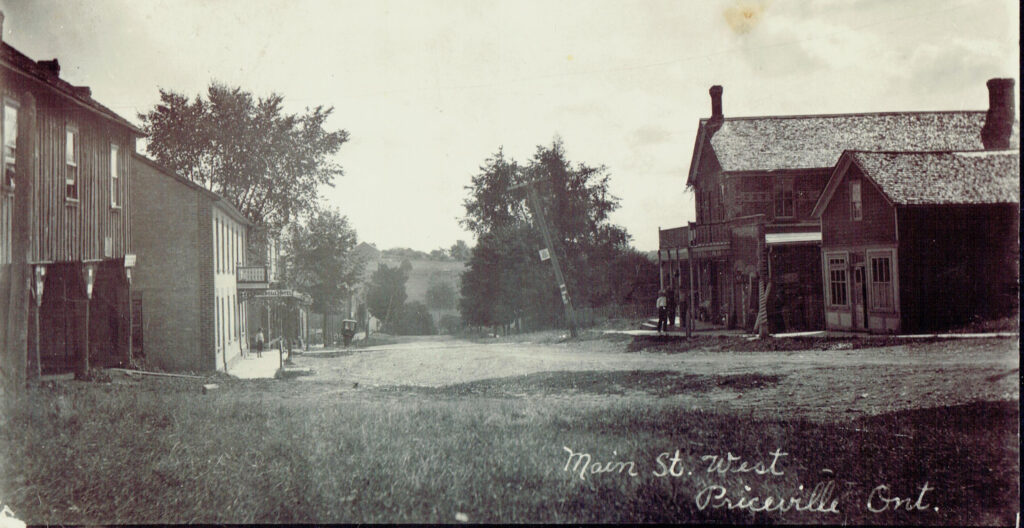
Every village needs a general store and this one served the community for many years. Over the years, stores were actually located in many buildings throughout the village, offering services like Mrs. McKinnon’s telegraph office before the Canadian Pacific Railway came to the village.
6. Commercial Hotel
This centrally-located hotel on the north side of Kincardine street was very popular. One of several local hotels, it is the last surviving hotel building. In later years it was a general store, post office and is now a private residence.
7. Baptist Church
First formed as a log church in 1865, its first minister – Mr. Robert McIntyre – preached in Gaelic, converting over 100 people. Later, a brick church served the community until 1921, when it was sold and became a private home.
8. Barber Shop & Cold Storage
Marked by a plaque telling of its age, this newly-sided building was an early barber shop, shoemakers and a cold storage building.
9. Post Office, Drugs, Sundries
As was common in early villages, the post office moved around, starting at McConkey’s store, then moving to the
Commercial Hotel then to the General Store. This square brick building was a bustling part of the village downtown. In
its day it was Archie Butter’s hardware store. It was later operated by R. H. McConkey’s as “Drugs and Sundries,” which also included a post office. It is now serving as a private residence.
10. Garage (now the post office)
This garage was built by Ray MacLean and Bert Aussum on the site of the Tryon Tavern. He sold Imperial gas. If oil was needed a quart was pumped out of a “high-boy” into a glass bottle with a metal spout for a funnel.
11. Harness Shop
In the early settlement days the harness shop was an important part of daily life to keep the horses in their traces working the fields and running the buggies and cutters about town. Three generations of Watsons: R.L, G.L. and W.G. ran the village shop. It was in the same building as the undertaker.
12. Undertaker
This would have been where coffins were made as those who had passed generally were laid out in their own homes. Undertakers over the years were Mr. Simpson, Colin MacMillan and William George Watson.
13. Grist and Sawmill
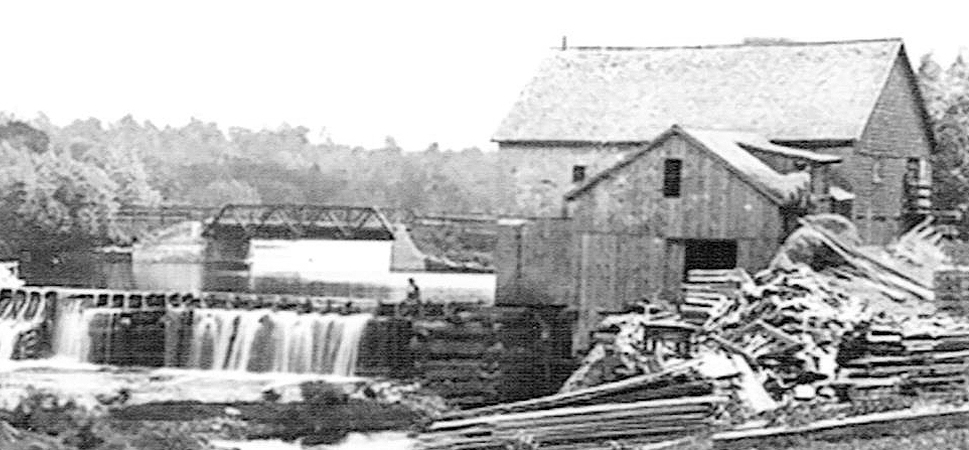
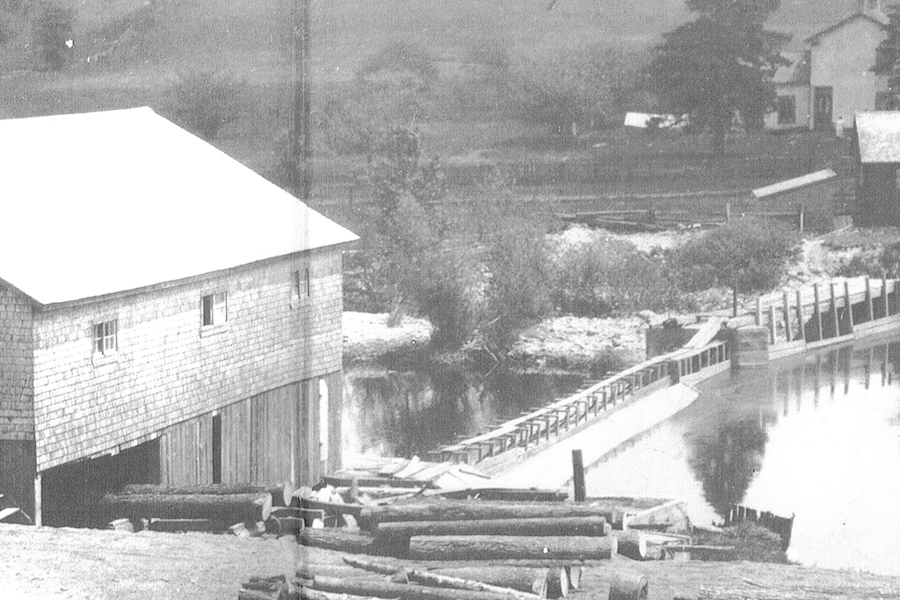
Every early village relied on its mills to grind flour, prepare lumber, make everything from shingles to basket bottoms and provide easy access to firewood in lumber trimmings. Priceville had several mills, with the most prominent remembered with a plaque by the Saugeen River.
14. Presbyterian Manse
In 1925, after the vote on church union, St. Columba Presbyterian became a United Church, so Presbyterians held services in the McKinnon Hall. In 1930 the McKinnon property and manse were purchased for $3,000 and a church was built in 1933. The church is still active. The manse is now a private residence.
15. Blacksmith Shop
Blacksmiths were needed for their horse shoeing services and for their ability to repair and even invent any kind of iron tool a farmer might need. Michael Reiley and Francis Waite were two of the first in Priceville.
16. St. Jerome’s Catholic Church
St. Jerome’s was erected in 1870, gaining parrish status in July 1880. The first resident Pastor, Rev. P.J. Cassin, served St. Jerome’s with missions at Glenelg (St. Peter’s), Durham, Dundalk and Melancthon. This area is now served by St. Joseph’s, Markdale and its mission St. John’s in Glenelg Centre.
This Village Walking Tour is a project of the Grey Highlands Canada 150 Committee. It was prepared in cooperation with the Priceville Improvement & Recreation Committee, with special thanks to Mary Harrison for her memory and use of some of the images in her collection.
Related posts:
 Osprey Historic Walking Tour
 Osprey Township Historic Car Tour
 Rocklyn Historic Walking Tour
 Kimberley Historic Walking Tour
 Eugenia Historic Walking Tour
 Flesherton Historic Walking Tour
 Markdale Historic Walking Tour
 Local Tree Trust Spotlights Four Old Maples
 The Geology of the Beaver Valley
 The Wickens Family in Kimberley, 1857 and on