

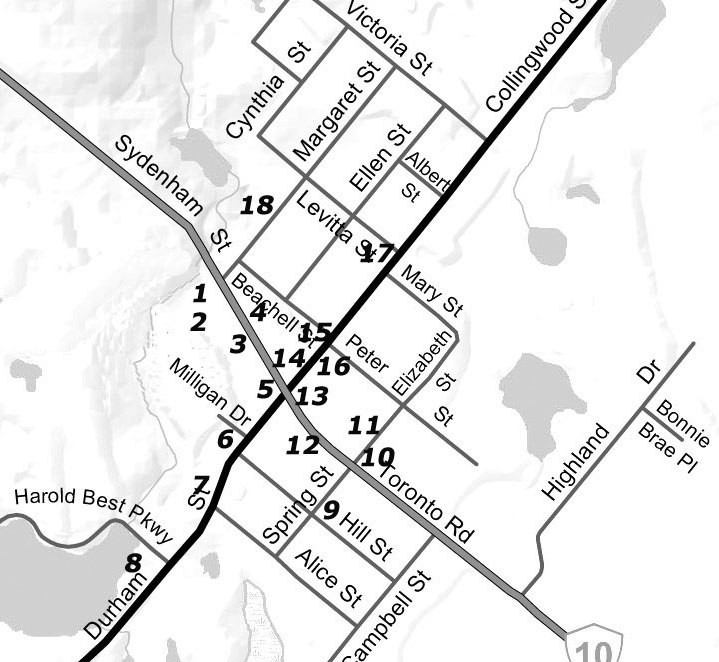
1. South Grey Museum 40 Sydenham Street
The South Grey Museum was built in Memorial Park in 1973. It houses many artefacts—one of the most interesting being Thomson Point. This paleo-Indian projectile point dates to 7,500 BCE. It was found by Alistair Thomson beside the Boyne River.
2. Memorial Park
The war memorial in the park was built in 1918 to honour local men who served in the First World War. Two captured German weapons flank it —a machine gun and a mortar artillery captured at Vimy Ridge.
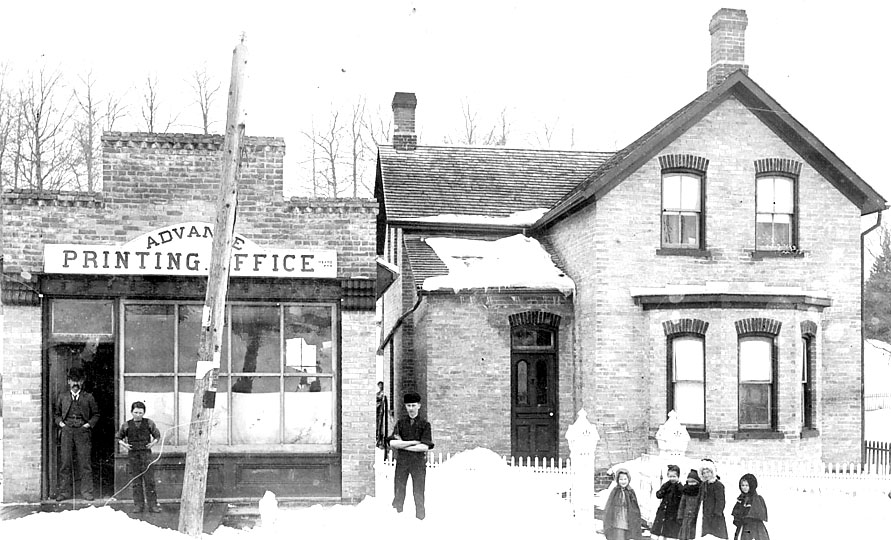
3. 26 Sydenham Street
This was the home of the Thurstons, founders of the Flesherton Advance, who ran a printing office there until it moved.
4. 25 Sydenham Street
Built around 1871 by J.W. Armstrong, this house was later sold to his son-in-law Fred Hickling, who married Adelaide Arm-
strong, when she died he married her sister Dorothy. He worked as a bookkeeper for Richardson’s store and owned a share in Boyd Brothers for a time. Upon his return to the village, he opened a dry goods store here until his death in 1961 at the age of 92.
5. 6 Sydenham Street
Known as the Richardson Block, this is one of the earliest downtown building. It was used by the Richard- son’s for a dry goods and pharmacy stores for generations of the family. It survived two major fires—one that destroyed the Sproule Block in 1909 and another which ravaged the south- west corner in the mid 1920s.
6. 20 Durham Street
The Park House opened as a temperance hotel, an alcohol-free home away from home for weary travellers. It was also a boarding house for teachers in the village.
7. 36 Durham Street
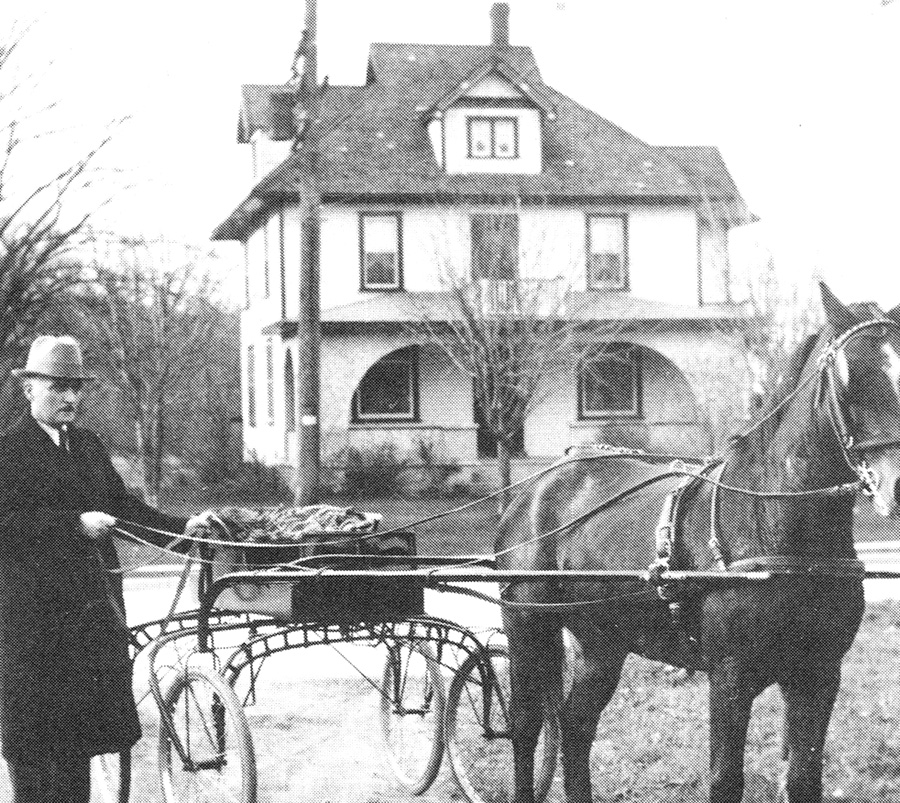
Built in 1929 by Dr. John Milne, the last horse-drawn doctor, who also raced horses. Note the old carriage house beside the home. Dr. Robinson’s family lived there when he took on the local practice.
8. Flesherton Pond
This popular swimming hole was created as a mill pond for a grist mill owned by William Kingston Flesher, who gave the village its name. The pond was a source for ice for hotels and the butcher shop prior to refrigeration. The Flesher’s had a house on the pond in the village’s early days.
9. 12 Spring Street
St. John’s United Church was built as a Wesleyan Methodist church in 1877. Organized by the early town fathers, the cornerstone was laid by Dr. Christoe with a silver trowel. It originally had a wrought iron fence and barn for horses and carriages.
10. 35 Toronto Street
Designed by architect Marshall B. Aylesworth—who also designed the Richardson block and Knarsboro Hall in Markdale (May Funeral Home), this unique yellow brick Gothic style farmhouse has the unique addition of the semi-hexagonal bay window.
10. 11 Elizabeth Street
Once used as the Flesherton branch of the Grey Highlands Public Library, this beautiful brick building was built in 1892. The artful arch is a public sculpture commissioned for the turn of the millennium in 2000. It is by artist Catherine Carmichael and pays homage to the village and the former Artemesia Township.
12. 16 Toronto Road
On the southwest side of downtown is a brick building that served as Hickling’s department store in 1898. It later became Flesherton’s bank and post office. Now it’s home to businesses and apartments.
13. 1 Toronto Road
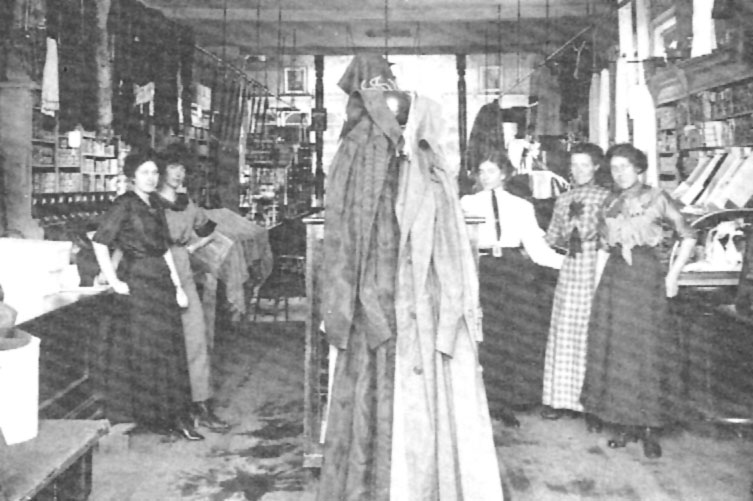
The Munshaw Hotel, constructed in 1849, has offered respite for weary guests for almost 170 years. In its early pioneer days, life in Flesherton revolved around the establishment and business was excellent. Before the first churches were built, the Munshaw’s bar room served as a temporary meeting place for Sunday religious activities. The hotel’s large barn, destroyed by fire in 1926, reportedly was always full of travelers’ horses and buggies.
14. 2 Collingwood Street
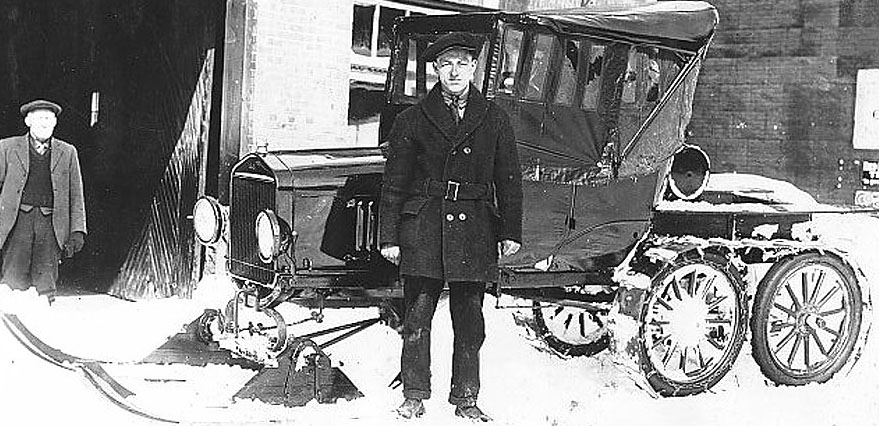
Built in 1910 on the site of the burned out Sproule Block, this garage was a busy local business. It had gas pumps until Hwy. 4 (now County Rd 4) was widened. It was owned by many people through the years, including Harry and Alf Down, shown here with the first snowmobile in the area.
15. 20 Collingwood Street
The Local Colour building was built before the 1900s. In the 1920s had a third storey and retail windows were added. In
the 1930s, it went back to its original state.
16. 17 Collingwood Street
This was the second office of The Flesherton Advance. Publisher Willard Thurston, then his son Frank printed the weekly local newspaper here for 68 years
17. 46 Collingwood Street
Built in 1889 as a Presbyterian church, it became a town hall in 1926. It was purchased in 1964 for the Baptist church.
18. 22 Margaret Street
This concrete form Mill house was home to generations of Nuhns and Milligans, owners of the local woollen mill.
This Village Walking Tour is a project of the Grey Highlands Canada 150 Committee. It was prepared in cooperation with local volunteers. Research was sourced through files from the South Grey Museum archives and Split Rail Country: A History of Artemesia Township and Markdale and Flesherton: A Written Heritage.
Related posts:
 Osprey Historic Walking Tour
 Kimberley Historic Walking Tour
 Osprey Township Historic Car Tour
 Priceville Historic Walking Tour
 Markdale Historic Walking Tour
 Eugenia Historic Walking Tour
 Rocklyn Historic Walking Tour
 Old Baldy Does Not Exist
 Local Tree Trust Spotlights Four Old Maples
 The Wickens Family in Kimberley, 1857 and on